1. Introduction: The Architecture of “Low-Inertia” Confectionery
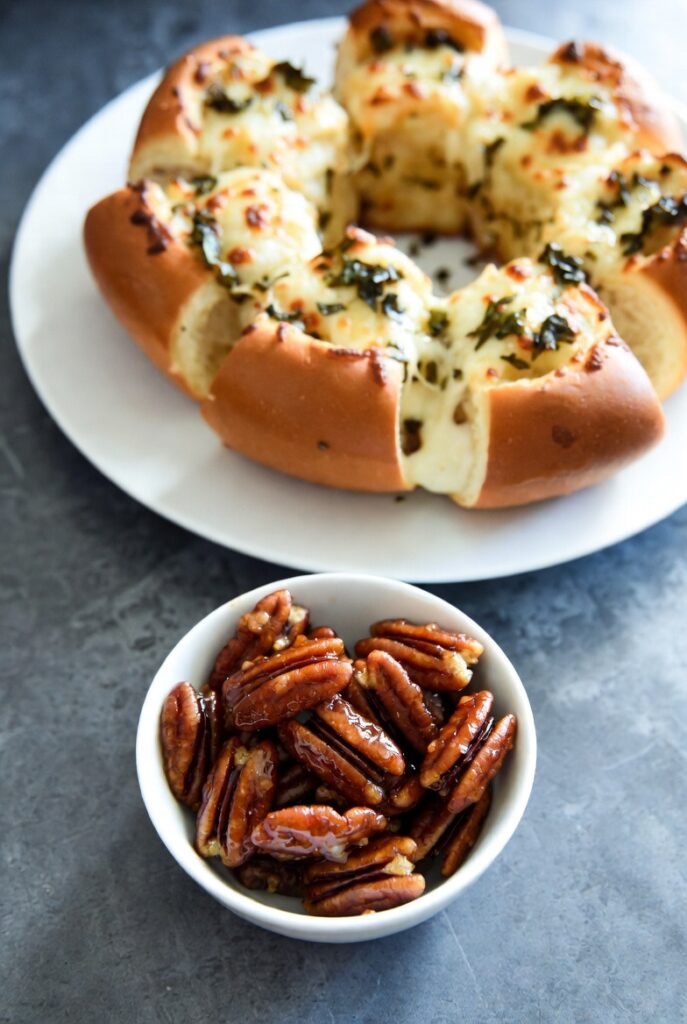
In the refined landscape of artisanal snacking, Slow Cooker Glazed Pecans represent a masterpiece of “Thermal Modulation.“ While traditional stovetop or oven methods rely on “High-Intensity” heat that risks scorching the delicate oils of the nut, the slow cooker method utilizes “Radiant Conduction.” This process allows the sugars to undergo a slow, controlled Pyrolysis, transforming from simple sweetness into a sophisticated, mahogany-hued lacquer without the bitter oxidation of burnt fats.
The brilliance of this dish lies in its “Internal Caramelization.” By maintaining a stable, low-heat environment over several hours, the glaze—a matrix of glucose, fructose, and aromatic lipids—penetrates the “Rugose” (wrinkled) surface of the pecan. For the modern professional, the holiday host, or the culinary strategist, this is the “Platinum Standard” of low-intervention gourmet: it requires minimal “active labor” while delivering a “High-Resolution” sensory experience. It is a dish that understands that “Luxury” is often a function of Time and Temperature Stability.
2. The Science of the “Albumin-Sugar” Matrix
To master Glazed Pecans, one must move beyond the spice jar and understand the behavior of Protein-Based Emulsions. The secret to the “Shatter-Smooth” crust of a professional pecan is the use of Egg Whites (Albumin).
When egg whites are whisked until frothy, they create a “Molecular Scaffold.” When tossed with the pecans and sugar, the albumin acts as a “Structural Adhesive.” Unlike a simple syrup glaze—which can become “Tacky” or “Sticky”—the albumin sets into a “Micron-Thin” crystalline shell. As the moisture evaporates slowly in the cooker, the sugar molecules bond to the protein fibers of the egg white, creating a crust that is both light and “Crisp-Resonant.” This is “Surface Engineering” disguised as a holiday treat.
3. Recipe Overview: The Master Blueprint
- Cuisine Type: Modern Americana / Confectionery
- Difficulty Level: Very Easy (Low-intervention)
- Total Preparation Time: 15 Minutes (Includes whisking)
- Total Cooking Time: 3 Hours
- Total Time: 3 Hours 15 Minutes
- Dietary Classifications: Gluten-Free, Vegetarian. (Can be made Vegan with Aquafaba).
- Yield: Approximately 1 lb of Glazed Pecans
4. Equipment and Tools: The Essentials of “Moisture Management”
- 6-Quart Slow Cooker: The size ensures that the pecans are not “Stacked” too deeply, allowing for even heat distribution.
- Whisk: For achieving the “Aerated State” of the egg whites.
- Parchment Paper or Silicone Mat: For the “Post-Cook Cooling Phase” to prevent adhesion.
- The “Lid-Gap” Tool (Optional): A wooden spoon to prop the lid open during the final hour.
5. Ingredients Section: Sourcing for “Lipid Density”
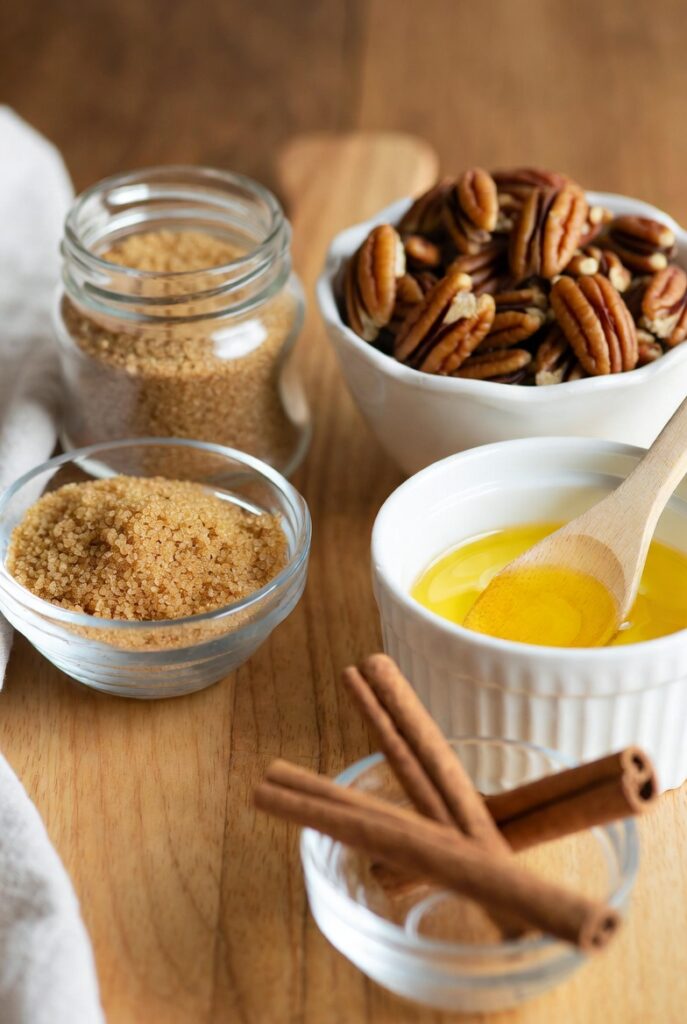
In a dish with a minimalist ingredient list, the “Freshness Index” of the nuts and the “Aromatic Purity” of the spices dictate the final quality.
The Nut Anchor
- Pecan Halves: 1 lb (Approx. 4 cups).
- The Master Hack: Ensure they are Raw and Unsalted. Pre-roasted nuts will double-roast in the cooker, leading to a “Rancid Lipid” profile. Look for halves with a “Golden-Brown” hue and no shriveling.
The “Crystalline” Matrix (The Glaze)
- Granulated Sugar: 1/2 cup. (For the “Hard-Crack” snap).
- Light Brown Sugar: 1/2 cup. (The “Molasses Depth” for a chewy undertone).
- Egg White: 1 large. (The “Structural Scaffold”).
- Vanilla Extract: 1 tbsp. (The “Aromatic Clarifier”).
The “Aromatic Trinity”
- Cinnamon: 1.5 tbsp. (The “Warm Spice” baseline).
- Salt: 1/2 tsp. (The “Saline Spark” to balance the glucose).
- Cayenne Pepper: 1 pinch. (The “Capsaicin High-Note” to cut the sweetness).
6. The “Aqueous Evaporation” Protocol
The most common failure in slow cooker confectionery is “Glaze Sogginess.” Slow cookers are designed to trap steam, which is the enemy of a crisp glaze. To achieve a “Master Draft” finish, you must utilize the “Aqueous Evaporation Protocol.”
During the first two hours, the lid remains closed to facilitate the “Bonding Phase.” However, during the final hour, the lid must be propped open slightly with a wooden spoon. This allows the accumulated water vapor to escape, shifting the environment from “Steaming” to “Drying.” This transition is what “Crystallizes” the sugar-albumin matrix, turning a wet coating into a “Shatter-Crisp” shell.
7. Deep Dive: The “Lipid-Antioxidant” Synergy
Why are Glazed Pecans more than just “Candy”? It centers on the Bioavailability of Vitamin E and Ellagic Acid. Pecans are among the most “Antioxidant-Dense” nuts on the planet. They are rich in gamma-tocopherols (a form of Vitamin E) and phenolic compounds.+1
The slow cooking process is “Nutritionally Conservative.” High-heat roasting (above $180^\circ C$) can oxidize the healthy monounsaturated fats in the nut. By keeping the temperature in the “Low-Zone” (approx. $90^\circ C$ to $120^\circ C$), we preserve the “Lipid Integrity” of the pecan. When you consume these fats alongside the cinnamon (which helps stabilize blood sugar), you are enjoying a “High-Functionality” treat. This is “Biologically Conscious” snacking.
8. Step-by-Step Instructions: The Master Blueprint
Step 1: The “Albumin Aeration”
In a large bowl, whisk the egg white and vanilla extract until they are “Frothy and Voluminous.” You aren’t looking for stiff peaks, but you want a bubble-dense foam. This creates the surface area needed to coat the pecans.
Step 2: The “Enrobing” Phase
Add the pecan halves to the egg white foam. Toss gently with a spatula until every “Nook and Cranny” of the pecans is glistening.
Step 3: The “Crystalline Synthesis”
In a separate small bowl, whisk the sugars, cinnamon, salt, and cayenne. Sprinkle this mixture over the wet pecans and toss again. The sugar will stick to the albumin foam, creating a “Granular Paste.”
Step 4: The “Slow-Conduction” Cycle
Lightly grease the slow cooker liner or use a liner bag. Add the pecans and spread them as evenly as possible. Set to LOW.
Step 5: The “Inertia Management” (Agitation)
Cook for 3 hours total.
- Crucial: Every 45 minutes, remove the lid and “Vigorously Agitate” (stir) the pecans. This prevents them from “Clumping” into a singular mass and ensures even caramelization.
Step 6: The “Evaporation Gap”
During the final 45–60 minutes, prop the lid open slightly. The aroma will intensify as the sugars reach the “Crystalline Set.”
Step 7: The “Structural Set” (Cooling)
Remove the pecans and spread them in a single layer on parchment paper. Do not skip this. As the pecans reach room temperature, the glaze goes from “Pliant” to “Hard-Shell.”
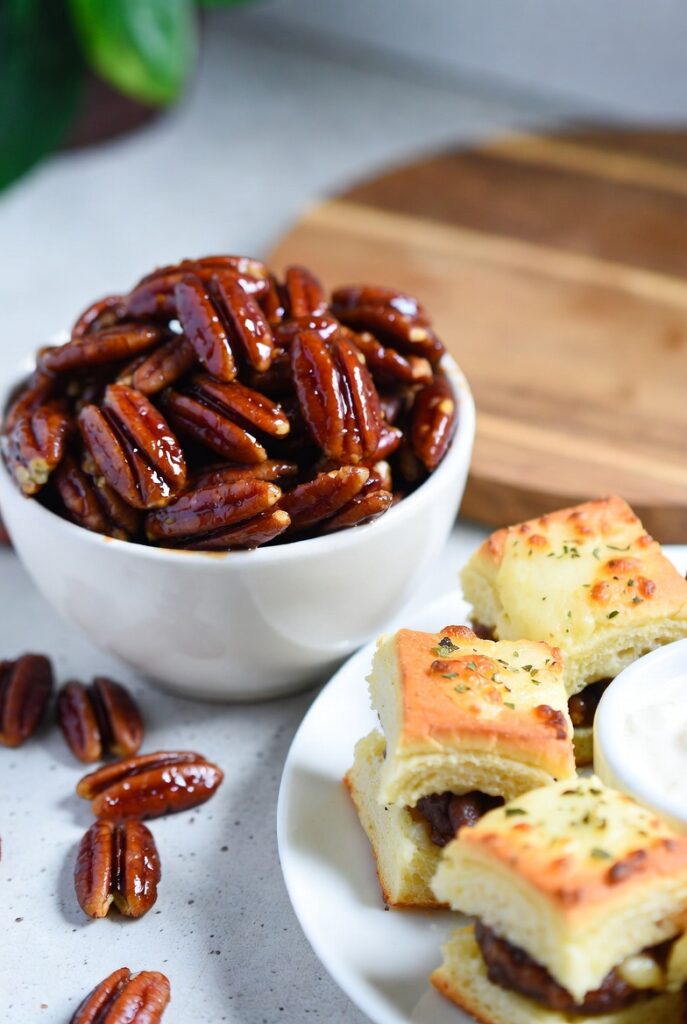
9. Satiety and the “Glucose-Fiber” Plateau
Glazed Pecans provide a unique “Satiety Curve.”
- The Lipid Buffer: The high fat content of the pecan slows down the digestion of the sugars.
- The Fiber Load: Pecans contain significant insoluble fiber, which creates “Physical Bulk” in the stomach.
This prevents the “Insulin Spike and Crash” often associated with pure sugar candies. A small handful provides a “Stable Energy Trajectory,” making them an elite “Cognitive-Support” snack for long-form focus or endurance activities.
10. Modular Variations: The “Flavor Pivots”
- The “Savory-Umami” Draft: Replace the cinnamon with Smoked Paprika and Rosemary. Omit 1/2 the sugar.
- The “Bourbon-Street” Standard: Replace vanilla with High-Quality Bourbon. The alcohol will evaporate, leaving a “Charred-Oak” complexity.
- The “Espresso” High-Note: Add 1 tbsp of Instant Espresso Powder to the sugar mix for a “Bittersweet” contrast.
11. Storage and “Crisp-Preservation”
- Room Temperature: Store in an airtight glass jar for up to 2 weeks.
- The “Hydrophobic” Rule: Sugars are “Hygroscopic,” meaning they pull moisture from the air. If you live in a high-humidity environment, add a small silica packet to the jar to maintain the “Shatter-Snap.”
- Freezing: These pecans freeze remarkably well for up to 3 months. Consume them directly from the freezer for a “Cold-Crunch” experience.
12. Frequently Asked Questions (FAQ)
Q: My pecans are sticky after 3 hours. What happened?
A: This usually means the “Aqueous Evaporation Protocol” was missed. If they are sticky, they need more time with the lid OFF.
Q: Can I use walnuts?
A: Affirmative. However, walnuts have a “Tannic Skin” that is more bitter than pecans. You may need to increase the brown sugar by 2 tbsp to balance the bitterness.
Q: Can I use a “High” heat setting?
A: Negative. “High” settings in most slow cookers exceed the “Burning Point” of the sugar-albumin matrix. “Low and Slow” is the only path to a “Platinum-Standard” finish.
13. Nutritional Information
(Per 1/4 cup serving)
| Nutrient | Amount |
| Calories | 210 kcal |
| Protein | 3g |
| Total Fat | 18g |
| Net Carbs | 9g |
| Manganese | 45% DV |
14. Summary: The Master Draft of Social Utility
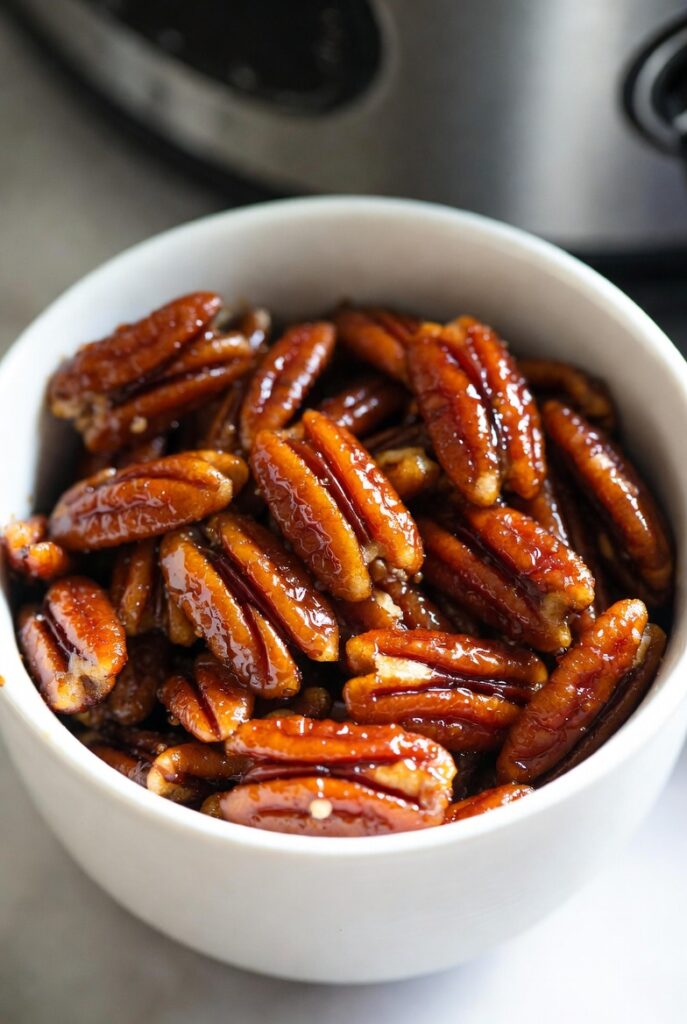
The Slow Cooker Glazed Pecans are more than a snack; they are a “Vessel for Intentional Aroma.” They prove that “Gourmet Confectionery” does not require a candy thermometer or constant stovetop stirring—it requires an understanding of “Moisture Dynamics” and “Slow-Heat Caramelization.” By mastering the “Albumin Scaffold” and the “Lid-Gap Protocol,” you are delivering a treat that is visually “Glistening,” nutritionally dense, and sensorially perfect.