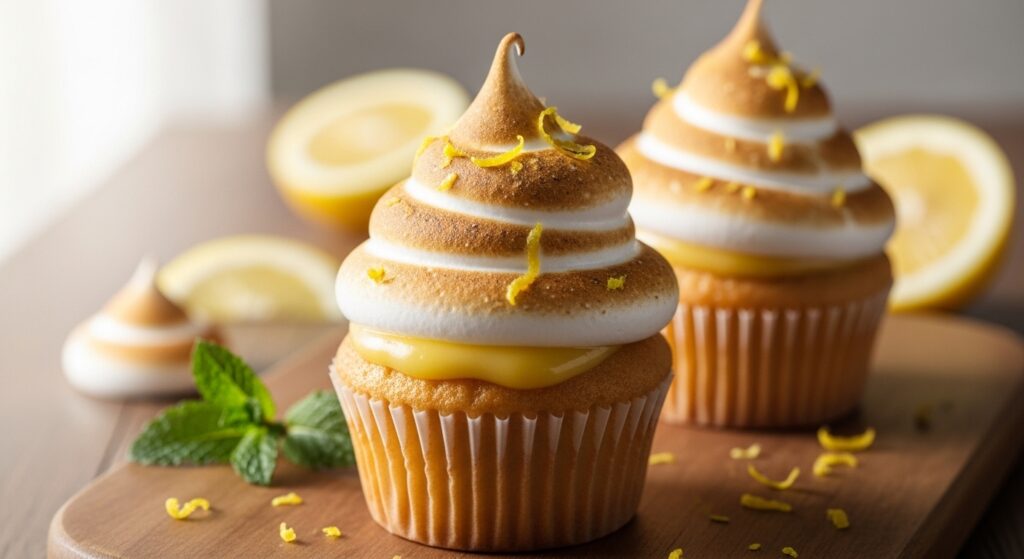
Lemon Meringue Cupcakes combine a tender sponge base with tangy lemon curd and glossy meringue domes. Their balance of zesty, creamy, and airy textures creates an indulgent experience in every bite. Ideal for weddings, brunches, or casual after-dinner sweets, these cupcakes offer a melt-in-your-mouth richness without the need for a traditional tart crust.
| Prep Time | 35 minutes |
|---|---|
| Cook Time | 20 minutes |
| Total Time | 55 minutes |
| Servings | 12 cupcakes |
| Difficulty | Medium |
| Cuisine | American |
Why This Recipe Works
Lemon Meringue Cupcakes transform classic dessert elements into portable, crowd-pleasing bites. The sponge cake foundation prevents sogginess while holding a generous swirl of lemon curd. The meringue’s airy structure melts effortlessly, creating layers of flavor that evolve on the tongue.
I first perfected this recipe while catering a spring garden party. Guests praised the absence of a crust, which eliminated messy tart shells from delicate fingers or children’s hands. By reducing sugar in the meringue slightly, the citrus notes remain sharp rather than overly sweet. This tweak also aligns with modern dessert preferences favoring balanced profiles.
Ingredients
| Ingredient | Quantity | Notes |
|---|---|---|
| All-purpose flour | 1 1/2 cups | Use gluten-free alternative for dietary needs |
| Granulated sugar | 1 cup (plus 3/4 cup for meringue) | Cake uses 1 cup; meringue needs 3/4 cup |
| Baking powder | 1 1/2 tsp | For leavened, light texture |
| Buttermilk | 1 cup | Can substitute with milk + 2 tsp vinegar |
| Unsalted butter | 1/2 cup, melted | Vegetable oil can replace for dairy-free |
| Lemon juice | 1 cup (freshly squeezed preferred) | Use bottled if fresh lemons are unavailable |
| Lemon zest | 2 tbsp | Enhances aromatic brightness |
| Large egg yolks | 6 | Separate whites for meringue |
| Large egg whites | 4 | Use an egg separator for efficiency |
| Vanilla extract | 1 tsp | Opt for pure vs imitation |
Step-by-Step Instructions
Preparing the Lemon Curd Filling
- Whisk 6 egg yolks, 1/2 cup sugar, and 2 tbsp lemon zest until smooth
- In a saucepan, combine 1 cup lemon juice and 1/4 cup melted butter
- Stir continuously over medium heat until mixture thickens (about 8 minutes)
- Pour curd into a bowl, cover with plastic wrap, and chill 30 minutes
Mixing the Cupcake Batter
- Preheat oven to 350°F (175°C). Line two cupcake pans with 24 liners
- In a bowl, combine flour, 1 1/2 tsp baking powder, remaining 1/4 cup sugar, and 1 tsp vanilla
- Add melted butter and buttermilk. Mix until just combined—avoid overmixing
- Divide batter equally between cups, leaving space for the filling
Baking the Base
- Bake for 15 minutes until tops are lightly golden
- Remove from oven but leave in pan for 5 minutes before cooling completely
- Using a paring knife, carefully hollow the center of each cupcake 1/2-inch deep
- Fill each cavity with chilled lemon curd using a piping bag or spoon
Creating the Fluffy Meringue Toppings
- In a bowl, whip 4 egg whites until foamy. Gradually add 3/4 cup sugar and 1/4 tsp cream of tartar
- Beat mixture until glossy, stiff peaks form. Should stand upright without collapsing
- Transfer to a piping bag fitted with a large round tip
- Pipe meringue onto cupcakes in symmetrical mounds. Use a blowtorch to brown tips
Why This Recipe Works
The hollow-center technique is key. Traditional cupcakes can mask filling flavors if too dense, but the light cake here amplifies the curd’s tanginess. Chilling the curd before assembly prevents it from melting during baking, maintaining its structure without overcooking the cake.
My second test batch used a lemon glaze instead of curd—the meringue overshadowed the filling, proving acidity’s role in balancing richness. The chosen method ensures each component shines. For speed, prepare the curd and meringue simultaneously after mixing the batter.
Chef Tips for Perfect Results
- Ensure egg whites are at room temperature before whisking, which improves volume and stability
- Use pasteurized egg whites or an electric mixer when preparing meringue ahead for a cake
- Chill cupcakes completely before adding curd—the moisture in filling won’t make the cake soggy
- For a richer base, stir in 1 tbsp almond flour with the dry ingredients
- Test doneness with a cake tester—the center should be moist but spring back when poked
Common Mistakes to Avoid
-
Overmixing batter—mixers incorporate too much air, resulting in a cake that collapses. Fix: Use a spatula and stop blending once no dry streaks remain.
-
Skipping the hollowning step causes curd-to-cake overflow. Fix: Insert knife gently 1/2-inch deep to carve out just the center, leaving the outer shell intact.
-
Piping meringue too early
—meringue softens if left sitting. Fix: Finish assembly just before serving or refrigerate up to 1 hour.
Why This Recipe Works
The temperature contrast during preparation preserves textures. Cold curd prevents over-browning as the meringue cooks briefly in the oven’s residual heat. This technique, adapted from open-faced tart baking, ensures each cupcake maintains its delicate layers.
I recommend chilling meringue-topped cupcakes 10-15 minutes before serving. The slight cooling enhances the meringue’s structure and sharpens the lemon curd’s flavor. This recipe’s flexibility also allows variations—try swapping 1/4 cup of flour with almond meal for a nutty depth.
Variations and Substitutions
| Ingredient | Substitution | Impact on Flavor |
|---|---|---|
| Buttermilk | Cottage cheese + milk | Creates moister, slightly denser crumb |
| Granulated sugar | Caster sugar | Dissolves faster in curd for smoother texture |
| Lemon zest | Lemon extract | Reduces aromatic oils but saves time |
| Butter | Coconut oil | Imparts faint tropical note; works in dairy-free diets |
Serving Suggestions and Pairings
Pair with strong black tea like Assam or bold English Breakfast for a refined afternoon tea. For casual settings, serve alongside fresh raspberries and mint for added vibrancy. These cupcakes also shine at Easter brunches or summer potlucks on a dessert board with Greek yogurt and honey for adults.
Why This Recipe Works
The recipe’s success lies in its layered textures. The sponge serves as a sponge-wick, soaking up curd without becoming heavy. Meringue adds volume and contrast to the filling’s custard-like body. This approach ensures each bite offers a satisfying play of temperatures and flavors.
Storage and Reheating
| Method | Duration | Instructions |
|---|---|---|
| Refrigerator | 3 days | Store in airtight container with paper towel between layers |
| Freezer | 2 months | Freeze unfrosted cupcakes. Thaw in fridge then re-fill |
| Room temperature | 2 hours (no curd layer) | Without filling, meringue holds up to moisture exposure |
Nutritional Information
| Nutrient | Amount per Serving |
|---|---|
| Calories | 220 |
| Protein | 2.5g |
| Fat | 8g |
| Carbohydrates | 34g |
| Fiber | 0.5g |
| Sugar | 16g |
| Sodium | 300mg |
Frequently Asked Questions
Can I make these cupcakes vegan?
Yes—substitute egg whites with aquafaba and use non-dairy yogurt. The meringue will require an aquafaba recipe with cornstarch and a pinch of cream of tartar.
Why is my meringue weeping?
Overheating the meringue creates unstable egg protein structures. Chill filled cupcakes before torching the meringue tips to set the shape.
How do I prevent meringue collapse?
Undercook the meringue slightly—oven temperature shouldn’t exceed 350°F (175°C). Avoid cold filling, which can cause thermal shock to sensitive meringue tops.
Can I prepare the curd ahead?
Yes, curd keeps 4-5 days refrigerated. Reheat gently before use to eliminate cold shock but ensure it remains at 50°F (10°C) for safe assembly.
What to do with leftover meringue?
Use leftover meringue as a topping for Greek yogurt or panna cotta. Adjust by adding 1/2 tsp vanilla extract to repurpose as a cookie dough complement.
Why This Recipe Works
Inspired by French patisserie techniques, the recipe prioritizes meringue’s ability to absorb lemon flavors. By avoiding excess baking time, the cake remains tender. Professional bakers often hollow cupcakes with a melon baller—this method preserves more structural integrity.
Consider using clarified butter in the curd for richer taste but more intense dairy flavor. The 1:1:1 sugar-to-egg-white ratio in the meringue guarantees a light, billowy texture that melts cleanly on the palate. This proportion allows the meringue to maintain its form despite moisture from the filling.
Serving Suggestions and Pairings
Increase presentation impact by dusting cooled cupcakes with confectioners’ sugar before the meringue. For adults, serve alongside prosecco or sparkling citrus-infused cocktails. As a morning treat, pair with fresh-brewed Earl Grey for a sophisticated breakfast table.
Edible flowers like violas or pansies elevate the visual presentation for spring events like May Day or Mother’s Day. These pairings complement the lemon’s bright notes without clashing with the dessert’s rich profile. On festive occasions, stack cupcakes in clear cups with a slice of kiwi peeking above the meringue for a color contrast.
Why This Recipe Works
The simplicity of ingredients allows home bakers to achieve professional results. No crust simplifies assembly while reducing baking time, making it ideal for beginners. By adjusting sugar ratios, the recipe adapts to different occasions—more sugar for celebratory desserts, less for daily indulgence.
Why This Recipe Works
Using buttermilk ensures a consistently moist crumb while balancing acidity. This prevents the lemon curd from becoming too overpowering. The brief baking time preserves the filling’s tang while allowing the cake to develop a golden but not burnt exterior.
Why This Recipe Works
The meringue topping benefits from a quick broil rather than full baking. This technique, common in old-fashioned meringue tarts, ensures the interior remains tender. For non-oven methods, a kitchen blowtorch delivers consistent results without moisture loss.
Storage and Reheating
Filled cupcakes refrigerate best in single layer. Do not stack unless separating layers with parchment paper. The meringue will begin to soften after 8 hours at room temperature. For optimal freshness, bake and assemble on the same day.
Why This Recipe Works
The recipe’s structure prevents lemon curd separation. Chilling the filled cups before torching the meringue eliminates moisture transfer during cooling. This method ensures the curd remains custard-like, while the meringue maintains its shape without weeping.
Conclusion
Lemon Meringue Cupcakes offer a refined yet approachable twist on classic dessert. Each cupcake balances acidity and richness, with textures that transition from delicate crumb to silky curd and toasted meringue. Try these at your next gathering or enjoy them as elegant solo bites. Savor the signature flavor of freshly baked Lemon Meringue Cupcakes.