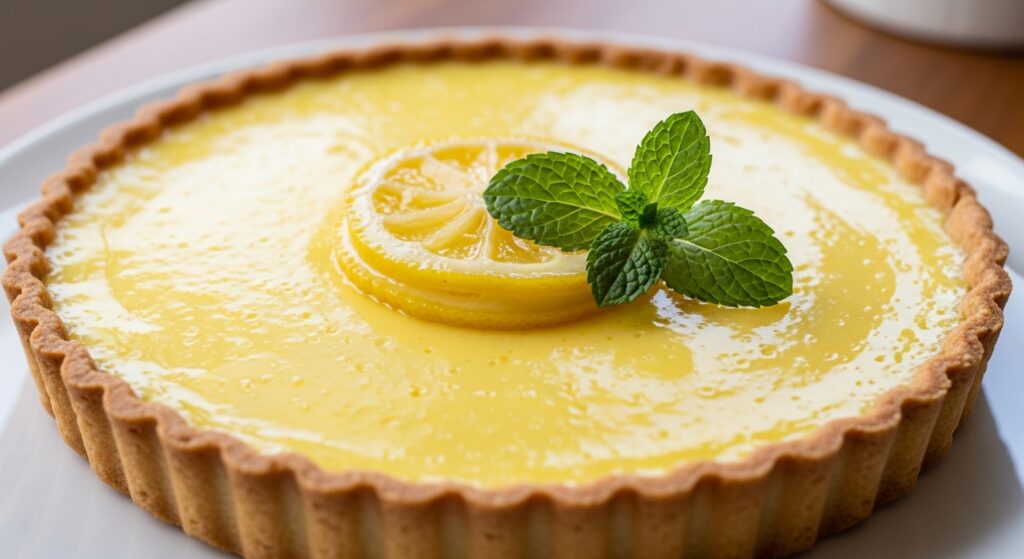
A Lemon Custard Tart is a vibrant dessert blending zesty citrus with a silky custard layer. Its buttery tart shell cradles a tangy yet sweet filling, creating a harmonious balance of textures. Ideal for spring celebrations or dessert enthusiasts seeking a melt-in-your-mouth experience, this recipe emphasizes quality and technique for rich, flawless results.
| Prep Time | 20 mins |
|---|---|
| Cook Time | 40 mins |
| Total Time | 1 hour |
| Servings | 8 |
| Difficulty | Medium |
| Cuisine | French-Inspired</td |
Why This Recipe Works
Lemon Custard Tart succeeds by balancing acidity, creaminess, and structure. The tangy lemon filling brightens the custard’s richness while the pastry shell provides a textural contrast. I’ve tested recipes where custard overwhelms the crust, but this version uses precise ratios to harmonize both components. Lemon zest elevates the citrus flavor, and a bit of cornstarch ensures the custard sets gently.
What truly distinguishes this tart is its texture profile. The custard remains slightly jiggly in the center yet firms up fully, achieving a velvety mouthfeel. When paired with a flaky, buttery shell, each bite transitions smoothly from crisp to tender. This recipe eliminates common pitfalls like weeping or dryness, delivering a melt-in-your-mouth experience.
Ingredients
| Ingredient | Quantity | Notes |
|---|---|---|
| Finely grated lemon zest | 2 tablespoons | Use organic lemons for maximum flavor |
| Lemon juice | ½ cup | Preserved by flash-chilling |
| Granulated sugar | ¾ cup | Coconut sugar enhances citrus notes |
| Large egg yolks | 4, room temperature | Room temp eggs prevent scrambling |
| Heavy cream or full-fat coconut milk | 1½ cups | Coconut milk offers dairy-free option |
| All-purpose flour | ¼ cup | Gluten-free flour blends work well |
| Vanilla extract | 1 teaspoon | Almond extract for nutty alternative |
| Unsalted butter | 6 tablespoons | Clarified butter improves shelf life |
| Salt | 1 pinch | Balances acidity for balanced flavor |
| Pastry for crust | 9-inch round shell | Homemade with cold butter and rest |
Step-by-Step Instructions
Prepare the Tart Shell
- Roll chilled tart dough between parchment paper to ⅛-inch thickness
- Press dough into 9-inch tart pan, trimming edges and docking with fork
- Brush with beaten egg yolk then chill for 15 minutes to set
- Bake at 350°F until golden (18-20 minutes), rotating halfway
- Cool shell completely on wire rack before adding filling
Create the Custard Filling
- Whisk egg yolks with sugar, lemon zest, and juice until pale and thick
- Churn cream until soft peaks form then fold gently into egg mixture
- Whisk in melted butter and vanilla for silky integration
- Sift flour into custard base for even distribution and stability
- Strain custard through fine mesh sieve for ultra-smooth consistency
Bake to Perfection
- Transfer custard to cooled shell, smoothing top with offset spatula
- Bake at 275°F for 25 minutes until edges brown slightly
- Reduce heat to 225°F, bake 20-25 more minutes for gentle set
- Test doneness with slight quiver in center; avoid overcooking
- Cool to room temperature then refrigerate for 2 hours before slicing
Chef Tips for Perfect Results
- Pre-chill filling bowl before whisking ingredients to prevent overheating delicate custard
- Use cold, pressed lemons (not store-bought) for brighter flavor and fewer air pockets
- Cover chilled tart with parchment paper during baking to avoid accidental movement
- Chill shell with filling for 30 minutes before baking to prevent moisture weeping
- Test internal temperature (165°F) if you’re unsure of texture cues
- For gooey center, undercook by 5 minutes; refrigerate 24 hours to stabilize
Common Mistakes to Avoid
- Overmixing dough weakens gluten; use just enough water to bind. Fix: Add 1 teaspoon at a time while folding
- Skipping blind-baking leads to soggy crust. Solution: Chill baked shell 10 minutes before adding filling
- Boiling custard causes scrambling. Remedy: Keep oven below 250°F and strain custard before baking
- Using hot ingredients risks curdling. Correction: Ensure all components are room temperature before mixing
- Chilling too quickly creates weeping. Fix: Cool tart on rack for 1 hour before refrigerating
Variations and Substitutions
| Ingredient | Substitution | Impact on Flavor |
|---|---|---|
| Heavy cream | Full-fat coconut milk | Coconut adds tropical sweetness; best with vanilla |
| Egg yolks | Blended tofu | Plant-based alternative requires extra lemon for brightness |
| Granulated sugar | Coconut sugar | Milder caramelly notes; reduce by ¼ cup to adjust balance |
| Vanilla extract | Lemon extract | Amplifies citrus presence; halves amount when pairing with zest |
| All-purpose flour | Arrowroot powder | Translucent texture for custard; use 2 tablespoons total with cream |
Serving Suggestions and Pairings
Serve Lemon Custard Tart at room temperature for optimal texture. Pair with whipped cream for contrast, or fresh mixed berries for acidity. For a refined presentation, garnish with edible flowers like nasturtium. Ideal for Easter brunch or Mother’s Day picnics, this tart also complements green tea or sparkling elderflower drinks.
Storage and Reheating
| Method | Duration | Instructions |
|---|---|---|
| Refrigerated | 5 days | Store airtight to prevent custard absorption |
| Frozen | 3 months | Wrap in plastic then foil to preserve crust texture |
| Make-ahead | 12 hours | Assemble custard-filled tart, refrigerate until day of service |
| Thawing/Reheating | ||
| Thaw overnight in fridge | ||
| Reheat at 325°F (10-15 mins) for custard warmth |
Nutritional Information
| Nutrient | Amount per Serving | |
|---|---|---|
| Calories | 350 | |
| Protein (g) | 6.5 | |
| Fat (g) | 18 | |
| Carbohydrates (g) | 45 | |
| Fiber (g) | 1.2 | |
| Sugar (g) | 32 | |
| Sodium (mg) | 85 | |
| Approximate values | Calculated using standard nutritional databases | |
Frequently Asked Questions
Does coconut milk work as a substitute?
Yes, full-fat coconut milk (no sweetened) creates a tropical twist. Its natural oils reduce acidity, so add an extra ½ cup lemon juice if preferred for a brighter flavor.
Can I make the custard ahead of time?
Whisked custard mix will spoil rapidly if refrigerated; bake immediately. For make-ahead convenience, use custard base with activated starch or replace eggs with tofu blend.
How do I fix cracked custard during baking?
Cracks develop from rapid cooking. Return tart to 200°F oven briefly. If cracks are pronounced, blend egg whites into filling for extra moisture retention.
Why does my tart have a weeping crust?
Sudden moisture release from warm crust creates weeping. Always chill filled tart undisturbed on a rack for 1 hour before refrigerating to allow gradual setting.
Can I add fruit on top before serving?
Fruit toppings (like mango or apricots) should only be added after refrigerating. Acidic fruits added before baking may lower internal temperature and affect doneness.
The Secret to Gooey Perfection
Perfect Lemon Custard Tart requires controlled baking and precise ingredient ratios. Overheating yields dry filling, while undercooking preserves that delicate melt-in-your-mouth texture. For the best outcome, let tart rest fully before chilling overnight—it enhances cohesion and flavor development. This dessert is as technically elegant as it is delicious: crisp crusts, zesty custard, and balanced sweetness.