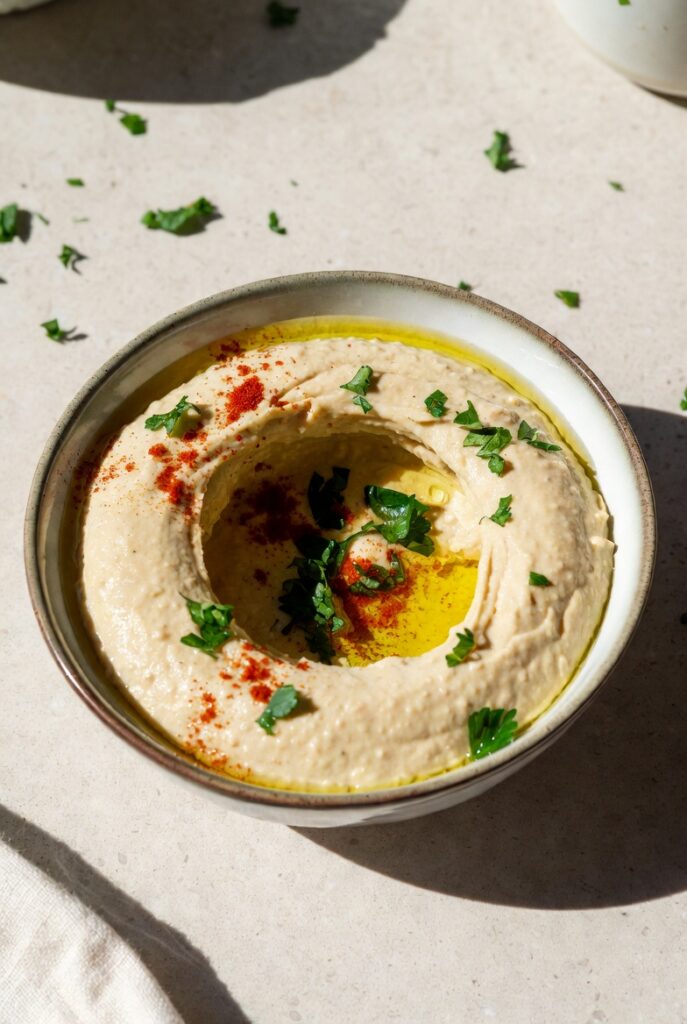
1. Introduction: The Architecture of the Perfect Puree
In the vast lexicon of Mediterranean gastronomy, few dishes represent the “Singularity of Utility” quite like Hummus. While the supermarket aisles are crowded with plastic tubs of varying quality, a true “Master Draft” of homemade hummus is a revelation of “Textural Elegance.” It is a dish that exists at the intersection of high-protein nutrition and “Lipid-Buffered” satisfaction.
The brilliance of this specific “Easiest” iteration lies in the “Mechanical Breakdown of the Legume.” We are moving beyond the grainy, lackluster pastes of amateur attempts and entering the realm of the “Velvet Emulsion.” By utilizing five primary staples—chickpeas, tahini, lemon, garlic, and ice water—we create a dip that is light, airy, and incredibly potent. For the high-performance individual, this is the “Zero-Friction” fuel: it is shelf-stable, requires no active heat, and provides a “Steady-State” energy release through complex carbohydrates and healthy fats. It is a dish that respects your time while honoring the essential chemistry of Levantine cooking.
2. The Science of the “Tahini-Water Emulsion”
To master the Easiest Homemade Hummus, one must look past the chickpeas and understand the behavior of Sesame Lipids. Most people believe hummus is made by simply throwing everything into a blender at once. This is a “Structural Error.”
The secret to a professional-grade result is the “Aerated Tahini Base.” Tahini is a concentrated paste of ground sesame seeds. When combined with lemon juice (an acid) and ice-cold water, it undergoes a “Physical Transformation.” The proteins in the sesame seeds unfold and trap air, turning the dark, heavy paste into a light, pale, and fluffy cream. By creating this “Cream Matrix” before adding the chickpeas, you ensure that the final product has the “Mouthfeel” of silk rather than grit. This is the difference between a “Deli Dip” and a “Culinary Masterpiece.”
3. Recipe Overview: The Master Blueprint
- Cuisine Type: Traditional Levantine / Minimalist Performance
- Difficulty Level: Very Easy (Order-of-operations dependent)
- Total Preparation Time: 10 Minutes
- Total Cooking Time: 0 Minutes (Utilizing pre-cooked chickpeas)
- Total Time: 10 Minutes
- Dietary Classifications: Vegan, Gluten-Free, Dairy-Free, Low-Glycemic.
- Yield: Serves 4–6
4. Equipment and Tools: The Essentials of Centrifugal Force
- High-Speed Food Processor or Blender: A food processor is preferred for its “Blade Span,” which allows for better aeration of the tahini.
- Silicone Spatula: For the “Scrape Phase”—ensuring that no un-emulsified particles remain on the walls of the vessel.
- Fine Mesh Strainer: Only if you are utilizing the “Skin-Removal” hack for “Platinum-Level” smoothness.
5. Ingredients Section: Sourcing for Purity
In a dish with five ingredients, there is no “Flavor Noise” to hide mediocrity.
The Protein Anchor
- Chickpeas (Garbanzo Beans): 1 can (15 oz/400g).
- The Master Hack: If using canned beans, drain and rinse them in Hot Water. Heat softens the starches, allowing for a smoother breakdown.
The Lipid Foundation
- Tahini (Sesame Paste): 1/2 cup. Sourcing is critical here; look for “Hulled” Lebanese or Israeli tahini, which is lighter and less bitter.
- Extra Virgin Olive Oil: For finishing only. Never blend the oil into the hummus, as the high-speed blades can cause the oil to turn bitter through oxidation.
The Aromatic High-Notes
- Fresh Lemon Juice: 1/4 cup (approx. 1 large lemon).
- Garlic: 1 small clove. The Pro-Tip: Let the minced garlic sit in the lemon juice for 5 minutes before blending. The acid neutralizes the “Allicin Burn,” leaving only the sweet garlic aroma.
- Cumin: 1/2 tsp (The “Earthy Base Note”).
- Ice Water: 2–3 tbsp. This is the “Secret Catalyst” for the white, fluffy color.
6. The “Ice-Water” Protocol: Why Temperature Matters
The most common failure in homemade hummus is a “Dense, Tan Paste.” To achieve a “Master Draft” finish, you must utilize the “Ice-Water Protocol.” When you add ice-cold water to the tahini-lemon mixture, it causes the sesame fats to “Seize” and then “Emulsify” rapidly. This process introduces micro-bubbles into the paste. The result is a hummus that is significantly lighter in color (almost a pale cream) and texture. It changes the dip from a heavy legume mash into a “Savory Mousse.” If you use room-temperature water, the fats remain heavy and the result will be a darker, oilier dip.
7. Deep Dive: The “Resistant Starch” Advantage
Why is Hummus the strategic choice for sustained cognitive performance? It centers on the “Starch-Fiber-Lipid Trinity.” Chickpeas are rich in Resistant Starch, which acts as a prebiotic, feeding the beneficial bacteria in your gut.
When these starches are paired with the healthy fats in tahini, the Glycemic Index of the meal is significantly lowered. This means the glucose is released into your bloodstream in a “Steady-State” fashion, preventing the “Sugar Spikes” and “Insulin Crashes” associated with bread or processed snacks. It is “Biological Fuel” that supports both the microbiome and the brain. By making it yourself, you avoid the inflammatory seed oils (sunflower or canola) often found in commercial brands.
8. Step-by-Step Instructions: The Master Blueprint
Step 1: The Acidic Garlic Soak
Mince the garlic and place it in the lemon juice. Let it sit for 5 minutes. This “Chemical Pre-Treatment” mellows the garlic’s pungency, ensuring it doesn’t overpower the delicate tahini.
Step 2: The Tahini Aeration
Add the tahini, lemon juice (strained of garlic bits if you prefer a smoother finish), cumin, and salt to the food processor. Process for 1 minute. Scrape down the sides and process for another 30 seconds. It will look like a thick, grainy paste.
Step 3: The “Ice-Water” Emulsion
While the processor is running, drizzle in the 2 tablespoons of ice water. Watch as the paste transforms from a dull tan to a “Vibrant, Fluffy White.” This is the “Emulsion Peak.”
Step 4: The Chickpea Integration
Add the drained, hot-rinsed chickpeas. Process for a minimum of 3 full minutes. Most people stop too early. To achieve the “Master Draft” texture, you need the heat of the blades to further break down the chickpea skins.
Step 5: The “Structural Check”
If the hummus is too thick, add one more tablespoon of ice water. The consistency should be like a thick frosting—it should hold its shape but feel light on the tongue.
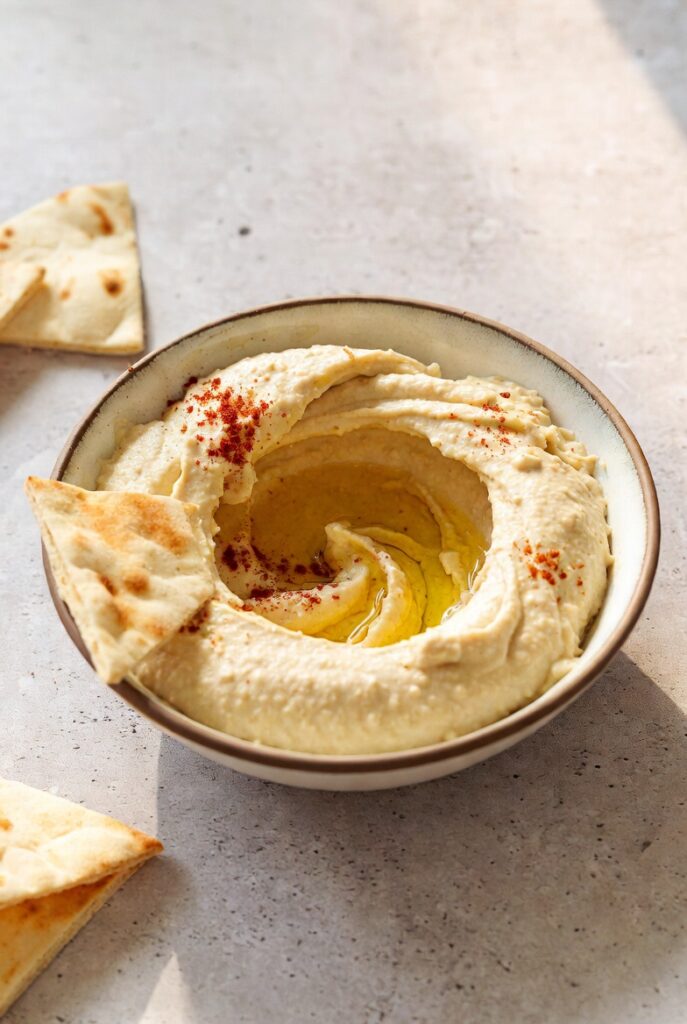
Step 6: The “Vortex” Presentation
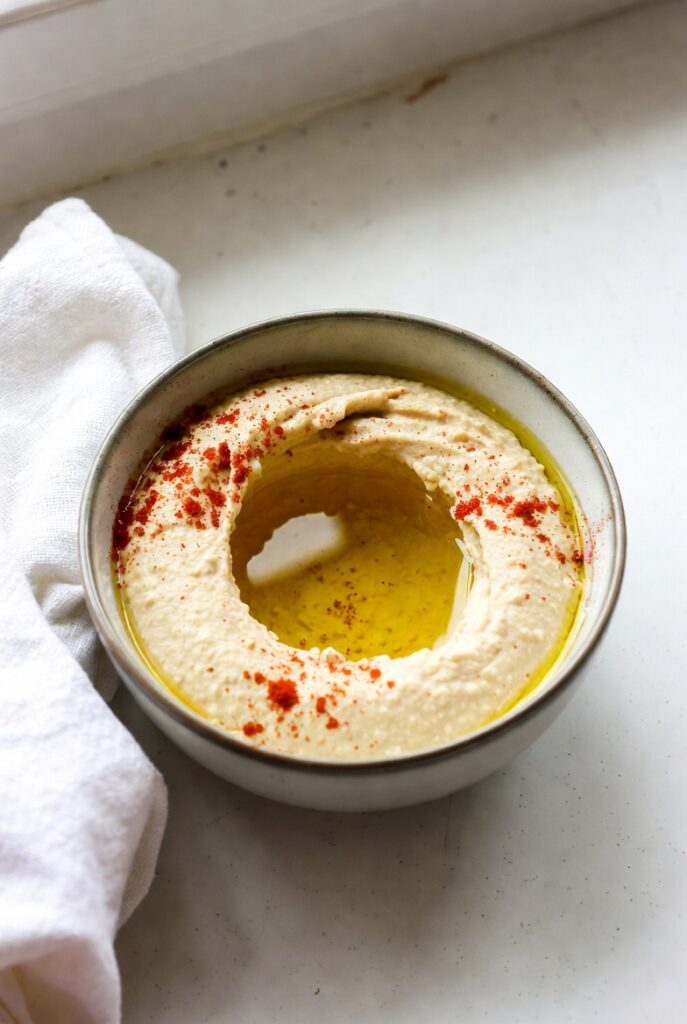
Transfer the hummus to a shallow bowl. Use the back of a spoon to create a “Vortex” or “Swirl.” This isn’t just for aesthetics; the “Valleys” in the hummus act as reservoirs for the olive oil and spices.
9. Satiety and the “Volume-to-Density” Ratio
Homemade hummus provides “High-Resolution Satiety.” Because it is so rich in fiber and protein, it triggers the “Stretch Receptors” in the stomach while simultaneously signaling the brain via the “Leptin Response.”
A 100-calorie serving of hummus is significantly more satiating than 100 calories of crackers or chips. This makes it an “Elite-Tier” weight management tool. It allows for “Mindful Grazing” that actually results in a “Fullness Signal,” preventing the overconsumption often associated with social snacking.
10. The “Skins” Debate: Is it Worth the Labor?
If you seek the “Platinum Standard” of hummus—the kind served in the high-end huumusiyas of Tel Aviv—there is one extra step: Peeling the Chickpeas.
- The Method: Place the drained chickpeas in a bowl of hot water with 1 tsp of baking soda. Rub them vigorously between your hands. The skins will float to the top.
- The Result: Removing the skins removes the “Cellulose Grit.” It results in a hummus that is essentially a “Legume Pudding.”
- The Verdict: For a “15-minute Utility Meal,” skip it. For a “Dinner Party Masterpiece,” it is a 10-minute investment that yields a 200% increase in textural quality.
11. Customization: The “Modular” Add-ons
The “Master Draft” is a perfect canvas for “Nutritional Stacking”:
- The “Antioxidant” Pivot: Add 1/2 cup of roasted red peppers or a roasted beet for a “Vibrant Pigment” and increased polyphenols.
- The “Green” Fortification: Blend in a handful of fresh parsley and cilantro for a “Chlorophyll-Rich” Mediterranean twist.
- The “Umami” Spike: Top with sautéed mushrooms or spiced ground lamb for a “High-Protein” meal-in-a-bowl.
- The “Crunch” Factor: Always garnish with whole chickpeas, toasted pine nuts, or a heavy dusting of Sumac and Za’atar.
12. Storage and the “Maturation of Flavor”
- Refrigeration: Store in an airtight container for up to 5 days.
- The “Tightening” Effect: Hummus will thicken in the fridge as the starches “set.” When ready to eat, stir in a teaspoon of warm water to restore the “Velvet Viscosity.”
- Avoid Freezing: Freezing destroys the “Lipid-Water Emulsion,” resulting in a grainy, separated texture once thawed.
13. Frequently Asked Questions (FAQ)
Q: Can I use dried beans? A: Affirmative. If you have the time, dried beans soaked with baking soda and overcooked until they are “Mushy” will produce a superior hummus. However, for “Maximum Utility,” high-quality canned beans are 90% as effective.
Q: Why is my hummus bitter? A: This usually comes from low-quality tahini or over-processing the garlic. Stick to the “Lemon Soak” for the garlic and buy “Hulled” tahini.
Q: Is olive oil inside the hummus a mistake? A: In traditional circles, yes. Olive oil is a topping. Blending it can create a “Heavy” mouthfeel and may turn the dip slightly bitter due to the high-speed blades breaking down the oil’s polyphenols.
14. Nutritional Information
(Per serving – approx. 1/4 cup)
| Nutrient | Amount |
| Calories | 160 kcal |
| Protein | 6g |
| Total Fat | 10g |
| Net Carbs | 12g |
| Fiber | 4g |
| Iron | 10% DV |
15. Summary: The Master Draft of Pantry Sovereignty
The Easiest Homemade Hummus is more than a recipe; it is a “System of Self-Sufficiency.” It proves that the most luxurious textures in the culinary world do not require expensive equipment or rare ingredients—they require an understanding of “Emulsion Mechanics.”
By mastering the “Tahini-Water Emulsion” and the “Ice-Water Protocol,” you are reclaiming your pantry from the world of processed preservatives. You are delivering a dish that is biologically dense, historically significant, and sensorially perfect. It is the ultimate fuel for a high-performance life, delivered one “Velvet Scoop” at a time.