1. Introduction: The Architecture of the “Sticky-Tender” Paradox
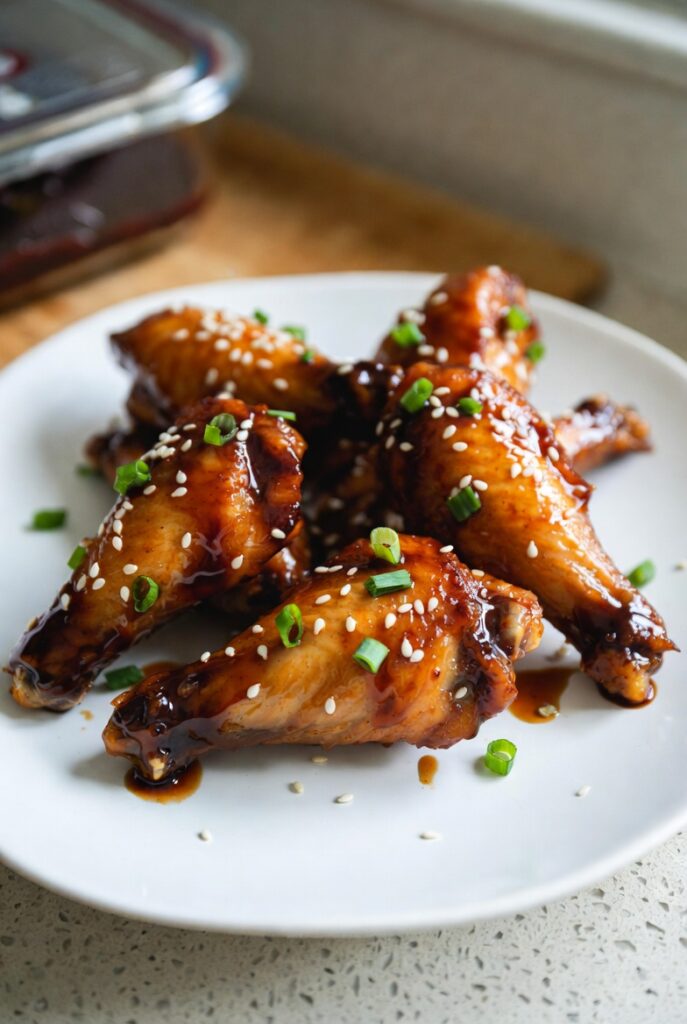
In the competitive landscape of “Social Gastronomy,” the Crockpot Teriyaki Chicken Wing represents a masterful “Structural Paradox.” Traditional wings are defined by their “Shatter-Crisp” skin, achieved through high-intensity frying. However, the slow-cooker iteration rejects this dry-heat tradition in favor of “Proteinic Braising.” By subjecting the wing to low-intensity, long-form conduction, we transform the connective tissues—specifically the collagen—into gelatin.
The brilliance of this dish lies in the “Viscosity-Infusion Loop.” As the chicken cooks, it releases natural juices that mingle with the soy-based teriyaki glaze. Through a controlled reduction phase, this liquid transforms into a “High-Gloss Lacquer” that doesn’t just sit on the surface but penetrates the meat fibers. For the modern host, the high-performance professional, or the “Saturday Socialite,” this is the “Platinum Standard” of utility: it is a “Set-and-Forget” operation that delivers a level of “Umami Density” that fried wings simply cannot match. It is a dish that respects the nostalgia of the sports bar while offering a “Gourmet Draft” optimized for effortless entertaining.
2. The Science of the “Collagen-to-Gelatin” Conversion
To master Crockpot Teriyaki Chicken Wings, one must understand the molecular biology of the wing. Chicken wings are high in connective tissue. At room temperature, this tissue is tough and “rubbery.” However, when held at a consistent internal temperature of approximately $71^\circ C$ to $82^\circ C$ ($160^\circ F$ to $180^\circ F$)—the “Sweet Spot” of a slow cooker—a chemical metamorphosis occurs.
The triple-helix structure of the collagen protein begins to unwind, a process known as “Denaturation.” As it unwinds, it dissolves into Gelatin. This gelatin is what gives slow-cooked wings their “Fall-off-the-Bone” profile and their “Silky Mouthfeel.” Furthermore, because gelatin is a natural thickener, it integrates with the sugars in the teriyaki sauce to create a “Glistening Emulsion” that adheres to the meat with superior “Shear Strength.” This is “Biological Engineering” disguised as comfort food.
3. Recipe Overview: The Master Blueprint
- Cuisine Type: Asian-Americana Fusion / Social Utility
- Difficulty Level: Very Easy (Order-of-operations focus)
- Total Preparation Time: 15 Minutes (Includes browning phase)
- Total Cooking Time: 3 Hours (High) or 5 Hours (Low)
- Total Time: ~4 to 6 Hours
- Dietary Classifications: High-Protein. (Can be made GF with Tamari).
- Yield: Serves 6 to 8 (Approx. 3 lbs of wings)
4. Equipment and Tools: The Essentials of “Surface Tension”
- 6-Quart Slow Cooker: A larger vessel is preferred here to allow for “Maximum Surface Area” exposure to the sauce.
- Large Baking Sheet & Wire Rack: For the “Maillard Finish” (Step 6).
- Small Saucepan: For the “Glaze Reduction” phase.
- Tongs: For the “Delicate Transfer”—slow-cooked wings are structurally fragile.
5. Ingredients Section: Sourcing for the “Sugar-Acid-Salt” Trinity
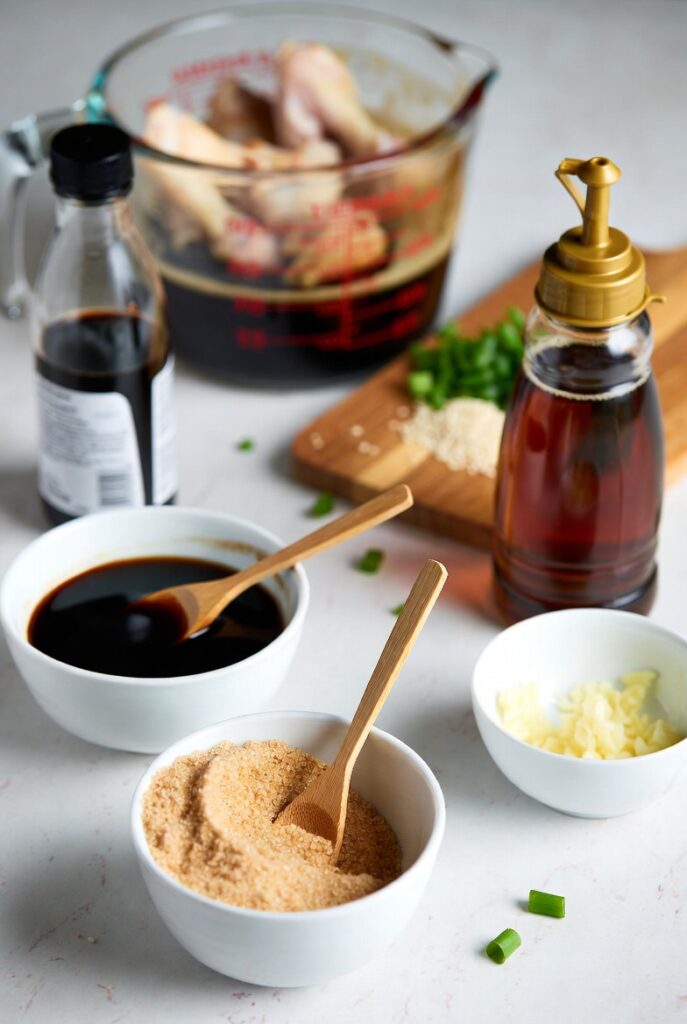
In a sauce-driven dish, the “Integrity” of the ferment and the “Aromatic Peak” of the aromatics determine the final quality.
The Protein Anchor
- Chicken Wings (Party Style): 3 lbs. Ensure they are “Split” (drums and flats) for the best “Sauce-to-Meat” ratio.
- Cornstarch: 2 tbsp. (Used for the “Velvet Coating”).
The “Aromatic Engine” (The Sauce)
- Soy Sauce: 1 cup. (The “Saline Base”). Use “Low Sodium” to control the salt profile.
- Honey or Brown Sugar: 3/4 cup. (The “Glucose Component” for the sticky finish).
- Rice Vinegar: 1/4 cup. (The “Acidic Spike” to cut the fat).
- Fresh Ginger: 2 tbsp, grated. (The “Thermal High-Note”).
- Garlic: 4 cloves, minced.
- Toasted Sesame Oil: 1 tbsp. (The “Lipid Finish”).
The “Master Draft” Garnishes
- Toasted Sesame Seeds: For “Textural Contrast.”
- Green Onions: Sliced on the bias for “Vibrant Freshness.”
6. The “Searing-Inertia” Protocol
The most common failure in Crockpot wings is “Pale, Soggy Skin.” While the slow cooker excels at “Internal Tenderness,” it cannot facilitate the Maillard Reaction (browning). To achieve a “Master Draft” result, you must utilize the “Searing-Inertia Protocol.”
There are two schools of thought: Pre-Sear or Post-Broil. For the slow-cooker method, the “Post-Broil” is the “Elite” choice. By cooking the wings in the sauce first, you infuse them with flavor. Then, by transferring them to a high-heat broiler for 3–5 minutes at the very end, you “Shock” the sugars in the sauce, causing them to caramelize and “set” into a crispy, charred lacquer. This gives you the “Best of Both Worlds”: the interior texture of a braise with the exterior aesthetic of a grill.
7. Deep Dive: The Bioavailability of Gingerol
Why is Teriyaki Chicken more than just a sweet-and-savory indulgence? It centers on the “Gingerol Infusion.” Fresh ginger contains gingerol, a bioactive compound with potent anti-inflammatory and antioxidant effects.
In a slow-cooker environment, the low, steady heat allows the gingerol to infuse deeply into the meat tissues. When combined with the Amino Acids from the fermented soy sauce and the Collagen from the wings, it creates a “Nutritional Matrix” that supports joint health and digestion. This is “Gastronomic Synergy”—utilizing traditional flavor pairings to maximize the biological utility of the meal.
8. Step-by-Step Instructions: The Master Blueprint
Step 1: The “Velvet” Prep
Pat the chicken wings “Bone-Dry” with paper towels. Toss them in a bowl with the 2 tablespoons of cornstarch. This “Micro-Coating” acts as a “Structural Buffer,” helping the sauce adhere to the skin during the long cook time.
Step 2: The Sauce Construction
In a medium bowl, whisk together the soy sauce, honey, rice vinegar, ginger, garlic, and sesame oil. This is your “Emulsion Base.”
Step 3: The Slow-Cooker Load
Place the wings into the slow cooker. Pour the sauce over the wings and toss until every wing is “Aromatically Encapsulated.”
Step 4: The Thermal Cycle
Cover and cook on LOW for 4 to 5 hours or HIGH for 2.5 to 3 hours.
- The “Pro” Choice: Cook on LOW. This prevents the delicate wing tips from overcooking and ensures the most “Glistening” gelatin conversion.
Step 5: The “Liquid Extraction”
Once the timer expires, use tongs to carefully remove the wings and place them on a wire rack set over a baking sheet.
Do not discard the liquid. Pour the remaining slow-cooker liquid into a saucepan.
Step 6: The “Glaze Reduction”
Bring the sauce to a boil on the stovetop. Simmer for 8–10 minutes until it reduces by half and achieves a “Nappe Consistency” (it should coat the back of a spoon).
Step 7: The “Maillard Finish”
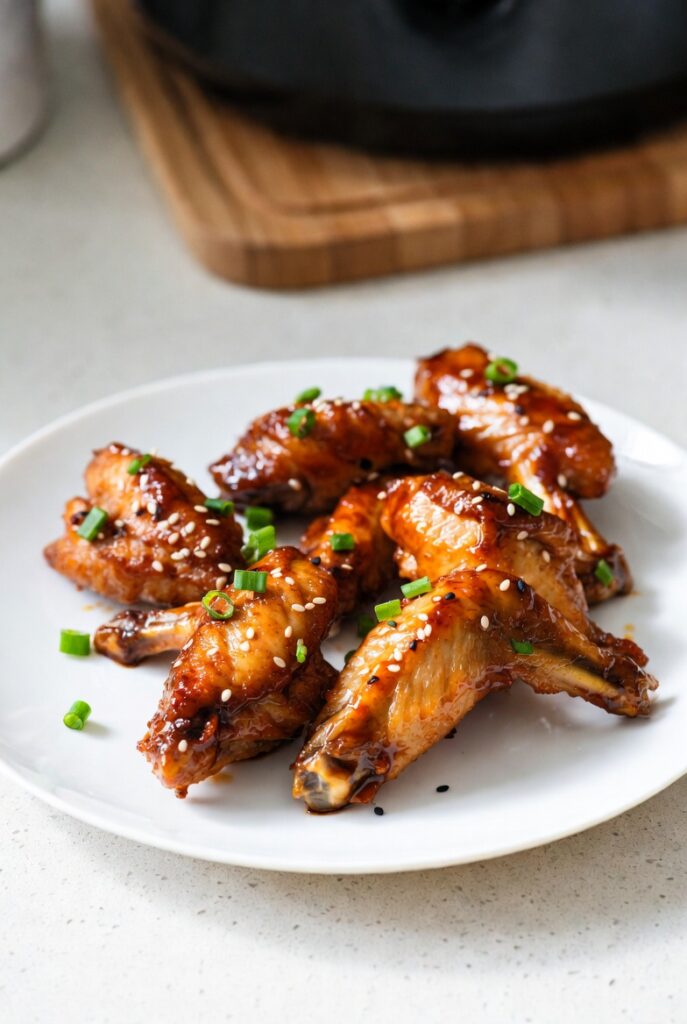
Brush the reduced glaze generously onto the wings. Place the baking sheet under a preheated broiler for 3 to 5 minutes. Watch closely! The sugars will transition from “Bubble” to “Char” very quickly. You are looking for “Deep Mahogany” spots.
Step 8: The Final Polish
Remove from the oven, brush with one final layer of the glaze, and garnish with sesame seeds and green onions.
9. Satiety and the “Protein-Umami” Peak
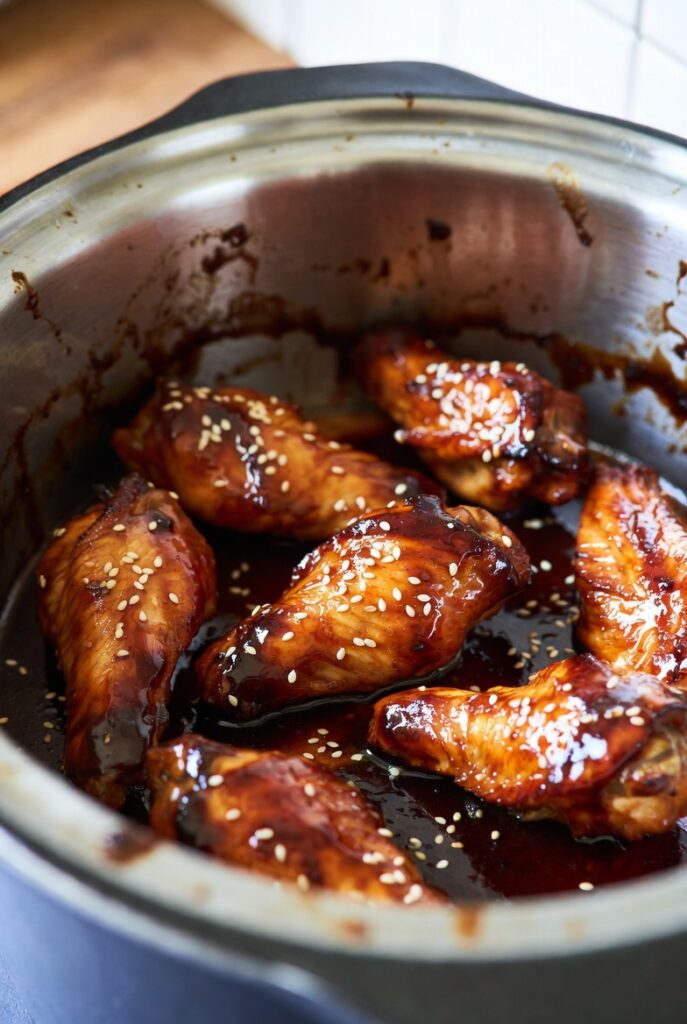
The Crockpot Teriyaki Wing is a “High-Satiety” powerhouse. Beef or pork can be heavy, but chicken wings provide a “High-Resolution” protein experience. The combination of Glutamates (from the soy sauce) and Glycine (from the dissolved collagen) triggers the “Vagus Nerve,” signaling a state of “Nutritional Completion” to the brain.
Furthermore, the “Tactile Engagement” of eating wings—the process of navigating the bone—slows down the rate of consumption. This “Slow-Food” mechanic allows the body’s Leptin Response to catch up with the intake, preventing the over-consumption common with “Hand-to-Mouth” snacks like chips. It is a “Tactical” choice for the health-conscious entertainer.
10. Modular Variations: Customizing the “Draft”
- The “Tokyo Drift” (Spicy): Add 2 tbsp of Sriracha or 1 tbsp of Gochujang to the sauce base for a “Capsaicin Kick.”
- The “Tropical” Pivot: Replace the honey with Pineapple Juice and add diced pineapple to the slow cooker for a “Pacific Rim” profile.
- The “Low-Glycemic” Shift: Use Liquid Aminos instead of soy sauce and Monk Fruit Sweetener instead of honey to reduce the insulin impact.
11. Storage and “Sauce Maturation”
- Refrigeration: These wings are an “Elite” leftover. As they cool, the gelatin “sets,” locking the flavor into the meat. They store perfectly for up to 3 days.
- The “Reheat” Protocol: To maintain the “Master Draft” quality, do not use the microwave. Instead, reheat in a $180^\circ C$ ($350^\circ F$) oven for 10 minutes. This “Re-Crisps” the skin while maintaining the “Internal Moisture.”
- Freezing: The sauce can be frozen, but the wings lose their “Structural Integrity” once frozen and thawed. Consumption within the 72-hour window is recommended.
12. Frequently Asked Questions (FAQ)
Q: My sauce is too thin. What happened?
A: Chicken wings release a significant amount of water during the slow-cooking process. If you skip the “Stovetop Reduction” (Step 6), the sauce will always be too thin. Evaporation is the key to “Gloss.”
Q: Can I use frozen wings?
A: Negative. Putting frozen meat in a slow cooker is a food safety risk, as it keeps the chicken in the “Danger Zone” ($4^\circ C$ to $60^\circ C$) for too long. Always thaw your wings completely before starting the “Thermal Cycle.”
Q: Why is the skin rubbery?
A: Rubbery skin is a result of “Sub-Optimal Heat.” Without the “Maillard Finish” (Step 7) under the broiler, the skin will remain in a “Poached” state. The broiler is the “Mechanical Necessity” for texture.
13. Nutritional Information
(Per serving – approx. 5 wings)
| Nutrient | Amount |
| Calories | 380 kcal |
| Protein | 28g |
| Total Fat | 18g |
| Net Carbs | 14g |
| Iron | 12% DV |
14. Summary: The Master Draft of Social Utility
The Crockpot Teriyaki Chicken Wing is more than a recipe; it is a “System of Satisfaction.” It proves that the most “Glistening” and “Tender” results in the culinary world do not require a deep fryer or constant supervision—they require an understanding of “Gelatin Conversion” and “Gloss Dynamics.”
By mastering the “Searing-Inertia Protocol” and the “Glaze Reduction,” you are elevating a casual snack into a “Gourmet Standard.” You are delivering a dish that is biologically dense, culturally nostalgic, and sensorially perfect. It is the ultimate fuel for a high-performance social life, delivered one “Sticky, Mahogany-Glazed” bite at a time.