1. Introduction: The Architecture of “Handheld Hors d’Oeuvres”
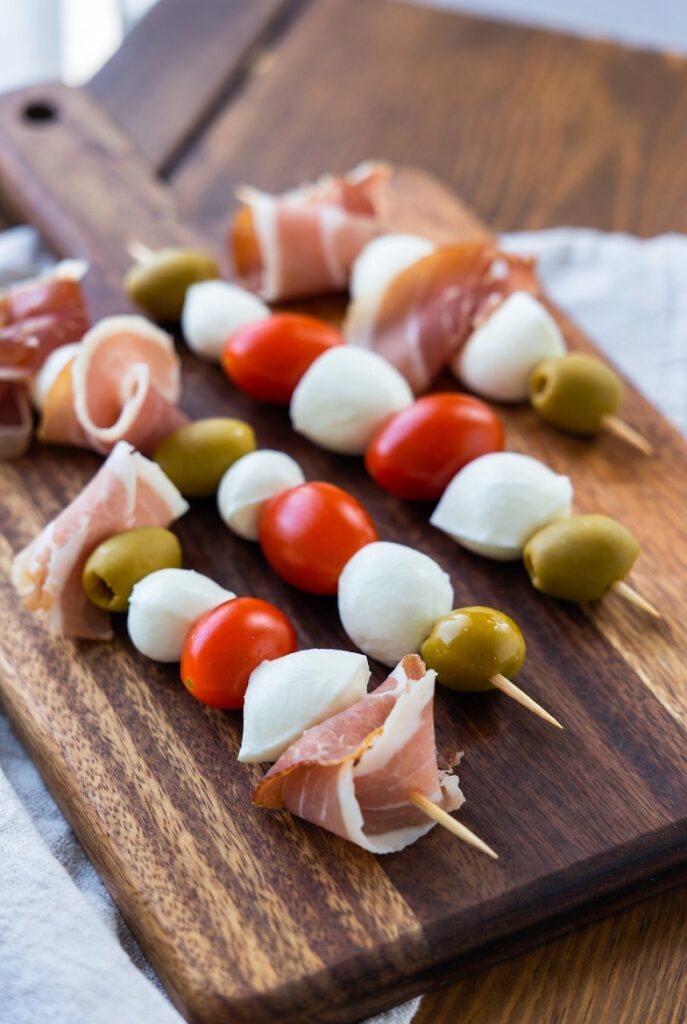
In the sophisticated taxonomy of modern Mediterranean gastronomy, the Antipasto Skewer represents a landmark study in “Mobile Flavor Density.” Traditionally, an antipasto platter (literally “before the meal”) is a sprawling landscape of cured meats, aged cheeses, and vinegar-brightened vegetables. However, the modern “Master Draft” of this concept involves a radical “Spatial Compression.” By migrating these elements onto a bamboo “Structural Axis,” we achieve a “Synchronized Palate Payload.”
This document serves as the “Constitutional Blueprint” for skewer engineering. We move beyond the rudimentary “olives and cheese” logic and examine the mechanics of “Vertical Flavor Sequencing.” By utilizing a specific order of ingredient placement, we ensure that every bite delivers a “High-Resolution” contrast of lipids, acids, and proteins. For the high-performance host, the wedding planner, or the “Zero-Friction” entertainer, this is the “Platinum Standard” of culinary utility: it provides the elegance of a curated meat board with the “Portable Utility” required for a standing reception.
2. The Science of “Organoleptic Stacking”
To master the Antipasto Skewer, one must understand the behavior of Flavor Migration in a Vertical Stack.
- The Capillary Effect: When an olive sits atop a piece of mozzarella, the residual brine (acid) naturally migrates downward, “Pickling” the cheese surface.
- The Lipid-Buffer: By placing a cured meat (like Salami) between two neutral elements, you create a “Fat-Reservoir” that enriches the leaner ingredients through simple contact.
- The Order of Operations: The human palate processes flavor in a specific sequence. By placing the most “Acidic” element at the top and the “Densest Protein” at the base, you create a “Sensory Arc” that keeps the diner engaged from the first visual contact to the final swallow.
4. The Blueprint Overview: Technical Specifications
- Cuisine Type: Italian-American Fusion / Performance Catering
- Difficulty Level: Easy (Focus on “Visual Symmetry”)
- Total Preparation Time: 30–45 Minutes
- Total Time: 45 Minutes
- Dietary Classifications: Gluten-Free, Low-Carb, Keto-Friendly.
- Yield: 24–30 Skewers
4. Equipment and Tools: The Essentials of “Structural Integrity”
- 4-inch or 6-inch Bamboo Skewers: The Structural Axis. Knotted bamboo “Cocktail Picks” are the “Gold Standard” for their aesthetic “Visual Gravity” and ergonomic grip.
- Stainless Steel Colander: For the “Triple-Rinse” of brined vegetables to prevent “Brine-Saturation” of the cheese.
- Large Serving Slate or Marble Slab: To maintain a “Cool Thermal Mass” for the meats and cheeses during service.
5. Ingredients Section: Sourcing for “Chromatographic” Brilliance
In a dish defined by its “Visual Spectrum,” the “Color-Vibrancy” of the peppers and the “Sheen” of the olives dictate the final “Sensory Resolution.”
The “Protein Anchors” (Cured Meats)
- Genova Salami or Soppressata: 6 oz, thinly sliced. (The “Salty-Lipid” driver).
- Prosciutto di Parma: 4 oz. (The “Floral-Salt” high-note).
- The Master Hack: Fold prosciutto into a “Ribbon-Pattern” to increase the “Textural Volume” on the skewer.
The “Lipid Core” (The Cheeses)
- Fresh Mozzarella Pearls (Ciliegine): 8 oz. (The “Creamy-Neutralizer”).
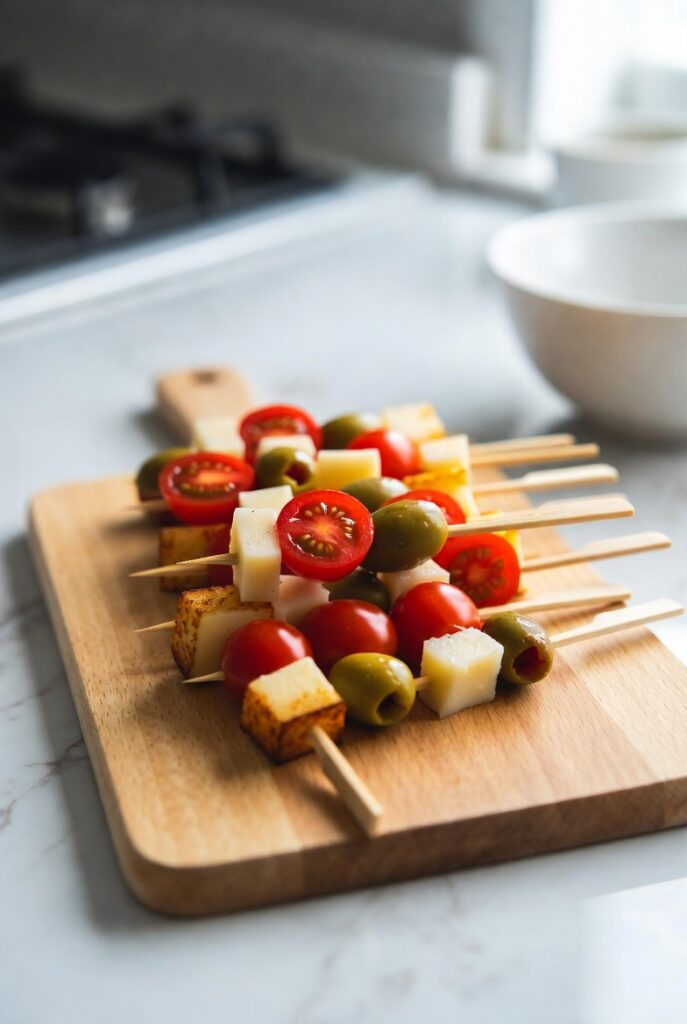
- Aged Provolone or Sharp White Cheddar: Cubed into 1/2-inch units. (For “Structural Hardness”).
The “Acidic Resolution” (The Vegetables)
- Marinated Artichoke Hearts: 1 jar, quartered. (The “Vinegar-Fibre”).
- Pitted Kalamata and Castelvetrano Olives: (The “Brine-Dynamic”).
- Pepperoncini or Roasted Red Peppers: (The “Capsaicin-Brightener”).
The “Jade” Finish
- Fresh Basil Leaves: Large, vibrant leaves. (The “Chlorophyll-Aromatic”).
- Balsamic Glaze (Reduction): For the “Final Viscosity” drizzle.
6. The “Symmetry-Sequencing” Protocol: Mastering the Stack
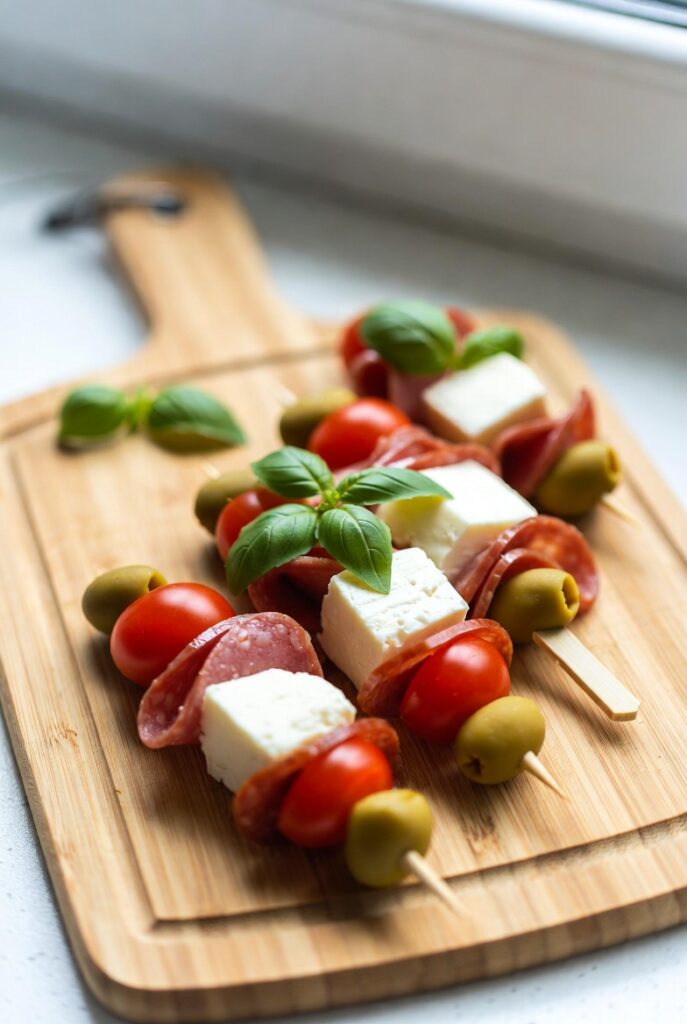
The primary failure point of an antipasto skewer is “Structural Collapse” or “Visual Chaos.” To achieve a “Master-Tier” result, you must utilize the “Binary-Contrast Protocol.”
- The Base (The Anchor): Always start with the densest, most “Friction-Heavy” ingredient—usually a cube of provolone or a folded piece of salami. This prevents the other ingredients from sliding off the bottom.
- The Middle (The Buffer): Place the “Wet” ingredients (olives/peppers) in the center, flanked by “Dry” ingredients (cheese/meat). This prevents the meat from becoming “Soggy.”
- The Crown (The Visual): End with a folded basil leaf and a mozzarella pearl. This creates a “Top-Heavy” aesthetic that draws the eye upward.
7. Deep Dive: The “Osmotic Exchange” of Marinades
Why do we use “Marinated” artichokes but “Fresh” mozzarella? It centers on “Osmotic Balance.”
If every ingredient is marinated, the skewer becomes a “Salt-Bomb,” overwhelming the palate. By pairing a “High-Acid” marinated artichoke with a “Neutral-Cream” mozzarella pearl, you create a “Chemical Balance” on the skewer. As they sit together, a microscopic amount of the artichoke’s herb-infused oil will migrate to the cheese, “Seasoning” it without saturating it. This is “Passive Flavoring” in a confined space.
8. Step-by-Step Instructions: The Master Execution
Step 1: The “De-Brining” Phase
Drain the olives, artichokes, and peppers. Pat them dry with paper towels.
- The Logic: Excess moisture is the “Enemy of the Skewer.” A “Dripping” skewer is a logistical failure in a social setting.
Step 2: The “Meat-Ribboning” Technique
Fold your salami slices into “Fourths” (triangles) and your prosciutto into a “Z-Fold” (accordion). This creates “Aerated Volume,” making the meat feel lighter on the palate while looking more substantial.
Step 3: The “Axis-Loading” Sequence
Follow the Symmetry-Sequencing Protocol (Section 6):
- Folded Salami (The Base).
- Green Castelvetrano Olive.
- Folded Basil Leaf.
- Fresh Mozzarella Pearl.
- Quartered Artichoke Heart.
- Black Kalamata Olive (The Crown).
Step 4: The “Alignment” Check
Ensure all ingredients are “Centered” on the bamboo axis. An “Off-Center” skewer creates “Rotational Instability,” making it difficult for the diner to eat gracefully.
Step 5: The “Viscosity-Drizzle” (Optional)
Just before service, arrange the skewers on your slate. Use a “High-Velocity” wrist motion to drizzle Balsamic Glaze in a “Diagonal-Grid” pattern across the tray.
9. Satiety and the “Salt-Acid-Fat” Equilibrium
Antipasto Skewers provide a “High-Resolution Satiety” profile:
- The Immediate Satiety: The “Lipid-Heavy” salami and cheese trigger the “Vagus Nerve,” signaling fullness quickly.
- The Palate Cleanser: The vinegar in the artichokes and the “Menthol-Notes” in the basil act as “Reset Buttons,” preventing “Palate Fatigue.”
- The Keto Advantage: This dish is a “Low-Glycemic Powerhouse,” providing stable energy without the “Glucose-Spike” associated with bread-based appetizers.
10. Modular Customization: The “Flavor Pivots”
- The “Tuscan” Draft: Add a “Sun-Dried Tomato” for a “Deep-Umami” resolution.
- The “Aegean” Shift: Replace mozzarella with Feta Cubes and salami with Bresaola (dried beef) for a leaner, sharper profile.
- The “Garden” Standard: Replace all meat with Marinated Mushrooms and Zucchini Ribbons for a “Vegetarian-Platinum” utility.
11. Storage and “Thermal Integrity”
- Refrigeration: Store in a sealed container for up to 24 hours.
- The “Sweat” Factor: Cheese will “Sweat” (release moisture) if moved from a cold fridge to a hot room too quickly.
- The Recovery Method: If the skewers have been refrigerated, let them sit at room temperature for 15 minutes before serving. This “Tempering” allows the fats in the salami to soften, unlocking the full “Aromatic Bouquet.”
12. Frequently Asked Questions (FAQ)
Q: Why do my mozzarella pearls look “Shriveled”?
A: This is due to “Dehydration.” If left uncovered in the fridge, the air-circulator will pull moisture from the cheese. Always store in a sealed environment until the “Final Drizzle.”
Q: Can I use toothpicks?
A: Negative. A standard toothpick lacks the “Tensile Strength” and length required for a multi-ingredient antipasto stack. It also lacks the “Visual Gravity” of a bamboo knot.
Q: Should I marinate the skewers after they are made?
A: No. This will cause the meat to “Cure” further, becoming overly salty, and will turn the fresh basil “Black” through acid-oxidation.
13. Nutritional Information
(Per 1 Large Skewer)
| Nutrient | Amount |
| Calories | 85 kcal |
| Protein | 5g |
| Total Fat | 7g |
| Net Carbs | 1.5g |
| Sodium | 210mg |
14. The “Visual Gravity” of Presentation
In the 2026 culinary landscape, the “Aesthetic Payload” is as critical as the flavor.
- The Radial Pattern: Arrange the skewers in a “Circle” with the knots facing outward.
- The Color-Gradient: Ensure the “Green” basil and “Red” peppers are distributed evenly to prevent “Monochromatic Zones.”
- The Texture-Contrast: The matte finish of the cheese against the glistening oil of the olives creates a “Multi-Dimensional” visual field.
15. Conclusion: The Master Draft of Mediterranean Utility
The Antipasto Skewer protocol is more than a recipe; it is a “Vessel for Intentional Synergy.” It proves that “Gourmet Results” can be achieved through the mastery of “Vertical Sequencing” and “Acid-Lipid Balancing.” By respecting the “De-Brining Phase” and the “Symmetry-Sequencing Protocol,” you are delivering an appetizer that is visually “Jade-and-Ruby,” nutritionally dense, and sensorially perfect.
It is the ultimate “Social Anchor”—a “Salty-and-Bright” testament to the power of high-quality ingredients, thoughtfully aligned on a single axis.