1. Introduction: The Deconstruction of the Lower East Side
In the world of “Gourmet Deconstruction,” the Hot & Cheesy Reuben Dip represents the ultimate “Structural Shift.” It takes the complex, layered architecture of the classic New York deli sandwich—the brine-cured beef, the fermented cabbage, and the nutty elasticity of Swiss cheese—and re-engineers it into a communal, “High-Density” format. By removing the “Bread Barrier” of a traditional sandwich, we isolate the most potent flavor compounds into a molten, “Single-Vessel” assembly.
The brilliance of this dip lies in its “Flavor Equilibrium.” It successfully balances the aggressive acidity of sauerkraut with the rich, high-lipid base of cream cheese and Swiss, all while being punctuated by the salty umami of corned beef. For the modern host, this is a “Signature Draft” that offers a “Zero-Friction” way to serve a sophisticated deli classic to a crowd. It is a dish that respects the heritage of the Reuben while providing the “High-Utility” ease of a baked appetizer.
2. The Science of the “Fermentation-Lipid Balance”
To master the Reuben Dip, one must understand the chemical interaction between the Lactic Acid in sauerkraut and the Dairy Fats in the cheese matrix. Sauerkraut is a fermented product that contains high levels of acidity and probiotics. If not managed correctly, this acid can “curdle” the dairy or cause the dip to become watery.
The secret to a professional-grade result is the “De-Brining Protocol.” By thoroughly rinsing and squeezing the sauerkraut until it is “bone-dry,” you remove the excess brine while retaining the fermented flavor. This allows the cabbage to absorb the cream cheese and dressing, ensuring a “Uniform Emulsion.”
Furthermore, we utilize Swiss or Gruyère for the “Cheesy Crown.” These are “Alpine-Style” cheeses with high melting points and a nutty flavor profile that complements the rye aromatics. When combined with the “Russian Dressing” base—a combination of mayonnaise, chili sauce, and horseradish—you create a complex “flavor loop” that hits every taste bud: salty, sweet, sour, and spicy.
3. Recipe Overview: The Master Blueprint
- Cuisine Type: American Deli Fusion / Gourmet Appetizer
- Difficulty Level: Very Easy (Assembly-focused)
- Total Preparation Time: 15 Minutes
- Total Cooking Time: 20 Minutes
- Total Time: 35 Minutes
- Dietary Classifications: High-Protein, Keto-friendly (when served with vegetables).
- Yield: Serves 8 to 12
4. Equipment and Tools: The Essentials of Heat Transfer
- 1.5-Quart Ceramic Baking Dish: Ceramic is the “Standard” for Reuben dip, providing the “Slow-Release” heat required to keep the Swiss cheese molten throughout a party.
- Large Stainless Steel Mixing Bowl: For the “Initial Emulsion”—ensuring the corned beef and sauerkraut are perfectly suspended in the dressing.
- Baking Sheet: Specifically for the Rye Toast Points. You need a wide surface area to achieve the “Max-Crisp” required to support the heavy dip.
- Cheesecloth or Fine Mesh Sieve: For the critical “Sauerkraut Compression” phase.
5. Ingredients Section: Sourcing for Complexity
In a dish defined by bold ingredients, the “Cure” of the beef and the “Crust” of the rye bread dictate the final quality.
The Protein & Fiber Core
- Corned Beef: 12 oz, finely chopped. Deli-sliced or home-cooked “Leftover” brisket is the “Elite Tier” choice.
- Sauerkraut: 1.5 cups. Look for “Refrigerated” sauerkraut (not canned) for superior texture and probiotic depth.
The Lipid Matrix
- Full-Fat Cream Cheese: 8 oz, softened. The “Structural Framework.”
- Swiss Cheese: 2 cups, freshly shredded. Provides the nutty “Stretch.”
- Russian Dressing: 1/2 cup (Mayonnaise, ketchup, horseradish, and Worcestershire sauce). This provides the “Tangy Engine.”
The “Aromatic Anchor”
- Caraway Seeds: 1/2 teaspoon (optional). If you love the flavor of rye but want to serve with crackers, adding seeds to the dip provides that “Deli-High-Note.”
- Fresh Chives: For the “High-Contrast” green garnish.
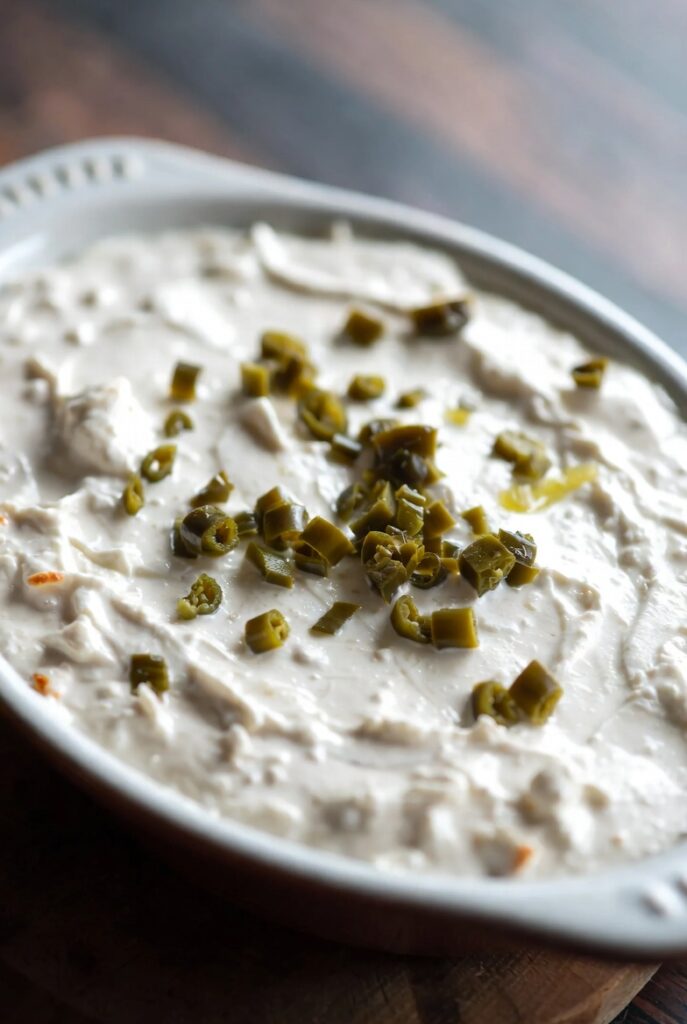
6. The “Rye Toast Point” Engineering
The most common failure in a Reuben dip experience isn’t the dip itself—it’s a “Failing Vessel.” A standard cracker will buckle under the weight of the dense corned beef. You need “Mechanical Advantage.”
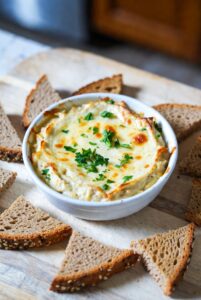
To achieve the “Master Draft” crunch, use a loaf of dark, seeded Rye bread. Brush each slice with melted butter and bake at $190^\circ C$ ($375^\circ F$) until they are “Shatter-Crisp.” By cutting them into “Points” (triangles), you create a sturdy, ergonomic tool designed for high-capacity scooping. The caraway seeds in the bread provide the essential “Aromatic Link” that completes the Reuben flavor profile.
7. Deep Dive: The Probiotic Profile of Sauerkraut
Why is the Reuben Dip a strategic choice for the “Gourmet Host”? It centers on the Functional Health of fermented cabbage. Sauerkraut is a concentrated source of $Lactobacillus$ and dietary fiber. While some of the probiotic benefits are reduced by high-heat baking, the fermented cabbage remains a powerful “Digestive Aid.”
The acidity in the sauerkraut helps stimulate the production of stomach acid, which in turn assists in the breakdown of the high-protein corned beef and high-lipid cheeses. This creates a “Metabolic Equilibrium,” making the dip surprisingly light on the digestive system despite its indulgent profile. It is “Functional Indulgence” at its finest.
8. Step-by-Step Instructions: The Master Blueprint
Step 1: The “Sauerkraut Compression”
Place your sauerkraut in a fine mesh sieve. Use your hands or a heavy spoon to press every drop of moisture out. This is the most critical step. Excess liquid will cause the dip to separate.
Step 2: Thermal Calibration
Preheat your oven to $190^\circ C$ (375°F). Lightly grease your ceramic dish with butter.
Step 3: The Emulsion Phase
In a large bowl, whisk the softened cream cheese and Russian dressing until smooth. Fold in 1 cup of the Swiss cheese, the chopped corned beef, and the “bone-dry” sauerkraut.
Step 4: The Strategic Spread
Transfer the mixture to your baking dish. Level the top with a spatula.
Step 5: The “Cheese Crown”
Top the dip with the remaining 1 cup of Swiss cheese. This creates the “Thermal Seal” that keeps the corned beef succulent during the bake.
Step 6: The High-Heat Bake
Roast for 20 minutes.
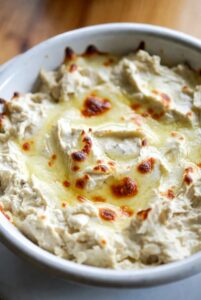
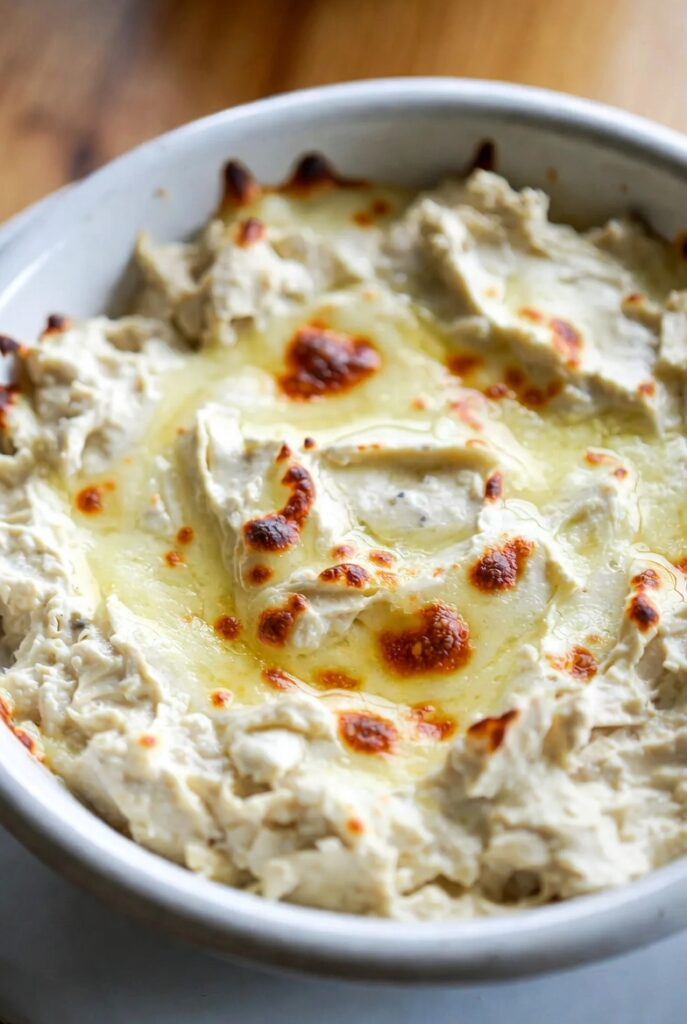
The Pro Move: Switch the oven to “Broil” for the final 60 seconds. You want the Swiss cheese to bubble and develop “Leopard Spotting” (small brown caramelized circles).
Step 7: The Final Garnish
Remove from the oven and let rest for 5 minutes. This allows the internal fats to “Tighten.” Garnish with fresh chives and serve alongside the hot Rye Toast Points.
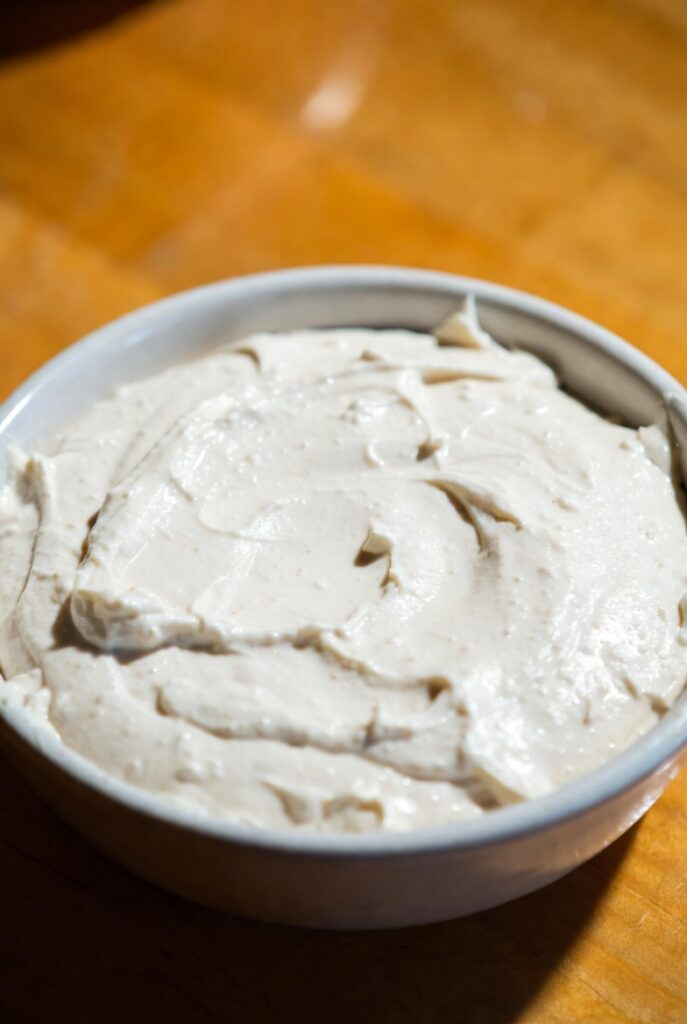
9. Modular Variations: Customizing the Deli Standard
- The “Rachel” Shift: Replace the corned beef with sliced turkey and use coleslaw (well-drained) instead of sauerkraut for a “Lighter” profile.
- The “Pastrami” Pivot: Use smoked pastrami and a dash of extra black pepper to mimic a “Katz-Style” sandwich.
- The “Inferno” Standard: Add 2 tablespoons of spicy brown mustard or extra horseradish to the emulsion for a “High-Voltage” kick.
10. Satiety and the “Salt-Acid-Fat” Loop
The Reuben Dip is engineered to satisfy the “Salt-Acid-Fat” loop. The brain is biologically wired to seek out foods that hit these three pillars simultaneously. The salt from the corned beef, the acid from the sauerkraut, and the fat from the Swiss cheese work in “Synergy” to create a high level of Sensory-Specific Satiety. This means guests will feel deeply satisfied after only a few bites, preventing the “unconscious grazing” often associated with lower-quality snacks.
11. Storage and Reheating: The Lipid Integrity
- Refrigeration: Store in an airtight container for up to 3 days. The flavors will actually “maturate” over 24 hours as the kraut and beef continue to infuse.
- The Reheat: To maintain the “Emulsion,” reheat in a $175^\circ C$ (350°F) oven for 10 minutes. Avoid the microwave if possible, as it can cause the Swiss cheese to become “rubbery.”
- The “Leftover” Hack: Use cold leftover dip as a spread for a “Gourmet Grilled Cheese” or as a stuffing for baked potatoes.
12. Frequently Asked Questions (FAQ)
Q: Can I use low-fat cream cheese?
A: You can, but the dip will be more prone to “weeping” (releasing liquid). For the best “Single-Vessel” consistency, full-fat is the “Standard.”
Q: Is the dip too salty?
A: Corned beef and sauerkraut are naturally high in sodium. To manage this, ensure you rinse the sauerkraut thoroughly before squeezing it dry. This removes excess salt.
Q: What if I don’t have Russian Dressing?
A: Thousand Island is a common substitute. To bring it closer to a “Deli Standard,” simply add a teaspoon of horseradish and a dash of Worcestershire sauce to the Thousand Island.
13. Nutritional Information
(Per serving – approx. 1/4 cup)
| Nutrient | Amount |
| Calories | 230 kcal |
| Protein | 14g |
| Total Fat | 18g |
| Net Carbs | 3g |
| B12 & Zinc | High |