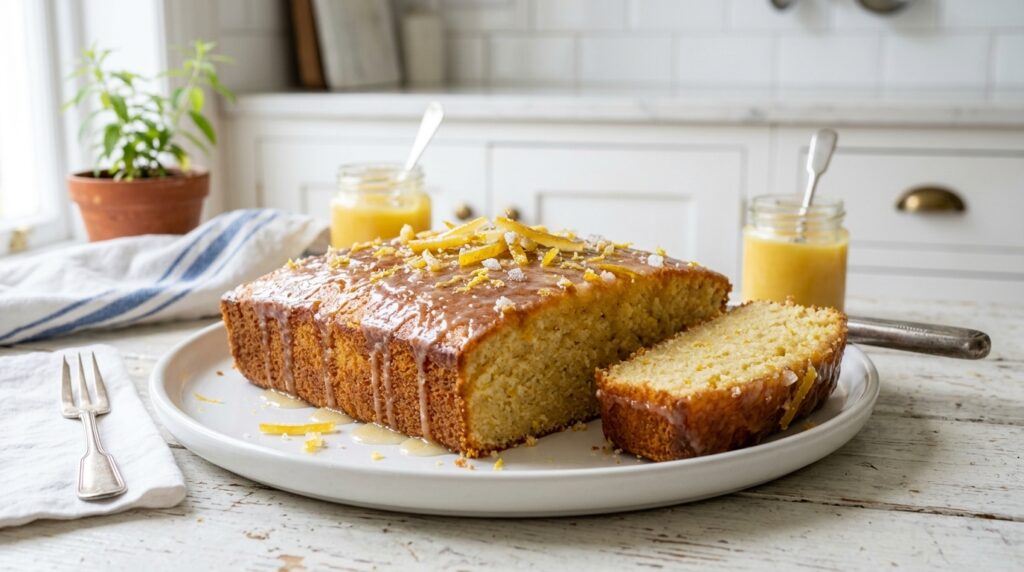
Lemon Drizzle Cake delivers tangy citrus flavor in a moist, golden sponge paired with a zesty glaze. This classic British dessert combines pillowy crumb with a glossy lemony drizzle that deepens the flavor. Best served warm with vibrant yellow glaze glistening evenly across the top.
| Prep Time | 20 minutes |
| Cook Time | 25-30 minutes |
| Total Time | 45 minutes |
| Servings | 9 slices |
| Difficulty | 2/5 (novice-friendly) |
| Cuisine | British Dessert |
Why This Recipe Works
The magic happens when lemon zest mingles with buttermilk in a sponge cake base. This combination creates a tender crumb that retains moisture while eliminating dry patches. The citrus glaze adds both visual appeal and concentrated flavor that amplifies in the oven’s residual heat.
Beloved in the UK since the 1940s rationing era, this cake balances acidity with richness. The buttermilk prevents overly sweet flavor, while the lemon glaze flows smoothly without masking the sponge’s subtle citrus notes. Unlike standard lemon cakes where the zest often disappears, this method ensures bright, detectable lemon character in each bite.
Ingredients
| Unsalted Butter | 125g | Softened to room temperature |
| Caster Sugar | 150g | For optimal lightness |
| Eggs | 2 large | Room temperature |
| Self-Raising Flour | 175g | Prevents dense texture |
| Buttermilk | 100ml | Available in grocery stores |
| Fine Baking Powder | 1 tsp | Ensures even rise |
| Lemon | 1 each | Use zest and juice |
| Caster Sugar (Drizzle) | 50g | Dissolves quickly |
Step-by-Step Instructions
Preparing the Batter
- Preheat oven to 180°C (350°F). Line 20cm square tin with parchment paper.
- Cream butter and caster sugar until light and fluffy.
- Add eggs one at a time, beating well between each addition.
- Gently fold in self-raising flour and baking powder using a spatula.
- Blend in buttermilk and excess of lemon zest (save some for glaze).
Baking and Cooling
- Pour batter into prepared tin. Bake 25-30 minutes until center springs back.
- Rest cake in tin for 5 minutes before transferring to cooling rack completely.
- Prepare glaze while cake cools – combine lemon juice, 50g sugar, and remaining zest.
- Drizzle glaze over warm cake, allowing excess to pool in center.
Chef Tips for Perfect Results
- Room Temperature Eggs: Warm eggs emulsify better with butter, creating air pockets for volume.
- Don’t Overmix: Mix wet and dry ingredients just until combined to maintain tenderness.
- Even Glaze Application: Work quickly to cover cake before it cools and glaze loses mobility.
- Test for Doneness: Insert thin knife into center – it should come out clean with no wet batter.
Common Mistakes to Avoid

- Underbaked Centers: Measure tin dimensions accurately. A 20cm tin ensures proper lift.
- Dry Cake: Use buttermilk vs regular milk – the acid prevents cake from over-drying.
- Broken Glaze: Sift sugar before dissolving to avoid lumps that cloud the glaze.
- Collapsed Structure: Avoid opening oven during first 20 minutes of baking to maintain leavening action.
Variations and Substitutions
| Unsalted Butter | Coconut Oil | Vegetarian-friendly; slight tropical flavor |
| Buttermilk | Plain Yogurt + 1 tsp vinegar | Requires 15-minute resting period |
| Gluten in Flour | Gluten-Free Blend | Add 1 tsp xanthan gum |
Serving Suggestions and Pairings
Presentation enhances experience: serve painted with additional glaze in the center using a piping bag or spoon. Contrast with blueberries or whipped cream. For informal occasions, pair with tea; formal settings demand a flute of champagne.
Storage and Reheating
| Room Temperature | 2 days | Keep in airtight container |
| Refrigeration | 5 days | Wrap in parchment then foil |
| Freezing | 2 months | Bake, freeze, then glaze before serving |
Nutritional Information
| Calories | 320kcal |
| Protein | 4g |
| Fat | 18g |
| Carbohydrates | 40g |
Frequently Asked Questions
Can I substitute applesauce for butter?
Replace 125g butter with 100g applesauce + 2 tbsp oil. Expect reduced richness and more compact crumbs.
How to tell if the cake is fully done?
Insert a small knife into center – it should emerge completely dry with no wet batter residues.
Why did my glaze seize and form lumps?
Sieve sugar before dissolving. Lumps form when sugar granules don’t fully granulate in the acidic lemon juice.
Can I prepare this cake ahead of time?
Bake and freeze without glaze up to 2 months. Thaw 24 hours before serving, then apply fresh glaze.
What occasions suit this cake?
Ideal for afternoon tea, noshing with coffee, or as a make-ahead dessert for family gatherings. The vibrant color enhances spring/summer celebrations.
Conclusion

Lemon Drizzle Cake elevates simple flour, butter, and citrus into a harmonious dessert. With precise technique and attention to glaze application, this cake delivers moist texture with burst of brightness. Perfect your batches to master this timeless British specialty. Slice with a warm knife for seamless presents and enjoy the signature tangy-sweet finish.