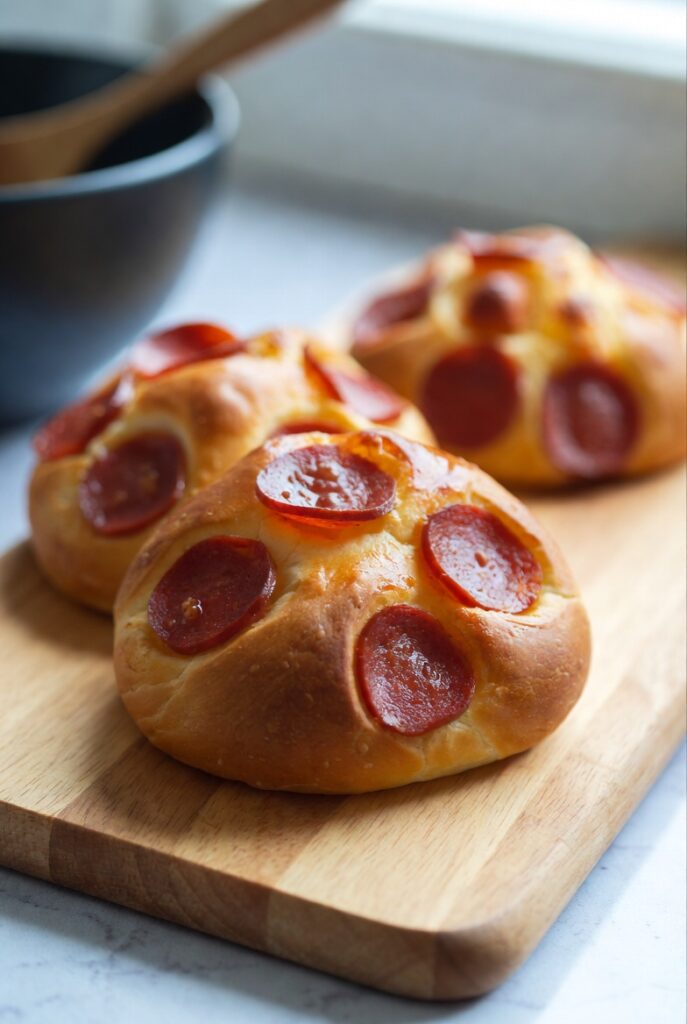
1. Introduction: The Architecture of the “Portable Coal-Miner’s Loaf”
In the specialized taxonomy of American regional gastronomy, the Pepperoni Roll represents a landmark study in “Lipid-Starch Migration.” Originating in the coal mines of West Virginia in the early 20th century, this dish was engineered for high-utility durability. It required no refrigeration and could be consumed with one hand in subterranean environments. However, the modern “Master Draft” of this recipe moves beyond mere survivalism and enters the realm of “High-Resolution Comfort Food.”
This document serves as the “Structural Manifesto” for creating the perfect roll. We move beyond the rudimentary “bread and meat” logic and examine the mechanics of “The Oil-Pocket Phenomenon.” By utilizing a specific “Encapsulation Technique,” we ensure that the spicy fats from the pepperoni permeate the dough from the inside out, creating a “Glistening-Amber” interior and a “Cloud-Soft” exterior. For the busy parent, the game-day host, or the culinary strategist, this is the “Platinum Standard” of savory baking: it delivers maximum “Umami-Density” with “Zero-Friction” preparation.
2. The Science of “Lipid Migration” and Crumb Structure
To master the Pepperoni Roll, one must understand the behavior of Saturated Fats under Thermal Stress.
- The Infusion Principle: As the oven temperature rises, the nitrates and spices within the pepperoni liquify. In a standard sandwich, this fat would simply drip away. In a roll, the dough acts as a “Biological Sponge.”
- The Crumb-Buffer: A dough with a high “Hydration-Level” is essential. If the dough is too dry, it becomes a “Dense Barrier.” If the dough is soft and airy, it develops a “Porous Matrix” that captures the orange pepperoni oil, creating a “Flavor-Zone” between the meat and the bread.
- The Result: You achieve a “Three-Tiered Texture”: a golden-brown crust, a soft-yeasty middle, and a spicy-moist core. This is “Intra-Molecular Flavoring” applied to dough.
3. The Blueprint Overview: Technical Specifications
- Cuisine Type: Appalachian-American / High-Utility Snack
- Difficulty Level: Easy (Focus on “Seal Integrity”)
- Total Preparation Time: 15 Minutes (plus 90 minutes rising time)
- Total Cooking Time: 18–20 Minutes
- Total Time: Approx. 2 Hours
- Dietary Classifications: High-Protein, High-Carbohydrate.
- Yield: 12 Large Rolls
4. Equipment and Tools: The Essentials of “Moisture Management”
- Large Baking Sheet: Preferably heavy-gauge aluminum for even “Bottom-Heat Conduction.”
- Parchment Paper or Silicone Mat: Non-Negotiable. The pepperoni oil will attempt to escape; parchment paper prevents the rolls from “Frying” in their own fat on the pan.
- Pastry Brush: For the “Lipid-Finish” (butter wash).
- Digital Scale: To ensure “Weight-Symmetry” across all 12 rolls for even baking.
5. Ingredients Section: Sourcing for “Spicy-Fat” Resolution
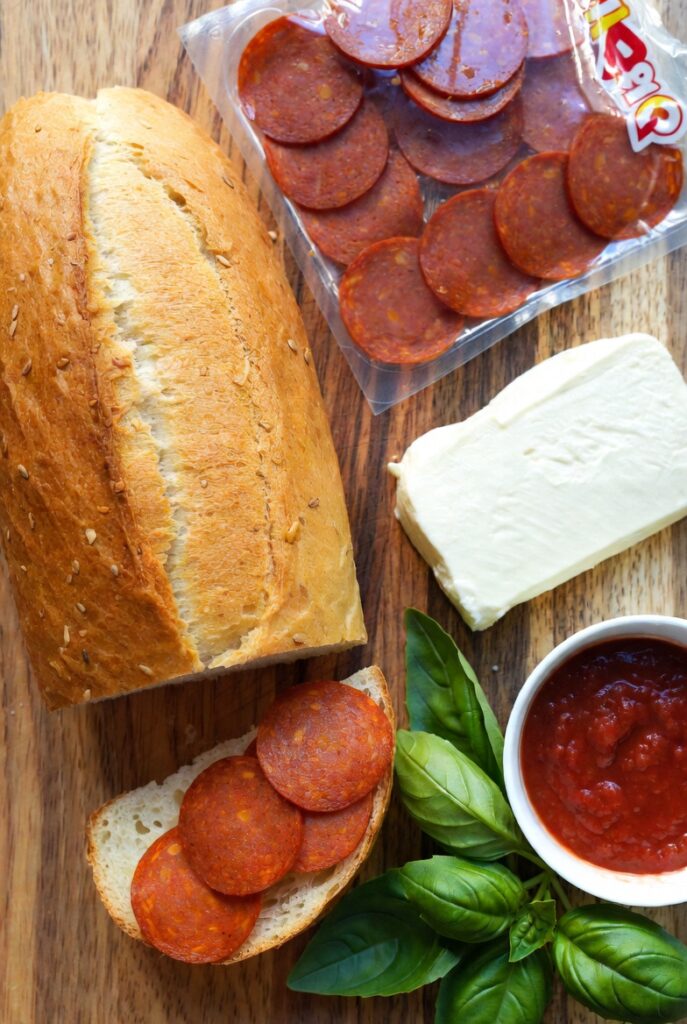
In a dish with minimal ingredients, the “Casing-Thickness” of the meat and the “Protein-Strength” of the flour dictate the final “Sensory Resolution.”
The “Dough Scaffold”
- Frozen Bread Dough or Pizza Dough: 1 lb. (For “Zero-Friction” utility).
- The Master Hack: If using frozen dough, let it thaw in the refrigerator overnight. This “Slow-Fermentation” improves the flavor profile and makes the dough more “Elastic-Stable.”
The “Protein Anchor” (The Meat)
- Pepperoni Sticks or Sliced Pepperoni: 8 oz.
- The Logic: Sticks are Superior. Cutting pepperoni into “Batons” (strips) allows for a “Sustained Release” of oil. Thin slices tend to clump and can create “Steam-Pockets” that weaken the dough seal.
The “Lipid-Buffer” (The Cheese)
- Mozzarella or Provolone String Cheese: 6 sticks, halved.
- The Strategy: Using string cheese provides a “Pre-Measured Structural Core.” It melts at the same velocity as the pepperoni renders, creating a “Unified Molten Center.”
The “Top-Coat” (The Finish)
- Melted Butter: 3 tbsp.
- Garlic Powder & Dried Parsley: 1 tsp each.
- Parmesan Cheese: 2 tbsp, finely grated.
6. The “Encapsulation Protocol”: Mastering the Seal
The primary failure point of a pepperoni roll is the “Oil-Leakage Event.” If the fat escapes the roll, the bread becomes dry and the pan becomes a mess. To achieve a “Master-Tier” result, you must utilize the “Burrito-Lock Protocol.”
- The Flattening: Stretch your dough into a rectangle.
- The Placement: Place the pepperoni and cheese in the center-third.
- The Side-Fold: Fold the sides over the meat first. This creates a “Dual-Layer Wall.”
- The Roll: Roll from the bottom up, pinching the final seam tightly. This creates a “Pressure-Vessel” that forces the pepperoni oil to stay inside the bread fibers.
7. Deep Dive: The “Butter-Wash” and Crust Kinetics
Why do we brush with butter twice? It centers on “Evaporative Cooling and Surface Softening.”
- The First Wash (Pre-Bake): This provides a “Lipid-Primer” that helps the dough expand without “Tearing.”
- The Second Wash (Post-Bake): Adding garlic butter the moment the rolls exit the oven utilizes the “Residual Thermal Energy” to pull the garlic flavor into the crust while the bread is still “Exhaling” steam. This creates a “Velvet-Soft” crust that doesn’t become “Hard-Brittle” as it cools.
8. Step-by-Step Instructions: The Master Execution
Step 1: The “Dough-Conditioning” Phase
Divide your thawed dough into 12 equal portions (approx. 60g each). Shape them into balls and let them rest for 10 minutes. This “Relaxes the Gluten,” preventing the dough from “Snapping Back” during the shaping phase.
Step 2: The “Protein-Loading”
Flatten each ball into a 4-inch oval. Place 3–4 batons of pepperoni and a half-stick of cheese in the center.
Step 3: The “Burrito-Lock” Assembly
Follow the Encapsulation Protocol (Section 6). Ensure the seam is placed Face-Down on the parchment-lined baking sheet. This uses the weight of the roll to “Gravity-Seal” the opening.
Step 4: The “Proofing” Window
Cover the rolls with a light cloth and let them rise in a warm area for 45–60 minutes.
- The Observation: You are looking for the dough to look “Inflated and Fragile.” This “Aeration” is what allows the pepperoni oil to penetrate the crumb later.
Step 5: The “Primary-Thermal” Bake
Preheat oven to 190°C (375°F). Brush with plain melted butter. Bake for 18–20 minutes until the tops are “Sunset-Orange” and the bottoms are “Golden-Brown.”
Step 6: The “Aromatic-Polish” Finish
Immediately upon removal, brush with the Garlic-Parsley butter and sprinkle with Parmesan. The cheese should “Adhere” to the wet butter, creating a “Micro-Textured” topping.
Step 7: The “Structural-Set” Rest
Let the rolls rest for 5 minutes. This allows the internal “Molten-Fat” to re-distribute and “Set,” preventing a “Hot-Oil-Spill” when you take the first bite.
9. Satiety and the “Stable-Energy” Curve
Easy Pepperoni Rolls provide a “High-Resolution Satiety” profile:
- The Lipid Signal: The concentrated fats from the pepperoni and cheese trigger the “Satiety Cascade” in the brain, signaling that high-density nutrition has been consumed.
- The Complex-Carb Buffer: The fermented bread dough provides a “Slow-Release” starch source, preventing the “Sugar-Crash” associated with highly processed snacks.
- The Portability Factor: Because the fats are “Self-Contained,” the hand-to-mouth transition is clean, reducing “Tactile-Friction” and making them an ideal “Performance-Fuel” for active environments.
10. Modular Customization: The “Flavor Pivots”
- The “Inferno” Draft: Add sliced Jalapeños or a dash of Crushed Red Pepper inside the roll for a “Capsaicin High-Note.”
- The “Pesto-Enigma” Shift: Spread a thin layer of Basil Pesto on the dough before adding the meat for a “Herbal-Umami” resolution.
- The “Breakfast-Utility” Standard: Replace pepperoni with Cooked Sausage and cheese with Scrambled Egg for a morning-aligned “Portable-Breakfast.”
11. Storage and “Thermal Recovery”
- Ambient Storage: Because of the high salt and nitrate content, these can stay at room temperature in a sealed container for 24 hours (true to their coal-mining heritage).
- Refrigeration: Store for up to 5 days.
- The Recovery Method: Avoid the Microwave. To restore the “Master Draft” texture, reheat in an oven or air fryer at 175°C (350°F) for 5 minutes. This “Re-Crisps” the crust and “Re-Liquifies” the internal pepperoni oil.
12. Frequently Asked Questions (FAQ)
Q: Why did my rolls turn out “Doughy” in the middle? A: This usually happens due to “Under-Proofing.” If the dough doesn’t rise enough before baking, the heat cannot penetrate the dense center. Ensure they double in size before entering the oven.
Q: Can I use turkey pepperoni? A: Affirmative. However, turkey pepperoni has a “Lower-Lipid Profile.” You may need to add a small sliver of butter inside the roll to simulate the “Oil-Pocket” effect.
Q: My cheese all leaked out. What happened? A: Your “Side-Folds” were likely too thin. Ensure the cheese is fully “Double-Wrapped” by the dough during the Encapsulation Protocol.
13. Nutritional Information
(Per 1 Large Roll)
| Nutrient | Amount |
| Calories | 310 kcal |
| Protein | 14g |
| Total Fat | 18g |
| Net Carbs | 22g |
| Sodium | 680mg |
14. The “Visual Gravity” of Presentation
In the 2026 culinary landscape, the “Aesthetic Payload” is as critical as the flavor.
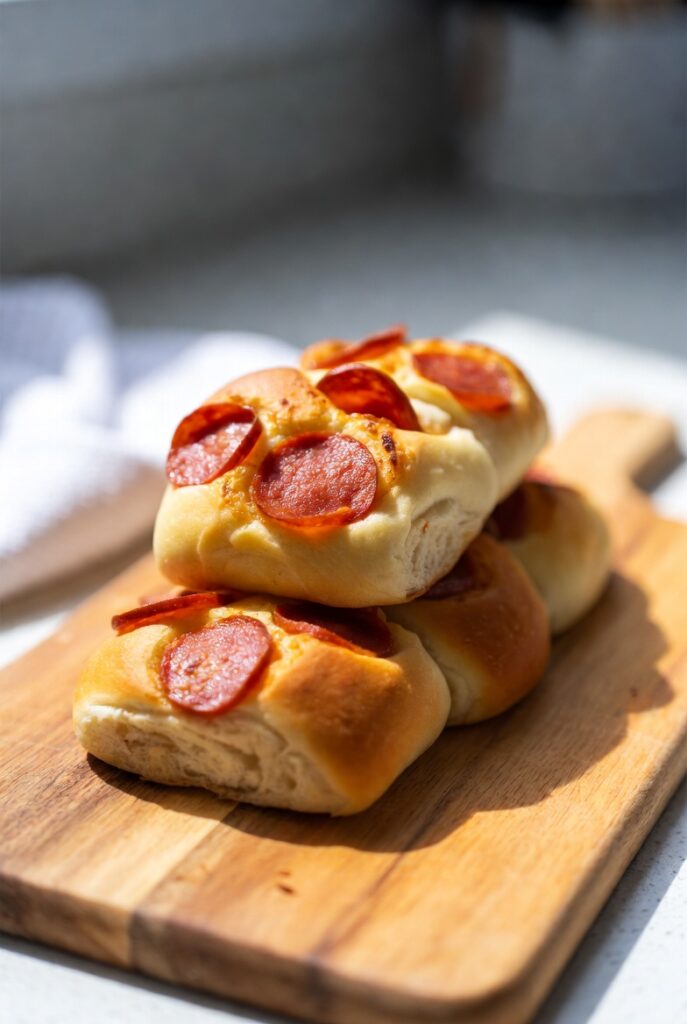
- The Stack: Arrange the rolls in a “Pyramid” on a wooden board to emphasize the “Hand-Crafted” rustic nature.
- The Cross-Section: Cut one roll on a “45-Degree Bias” to show off the “Amber-Oil” interior and the “Molten-Cheese” core.
- The Herb-Dusting: Ensure the parsley is “Vibrantly Green” to contrast against the “Golden-Orange” crust.
15. Conclusion: The Master Draft of Appalachian Utility
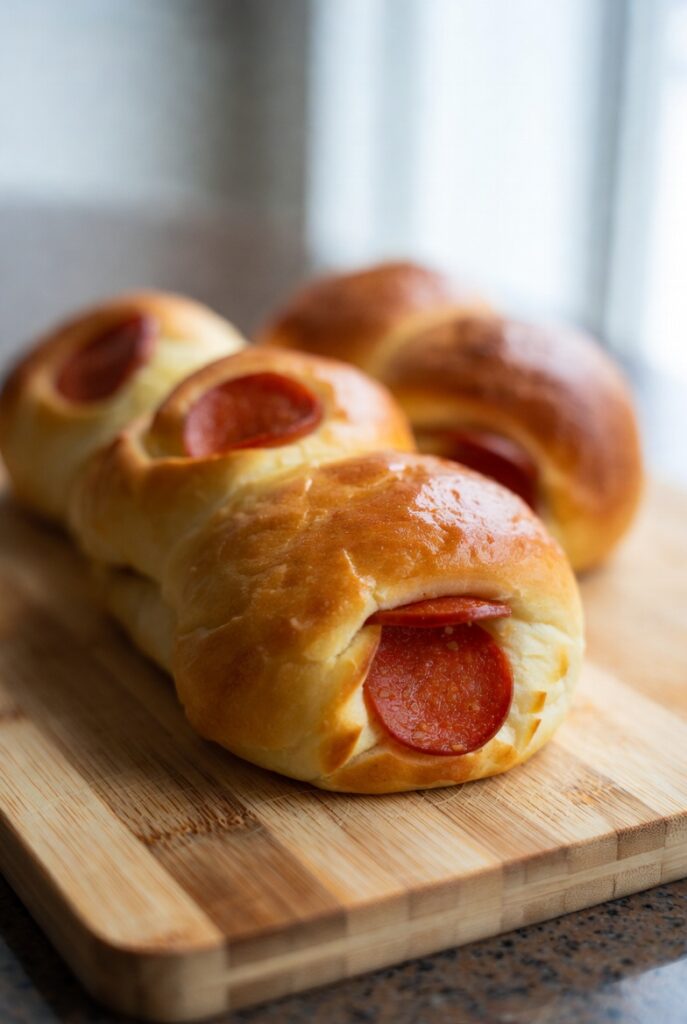
The Easy Pepperoni Roll protocol is more than a recipe; it is a “Vessel for Intentional Synergy.” It proves that “Gourmet Results” can be achieved through the mastery of “Lipid Migration” and the “Burrito-Lock Protocol.” By respecting the “Double-Rise” and the “Garlic-Butter Polish,” you are delivering a snack that is visually “Amber-and-Gold,” nutritionally dense, and sensorially perfect.
It is the ultimate “Social Anchor”—a “Soft-and-Spicy” testament to the power of dough, meat, and heat.