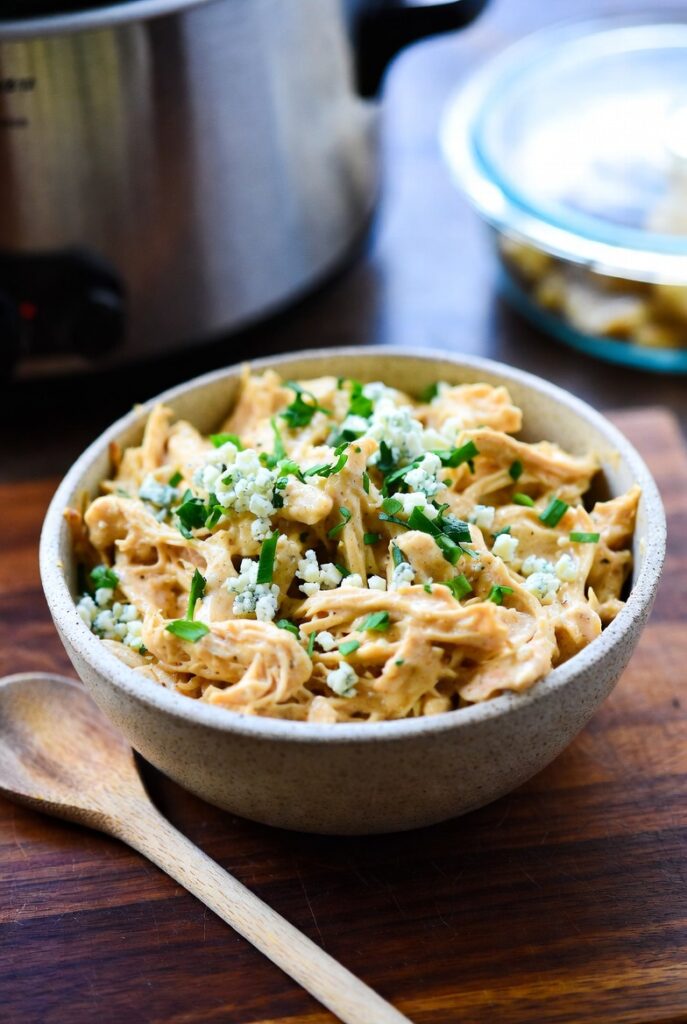
1. Introduction: The Architecture of the Ultimate Game-Day Emulsion
In the competitive arena of “Social Gastronomy,” the Slow Cooker Buffalo Chicken Dip stands as the undisputed champion of the appetizer table. It is more than a mere snack; it is a masterful “Structural Reimagining” of the classic Buffalo wing. By deconstructing the flavor profile of the chicken wing—the capsaicin heat, the sharp tang of vinegar, and the cooling lipid-richness of blue cheese or ranch—and suspending it in a “Molten Matrix,” we create a dish optimized for “High-Volume Utility” and “Textural Uniformity.”
The brilliance of this dish lies in its “Emulsion Stability.” Unlike traditional wings, which suffer from a rapid “Quality Half-Life” as they cool and become rubbery, this dip leverages the consistent, low-intensity conduction of a slow cooker to maintain a perfect “Viscous Integrity.” For the modern host, the high-performance professional, or the weekend socialite, this is the “Platinum Standard” of hospitality. It is a “Zero-Friction” operation that facilitates mass feeding while delivering a level of “Palate Density” that triggers the brain’s highest reward centers.
2. The Science of the “Capsaicin-Lipid” Buffer
To master Buffalo Chicken Dip, one must understand the chemical interplay between Capsaicin and Casein.
The first scientific pillar is the “Capsaicin-Lipid Solubility.” The heat in Buffalo sauce comes from capsaicin, a hydrophobic molecule. In a standard wing, the heat can be aggressive and sharp because it lacks a proper carrier. However, in this dip, the high fat content of the cream cheese and cheddar acts as a “Biological Buffer.” The lipids wrap around the capsaicin molecules, slowing their interaction with your pain receptors (TRPV1). This results in a “Long-Tail Heat”—a warmth that is flavorful and persistent rather than punishing.
The second pillar is “Protein Suspension.” By utilizing slow-cooked, shredded chicken breast, we create a “Fibrous Scaffold” that holds the melted cheese in place. This prevents the dip from becoming a greasy, separated mess. The result is a “Uniform Suspension” of protein and fat that stays “Shatter-Smooth” from the first scoop to the last.
3. Recipe Overview: The Master Blueprint
- Cuisine Type: Modern Americana / Tailgate Fusion
- Difficulty Level: Very Easy (Order-of-operations focus)
- Total Preparation Time: 15 Minutes
- Total Cooking Time: 2 to 3 Hours (High) or 4 Hours (Low)
- Total Time: ~3 Hours
- Dietary Classifications: High-Protein, Keto-Friendly, Gluten-Free (verify sauce labels).
- Yield: Serves 10–12 (The “Crowd-Pleaser” Volume)
4. Equipment and Tools: The Essentials of Thermal Stability
- 3 to 4-Quart Slow Cooker: A smaller slow cooker is actually superior here, as it ensures the dip is deep enough to maintain “Thermal Mass” and prevents the edges from scorching.
- Two Forks or a Hand Mixer: For the “Efficiency Shred” of the chicken.
- Silicone Spatula: For the “Fold-and-Integrate” phase.
5. Ingredients Section: Sourcing for the “Umami-Heat” Loop
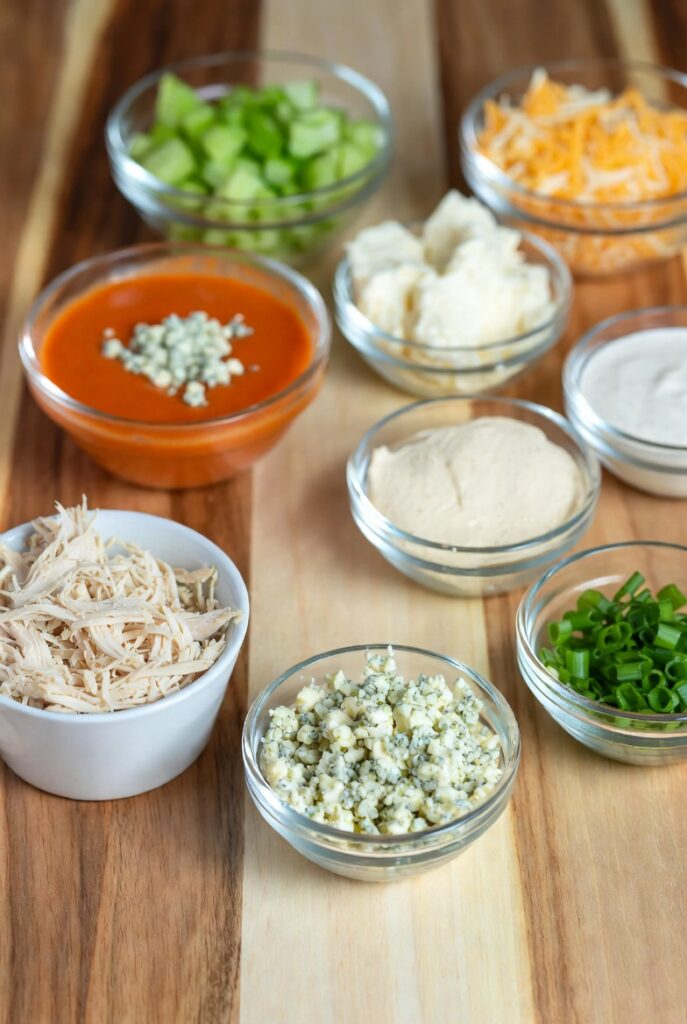
In a dish defined by its “Boldness,” the “Acidity” of the sauce and the “Sharpness” of the cheese are your primary variables.
The Protein Anchor
- Chicken Breast: 1.5 to 2 lbs.
- The Master Hack: Use Rotisserie Chicken for the “Elite-Tier” flavor. The pre-roasted skin and seasoned meat provide a depth of flavor that poached chicken simply cannot match.
The “Molten Matrix” (The Base)
- Cream Cheese: 16 oz (two 8-oz blocks). Full fat is mandatory for “Emulsion Stability.”
- Buffalo Sauce: 3/4 cup to 1 cup (Frank’s RedHot is the “Industry Standard”).
- Ranch or Blue Cheese Dressing: 1 cup. (Ranch for a “Mellow Finish,” Blue Cheese for “Gourmet Sharpness”).
- Sharp Cheddar Cheese: 2 cups, freshly shredded.
- Mozzarella Cheese: 1 cup, freshly shredded (for the “Mechanical Stretch”).
The “Master Draft” Enhancers
- Garlic Powder: 1 tsp.
- Green Onions: 1/2 cup, sliced (The “Aromatic High-Note”).
- Blue Cheese Crumbles: 1/4 cup (For the “Visual and Flavor Texture” finish).
6. The “Layered-Inertia” Protocol
The most common failure in slow-cooker dips is “Hot Spots”—where the cheese on the bottom burns before the center is melted. To achieve a “Master Draft” finish, you must utilize the “Layered-Inertia Protocol.”
- Bottom Layer: Place the cubed cream cheese at the very bottom. It has the highest moisture content and acts as a “Heat Shield” for the other ingredients.
- Middle Layer: Add the shredded chicken and the Buffalo sauce.
- Top Layer: Add the dressings and half of the shredded cheeses.
- The “Mid-Cycle Agitation”: After 90 minutes, stir the dip vigorously. This introduces “Kinetic Energy” into the center, ensuring the emulsion forms perfectly.
7. Deep Dive: Satiety and the “Casein-Capsaicin” Synergy
Why is Buffalo Chicken Dip so uniquely satisfying? It centers on “Sensory-Specific Satiety.” Because this dish hits multiple taste receptors simultaneously—salty (cheeses), sour (vinegar in the sauce), spicy (capsaicin), and umami (chicken)—the brain receives a “Complex Nutritional Signal.”
From a macronutrient perspective, the high-protein load of the chicken combined with the high-lipid load of the cheeses triggers the release of Peptide YY (PYY) and Leptin. These are the hormones responsible for long-term fullness. This is why a small portion of this dip feels significantly more substantial than a large bowl of potato chips. It is “High-Efficiency Fuel” disguised as a party favorite.
8. Step-by-Step Instructions: The Master Blueprint
Step 1: The “Protein Prep”
If using rotisserie chicken, remove the bones and skin, then shred the meat using two forks. If using raw chicken, poach it in chicken broth first. Aim for “Fine Shreads”—coarse chunks make the dip harder to scoop.
Step 2: The “Base Cube”
Cut your room-temperature cream cheese into 1-inch cubes. This increases the “Surface Area” and ensures it melts into the sauce without leaving white “Lumps.”
Step 3: The Slow-Cooker Assembly
Follow the Layered-Inertia Protocol: Cream cheese on the bottom, followed by chicken, Buffalo sauce, and dressing. Top with half of the shredded cheddar.
Step 4: The Thermal Cycle
Cover and cook on LOW for 3 to 4 hours or HIGH for 2 hours. Low heat is preferred to prevent the oils from separating (breaking) the cheese.
Step 5: The “Emulsion Stir”
Halfway through the cooking time, open the lid and stir thoroughly. You should see the cream cheese “dissolving” into the Buffalo sauce, creating a bright orange, velvety texture.
Step 6: The “Stretch” Finish
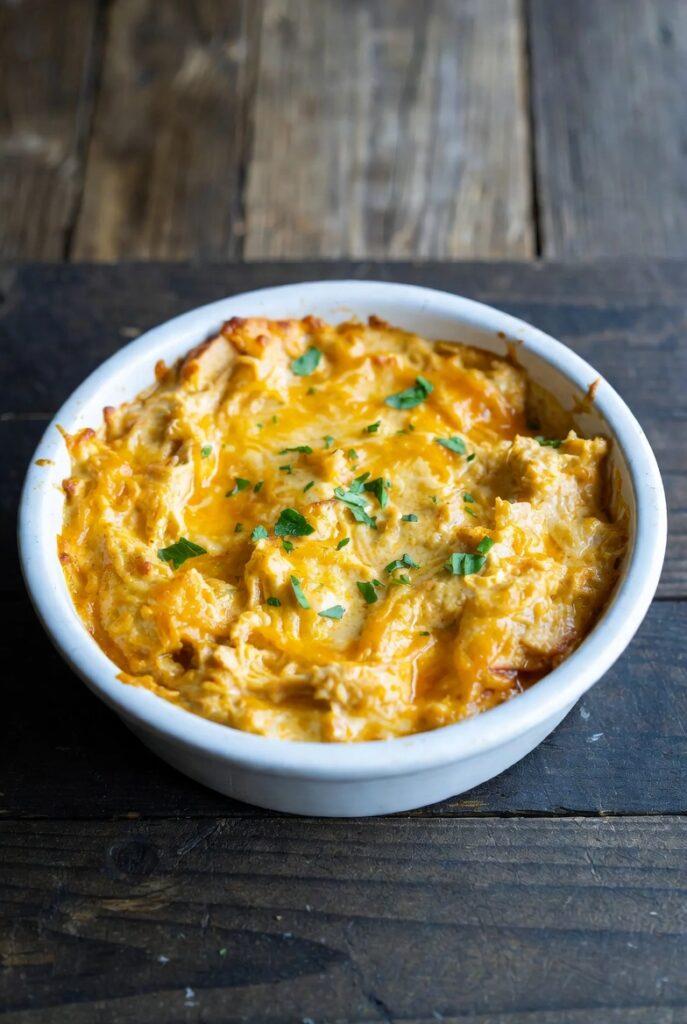
Top with the remaining shredded cheddar and mozzarella. Cover for another 15 minutes until the cheese is “Glistening and Bubbling.”
Step 7: The Aromatic Garnish
Turn the slow cooker to the “WARM” setting. Top with green onions and blue cheese crumbles. Serve immediately with sturdy “Carriers.”
9. The “Carrier” Infrastructure: Structural Selection
A dip is only as good as its “Delivery Vehicle.” Because Buffalo Chicken Dip is “Viscous and Heavy,” you must choose carriers with high “Shear Strength.”
- Tortilla Chips: Choose “Scoop” or “Thick-Cut” varieties. Thin chips will shatter under the weight of the chicken.
- Celery Sticks: The “Platinum Standard.” The “Aqueous Crunch” of the celery provides a necessary “Thermal Relief” and cuts through the richness of the cheese.
- Toasted Baguettes: For a “Gourmet Pivot” that turns the dip into a meal.
- Pork Rinds: The “Keto-Pure” option for maximum “Lipid Synergy.”
10. Modular Variations: The “Flavor Pivots”
- The “Inferno” Standard: Add 2 tbsp of chopped pickled jalapeños and a dash of cayenne pepper.
- The “Smoky” Draft: Replace 1/4 cup of Buffalo sauce with a “Smoky” BBQ sauce and use Smoked Gouda in place of Mozzarella.
- The “Vegetarian” Shift: Replace chicken with “Smashed Cauliflower” or “Pulled Jackfruit.” The texture remains remarkably similar once saturated in the “Buffalo Matrix.”
11. Storage and the “Thermal Recovery”
- Refrigeration: Store in an airtight container for up to 4 days.
- The “Separation” Risk: In the fridge, the fats will solidify. When reheating, do not use the microwave on high power, as it will cause the oils to “Leach Out.”
- The Reheat: The best way to restore the “Velvet Standard” is to put the dip back into the slow cooker or a small saucepan over low heat. Add 1 tbsp of milk or extra Buffalo sauce to “re-bind” the emulsion.
12. Frequently Asked Questions (FAQ)
Q: Can I use low-fat cream cheese?
A: Negative. Low-fat or “Neufchâtel” cheese has a higher water content and lower protein stability. It is prone to “curdling” or becoming watery under the sustained heat of a slow cooker.
Q: Why is my dip greasy?
A: This usually happens if the heat was too high or if you used pre-shredded cheese from a bag (which contains cellulose). Freshly grated cheese and “Low” heat are the keys to a “Glistening” rather than “Oily” finish.
Q: Is Blue Cheese dressing better than Ranch?
A: This is a “Regional Preference.” Blue cheese provides an “Authentic Buffalo” experience with a sharper acidic profile, while Ranch provides a “Universal Appeal” that is smoother and sweeter.
13. Nutritional Information
(Per serving – approx. 1/3 cup)
| Nutrient | Amount |
| Calories | 320 kcal |
| Protein | 18g |
| Total Fat | 24g |
| Net Carbs | 4g |
| Vitamin A | 15% DV |
14. Summary: The Master Draft of Social Utility
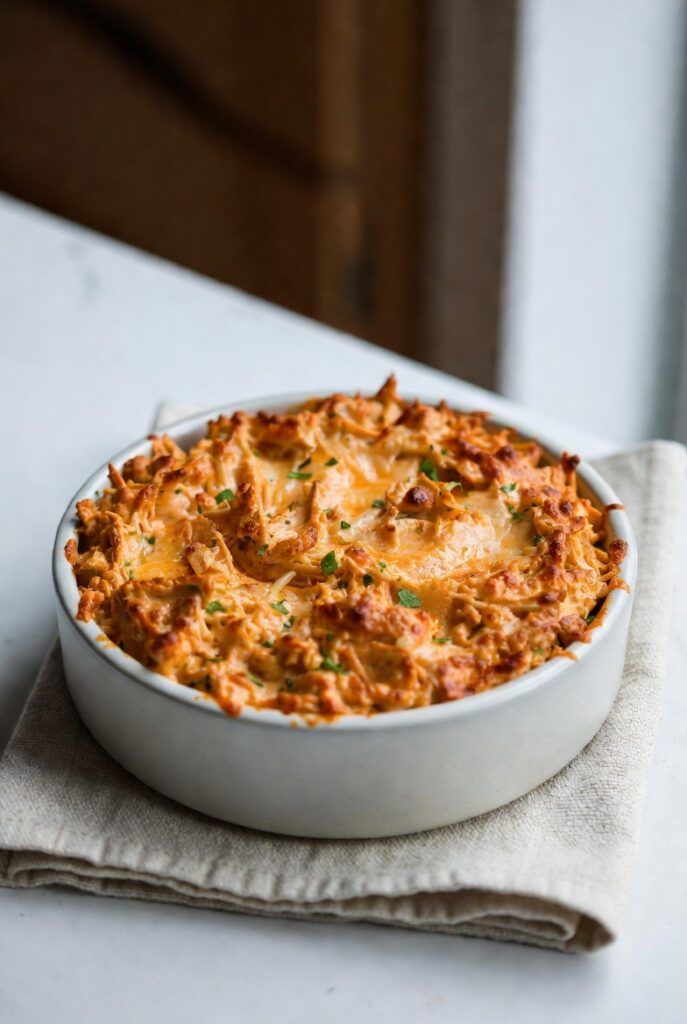
The Slow Cooker Buffalo Chicken Dip is more than a recipe; it is a “System of Social Interaction.” It proves that the most powerful flavors in the American culinary canon can be distilled into a “High-Efficiency” format. By mastering the “Capsaicin-Lipid Buffer” and the “Layered-Inertia Protocol,” you are delivering a dish that is biologically satisfying, culturally iconic, and visually stunning.
It is the ultimate “Anchor” for any gathering—a “Glistening, Orange” testament to the power of slow-form conduction and high-intensity flavor.