1. Introduction: Deconstructing the Liberty Bell Classic
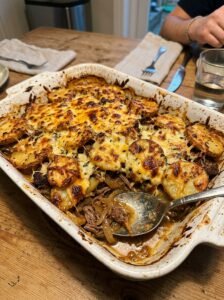
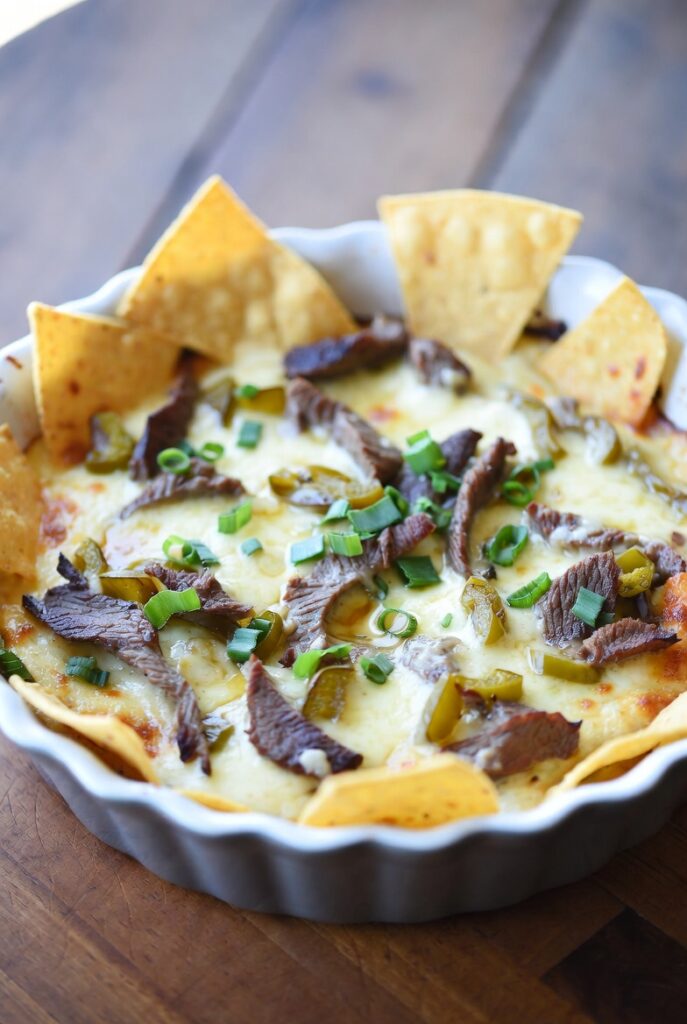
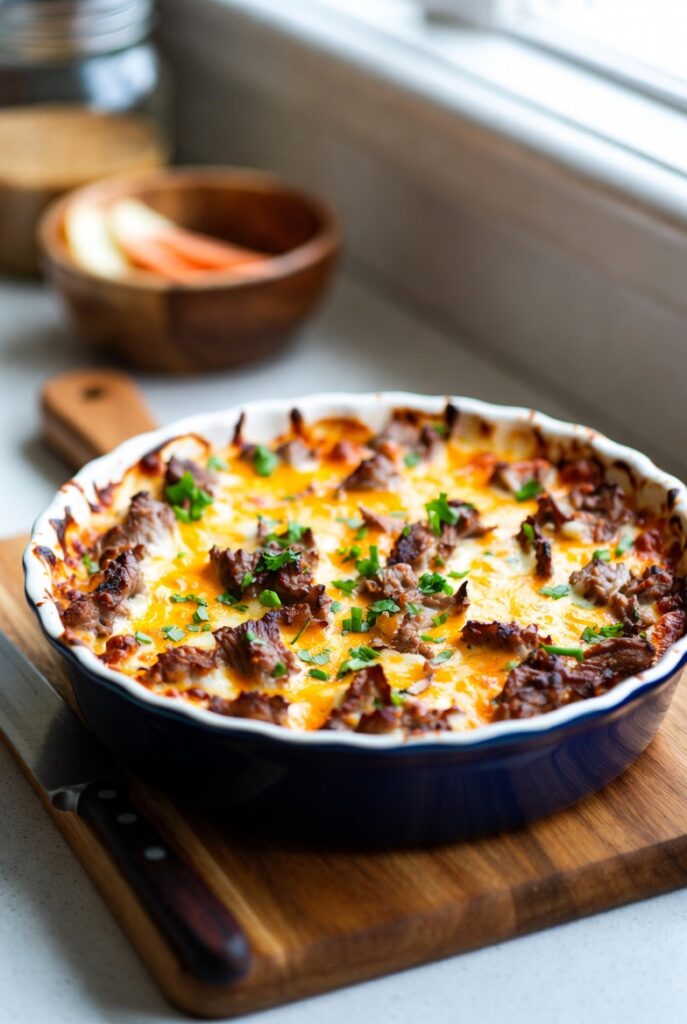
In the high-stakes world of “Social Gastronomy,” few dishes command the room quite like the Philly Cheesesteak Dip. This is not merely a snack; it is a “Structural Reimagining” of Philadelphia’s most iconic culinary export. By removing the constraints of the long roll and transitioning the cheesesteak’s DNA into a “Molten Matrix,” we create a dish that is optimized for sharing, high-density flavor delivery, and “Textural Multiplicity.”
The brilliance of this dip lies in its “Lipid-Umami Synergy.” We take the core components—shaved ribeye, caramelized aromatics, and a specific cheese profile—and suspend them in a rich, creamy base that maintains “Viscous Integrity” even as it cools. For the modern host, the high-performance athlete on a “Refeed Day,” or the gourmet enthusiast, this is the “Platinum Standard” of comfort. It respects the blue-collar roots of the original sandwich while elevating the experience through superior browning and a sophisticated, multi-tiered cheese melt.
2. The Science of the “Maillard-Melt” Equilibrium
To master the Philly Cheesesteak Dip, one must understand the chemical behavior of the ribeye and the stabilization of the “Cheese Emulsion.”
The first scientific pillar is the “Flash-Sear of the Shaved Protein.” Unlike a steak dinner, where we prioritize a thick crust on a whole muscle, cheesesteak meat must be shaved “Paper-Thin.” This massive increase in surface area allows for near-instantaneous Maillard browning. When this seared beef is integrated into the dip, it leaches savory glutamates into the cream base, flavoring every molecule of the sauce.
The second pillar is “Viscosity Stabilization.” A common failure in warm dips is “Lipid Separation”—where the cheese breaks and leaves a pool of oil on top. To achieve a “Master Draft” consistency, we utilize Cream Cheese as a “Molecular Anchor.” The stabilizers (guar gum or carob bean gum) found in high-quality cream cheese act as an emulsifying net, holding the fats from the ribeye and the sharper cheeses in a permanent state of “Glistening Suspension.”
3. Recipe Overview: The Master Blueprint
- Cuisine Type: American Fusion / Social Comfort
- Difficulty Level: Easy (Focus on browning precision)
- Total Preparation Time: 15 Minutes (Includes meat prep)
- Total Cooking Time: 25 Minutes
- Total Time: 40 Minutes
- Dietary Classifications: High-Protein, Keto-Friendly (if served with vegetable crudités).
- Yield: Serves 8–10 (The “Party Standard”)
4. Equipment and Tools: The Essentials of Conductive Heat
- 12-inch Cast Iron Skillet: This is the “Engine Room.” Cast iron provides the “High-Inertia Heat” required to sear the beef without the pan temperature dropping.
- 1.5-Quart Oven-Safe Baking Dish: If you aren’t serving directly from the skillet, a ceramic baker provides the best “Heat Retention.”
- Ultra-Sharp Knife or Mandoline: For achieving the “Translucent Slice” on the onions and peppers.
- The “Box Grater”: Mandatory. Pre-shredded cheese is coated in cellulose (wood pulp) to prevent clumping, which prevents a “Smooth Melt.” We grate by hand for the “Elite-Tier” stretch.
5. Ingredients Section: Sourcing for the “Philly Profile”
In a dip this rich, the “Fat-to-Lean” ratio of the meat and the “Elasticity” of the cheese are the only variables that matter.
The Protein & Aromatic Anchor
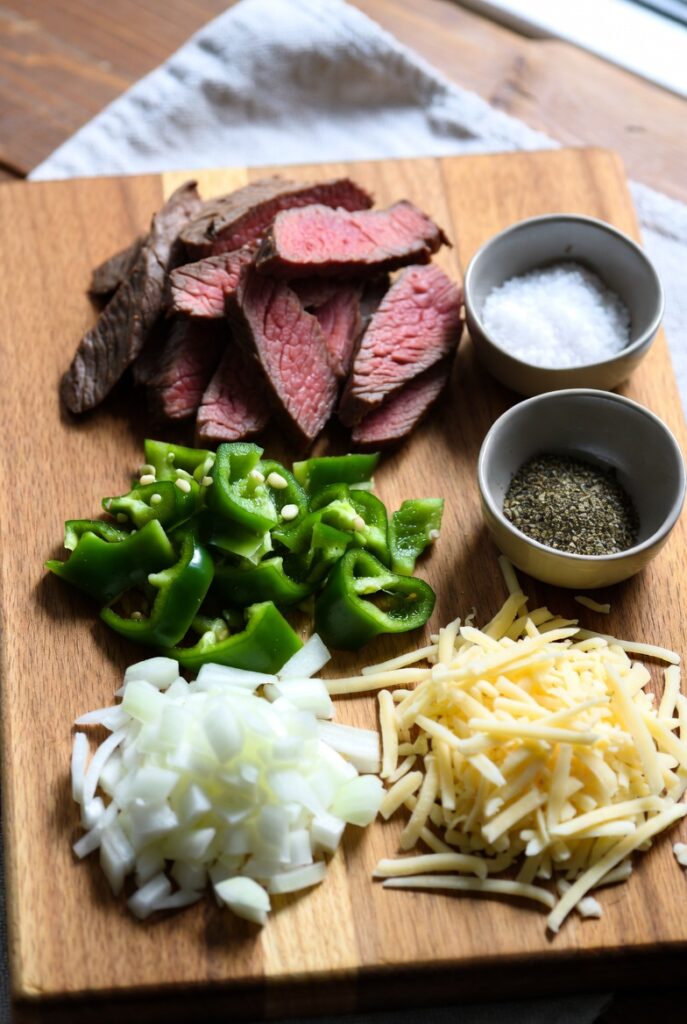
- Ribeye Steak: 1 lb. Frozen for 30 minutes before slicing to achieve “Micro-Thin” strips. Ribeye is essential for its intramuscular fat.
- Yellow Onion & Green Bell Pepper: 1 large each. The “Aromatic Trinity” of the South Philly tradition.
- Worcestershire Sauce: 1 tbsp. The “Umami Catalyst.”
The “Molten Matrix” (The Base)
- Cream Cheese: 8 oz (Full fat). The “Emulsion Anchor.”
- Provolone Cheese: 1 cup, freshly shredded. Provides the “Sharp Tang.”
- Mozzarella Cheese: 1 cup, freshly shredded. Provides the “Structural Stretch.”
- Sour Cream or Greek Yogurt: 1/2 cup. Provides the “Acidic Brightener” to cut through the fat.
- Garlic Powder & Black Pepper: 1 tsp each.
The “Crunch” Factor (The Vessels)
- Toasted Baguette Slices: The “Standard Carrier.”
- Pita Chips or Thick-Cut Kettle Chips: The “High-Utility” options.
- Bell Pepper Wedges: The “Keto-Pure” alternative.
6. The “Partial-Freeze” Prep Protocol
The most common failure in home-made cheesesteak dishes is “Chunky Meat.” To achieve the “Restaurant Standard” texture, you must utilize the “Partial-Freeze Protocol.” Place your raw ribeye in the freezer for 45 minutes. This firms up the muscle fibers and the fat, allowing you to use a sharp knife to shave the meat into paper-thin ribbons. When these ribbons hit the hot skillet, they curl and brown in seconds, creating the “Tender-Crisp” texture that defines a true Philly experience. If you use room-temperature meat, you will end up with “Stews-Meat” chunks, which ruins the “Dip-ability” of the final product.
7. Deep Dive: The Chemistry of Provolone vs. Wiz
In Philadelphia, the “Whiz vs. Provolone” debate is a cultural touchstone. For a Gourmet Dip, we prioritize Aged Provolone. Why? Because of Casein. Provolone is a “Pasta Filata” cheese, meaning the curds are stretched during production. This gives it a high protein alignment that results in a “Sophisticated Pull.” While “Cheez Whiz” offers a nostalgic salt hit, it lacks the complex flavor of aged dairy. By combining Provolone (flavor/tang) with Mozzarella (moisture/stretch), we create a “Cheese Matrix” that is superior in both taste and performance. This is “Gastronomic Logic” applied to street food.
8. Step-by-Step Instructions: The Master Blueprint
Step 1: The Aromatic Caramelization
Heat 1 tbsp of oil in your skillet over medium-high heat. Add the onions and peppers. Sauté for 8–10 minutes until they are soft and have “Leopard-Spot” charring. Remove from the skillet and set aside.
Step 2: The “Flash-Sear”
Wipe the skillet. Increase heat to High. Add the shaved ribeye in a single layer. Let it sear for 90 seconds without moving it to develop the Maillard Crust. Flip, add the Worcestershire sauce, and cook for another 60 seconds. Remove from heat.
Step 3: The “Base Emulsion”
In a large mixing bowl, combine the softened cream cheese, sour cream, garlic powder, and black pepper. Use a hand mixer or a stiff spatula to whip until “Airy and Light.”
Step 4: The Integration
Fold the seared beef, the caramelized onions, the peppers, and half of your shredded Provolone and Mozzarella into the cream cheese base. The residual heat from the beef will begin to melt the cheese, creating a “Preliminary Emulsion.”
Step 5: The “Bake and Bloom”
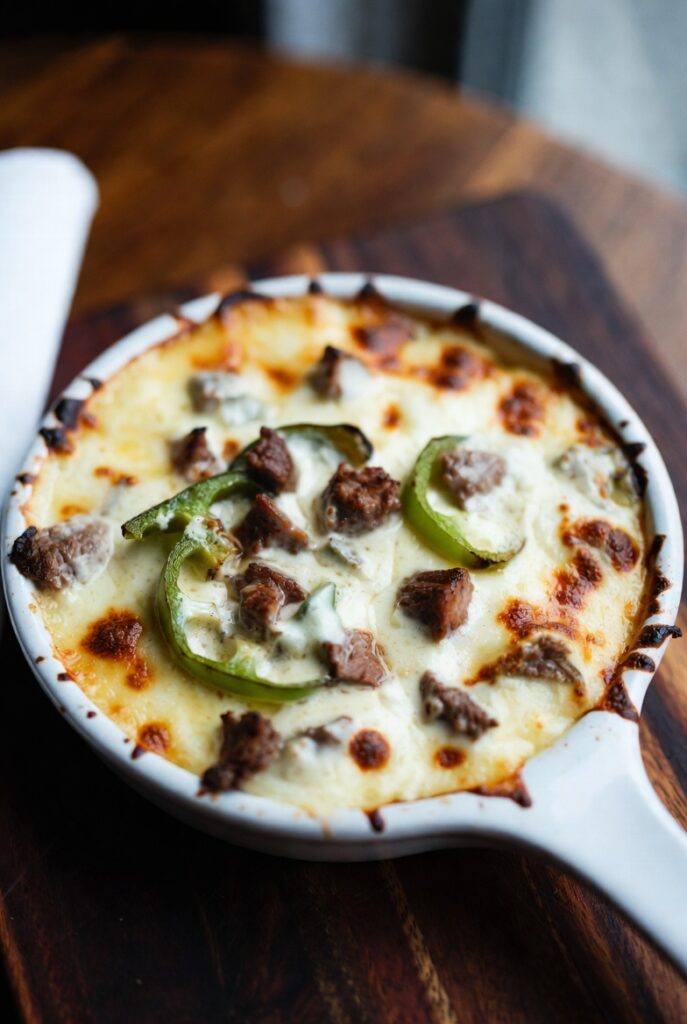
Transfer the mixture into a baking dish (or keep it in the cast iron skillet if it’s large enough). Top with the remaining Provolone and Mozzarella. Place in a preheated oven at 190°C (375°F) for 15–20 minutes.
Step 6: The “Broil” Finish
Turn the oven to “Broil” for the final 2 minutes. Watch closely! You are looking for the cheese to “Bubble” and develop “Deep Amber Spots.” This is where the flavor peaks.
9. Satiety and the “Lipid-Protein” Plateau
The Philly Cheesesteak Dip is an “Energy-Dense” powerhouse. From a nutritional standpoint, it provides a massive dose of Bioavailable Iron and Zinc from the ribeye. Because the dip is high in both lipids (fat) and proteins, it triggers a rapid and sustained release of Cholecystokinin (CCK), the hormone that signals the brain to stop eating.
Unlike carb-heavy snacks (like chips and salsa) that can lead to “Sensory-Specific Satiety” issues (where you keep eating because the flavor is one-dimensional), the Cheesesteak Dip is so complex and rich that it satisfies the palate quickly. It is “Tactical Indulgence”—maximum satisfaction per bite.
10. The “Social Logistics” of Serving
A dip of this magnitude requires the correct “Carrier Infrastructure.”
- The “Structural Integrity” Rule: Avoid thin, “Party-Style” potato chips. They will shatter under the weight of the ribeye and molten cheese.
- The “Warm-Carrier” Protocol: If using a baguette, slice it and toast it with a brush of garlic butter. A cold bread against a hot dip creates “Thermal Dissonance.” A warm, toasted carrier ensures “Harmonic Consumption.”
11. Modular Variations: The “Regional Pivots”
- The “Pizza-Steak” Pivot: Add 1/2 cup of marinara to the base and top with pepperoni.
- The “Inferno” Standard: Add 1/4 cup of chopped “Long Hot” peppers or pickled jalapeños to the beef mixture.
- The “Garden” Draft: Double the peppers and add sautéed mushrooms for a “Volume-Heavy” version that maintains the cheesesteak essence.
12. Storage and the “Day-Two” Reheat
- Refrigeration: Store in an airtight glass container for up to 3 days.
- The Reheat: Cheese dips can become “Gritty” if microwaved. The best way to revive the “Velvet Standard” is to place the dip back in a small oven-safe dish, add a splash of milk or cream to “re-loosen” the emulsion, and bake at 350°F until bubbling.
13. Frequently Asked Questions (FAQ)
Q: Can I use ground beef?
A: You can, but it is a “Low-Tier” substitute. Ground beef lacks the specific “Intermuscular Fat” of ribeye, resulting in a grainier texture. Shaved ribeye is the “Industry Standard” for a reason.
Q: Why is my dip oily?
A: This usually happens if you used pre-shredded cheese or if the meat wasn’t drained properly. If a pool of oil forms, simply blot it with a paper towel and stir—the cream cheese should help re-emulsify it.
Q: Is Provolone necessary?
A: It is the “Soul” of the dish. If you absolutely must substitute, use a high-quality White Cheddar or Muenster, but you will lose that specific “Philly Tang.”
14. Nutritional Information
(Per serving – approx. 3 tbsp)
| Nutrient | Amount |
| Calories | 280 kcal |
| Protein | 14g |
| Total Fat | 22g |
| Net Carbs | 3g |
| Calcium | 15% DV |
15. Summary: The Master Draft of Social Comfort
The Philly Cheesesteak Dip is more than a recipe; it is a “Culinary Event.” It proves that the flavors of a world-famous sandwich can be successfully “Re-Engineered” into a format that favors social interaction and textural depth. By mastering the “Partial-Freeze Protocol” and the “Cream Cheese Anchor,” you are delivering a dish that is biologically satisfying, culturally iconic, and visually stunning.