1. Introduction: The Evolution of the Classic “French Onion”
In the hierarchy of communal appetizers, the Hot & Cheesy Caramelized Onion Dip represents the “Platinum Standard” of savory comfort. While the cold, powdered “French Onion” dips of the 20th century relied on high sodium and artificial flavorings, this contemporary draft is a study in “Culinary Patience” and “Lipid Engineering.” By utilizing the slow chemical transformation of raw alliums into sweet, umami-rich gold, we create a dip that offers a depth of flavor usually reserved for fine dining.
The brilliance of this dish lies in the “Maillard Synergy.” We take the natural sugars found in yellow onions and pair them with a multi-cheese matrix of Gruyère and Swiss. The result is a “Signature Assembly” that is both sophisticated and primal—delivering a concentrated dose of French Onion soup in a dense, scoopable format. For the modern host, this represents a tactical advantage: a high-impact, vegetarian-friendly dish that serves as a “Social Anchor,” providing guests with sustained satiety and an unforgettable sensory experience.
2. The Science of “Quercetin” and Allium Caramelization
To master the Hot & Cheesy Caramelized Onion Dip, one must understand the chemistry of the onion. Onions are rich in Quercetin, a powerful antioxidant, and complex sugars that are only accessible through heat. When we sauté onions over low heat for an extended period, we are facilitating a “Pyrolytic Breakdown” of the cell walls, transforming the sharp, pungent sulfur compounds into sweet bis-furyl compounds.
The secret to a professional-grade result is “Moisture Management.” Onions are approximately 89% water. To achieve the necessary flavor density, this water must be slowly evaporated, leaving behind the concentrated “essence” of the onion. Introducing a splash of white wine or balsamic vinegar at the finish provides an “Acid Catalyst” that cuts through the heavy fats of the cheese, ensuring the palate remains stimulated rather than fatigued.
Furthermore, we utilize Gruyère as our primary “Melt-Agent.” Gruyère is a “washed-rind” cheese with a high fat-to-protein ratio, ensuring it maintains a smooth, elastic flow even at high temperatures, preventing the “gritty” texture common in lower-quality dips.
3. Recipe Overview: The Master Blueprint
- Cuisine Type: French-American Fusion / Gourmet Appetizer
- Difficulty Level: Easy (Requires patience for caramelization)
- Total Preparation Time: 15 Minutes
- Total Cooking Time: 45 Minutes (30 min for onions, 15 min for bake)
- Total Time: 1 Hour
- Dietary Classifications: Vegetarian, Keto-friendly, High-Calcium.
- Yield: Serves 8 to 10
4. Equipment and Tools: The Essentials of Heat Distribution
- 10-inch Cast Iron Skillet or Heavy Stainless Steel Pan: Crucial for even heat distribution during the caramelization phase. Thin pans will create “hot spots” that burn the sugar before it can caramelize.
- 1.5-Quart Ceramic Baking Dish: Ceramic provides superior heat retention, ensuring the dip stays molten at the table.
- Wooden Spatula: For scraping the “Fond” (the browned bits) from the bottom of the pan—this is where the concentrated flavor lives.
5. Ingredients Section: Sourcing for Complexity
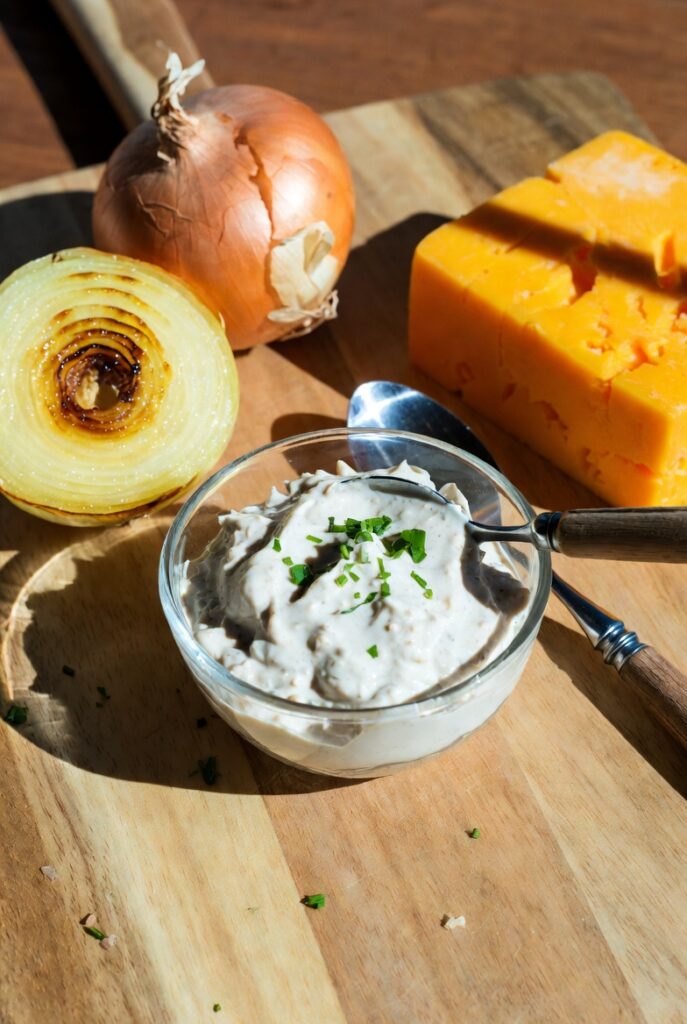
In a dish defined by richness, the “Aromatic Contrast” provided by the thyme and garlic is what prevents the dish from being one-dimensional.
The Allium Foundation
- Yellow Onions: 3 large, thinly sliced. Yellow onions have the ideal sugar-to-sulfur ratio for caramelization.
- Unsalted Butter: 2 tablespoons. For the “Lipid-Base” of the sauté.
The Lipid Matrix
- Full-Fat Cream Cheese: 8 oz, softened. The “Structural Framework.”
- Sour Cream: 1/2 cup. Provides the necessary acidity and “Tang.”
- Gruyère Cheese: 1.5 cups, freshly shredded. (Swiss or sharp White Cheddar can be substituted).
The “High-Note” Aromatics
- Fresh Thyme: 1 teaspoon, minced. Provides an “Earthy Counterpoint.”
- Garlic: 2 cloves, minced.
- Dry White Wine or Sherry: 2 tablespoons. For deglazing and adding “Floral Depth.”
6. The “Fond” Extraction: Deglazing for Depth
The most common error in onion-based dishes is leaving the flavor in the pan. As the onions cook, they deposit a brown, sticky glaze on the bottom of the skillet known as the Fond. This is the highest concentration of umami in the dish.
To achieve a “Master Draft” finish, do not wash this away. Once the onions are deep mahogany, add your white wine or sherry. Use your wooden spatula to scrape the bottom of the pan vigorously. This process—Deglazing—incorporates those caramelized proteins back into the onion mixture, ensuring that the “Core Flavor” of your dip is consistent throughout. This technical step is what separates a “home-style” dip from an “Elite-Tier” assembly.
7. Deep Dive: The Probiotic-Prebiotic Synergy
Why is this dip more than just “Party Food”? It is a study in Gut Health Synergy. Onions are one of nature’s best sources of Inulin, a prebiotic fiber that feeds the beneficial bacteria in your digestive system.
When you pair these prebiotics with the cultured dairy in the sour cream and cheeses, you are creating a “Symbiotic Environment” that supports digestive wellness. While the dip is indulgent, the high fiber content of the onions and the high protein of the cheese provide a “Satiety Plateau,” preventing the blood-sugar spikes associated with carb-heavy appetizers. It is “Functional Indulgence.”
8. Step-by-Step Instructions: The Master Blueprint
Step 1: The Caramelization Phase
Melt the butter in your skillet over medium-low heat. Add the sliced onions with a pinch of salt. Cook, stirring occasionally, for 25–30 minutes. You are looking for a deep, jam-like consistency and a mahogany color.
Step 2: The Aromatic Deglaze
Add the minced garlic and thyme. Cook for 60 seconds. Pour in the wine or sherry and scrape the bottom of the pan to incorporate the Fond. Remove from heat and let cool slightly.
Step 3: Thermal Calibration
Preheat your oven to $190^\circ C$ (375°F). Lightly grease your ceramic baking dish.
Step 4: The Matrix Assembly
In a large mixing bowl, whisk together the softened cream cheese and sour cream until smooth. Fold in the caramelized onions, 1 cup of the Gruyère, and a crack of fresh black pepper.
Step 5: The High-Heat Bake
Transfer the mixture to the baking dish. Top with the remaining 1/2 cup of Gruyère. Bake for 15–20 minutes until the edges are bubbling vigorously.
Step 6: The “Golden” Broil
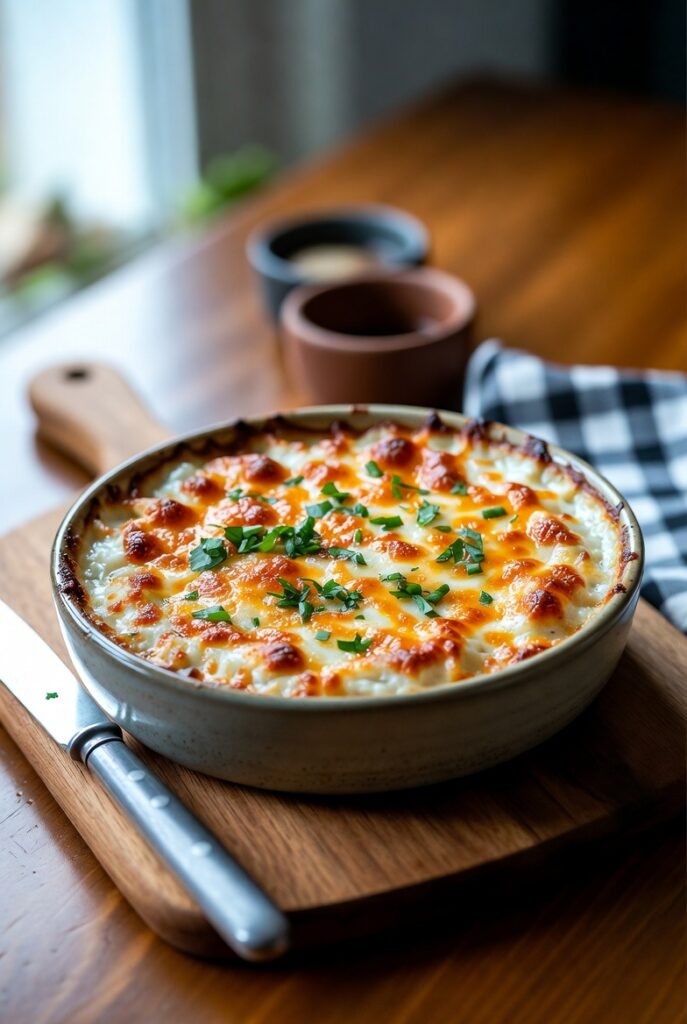
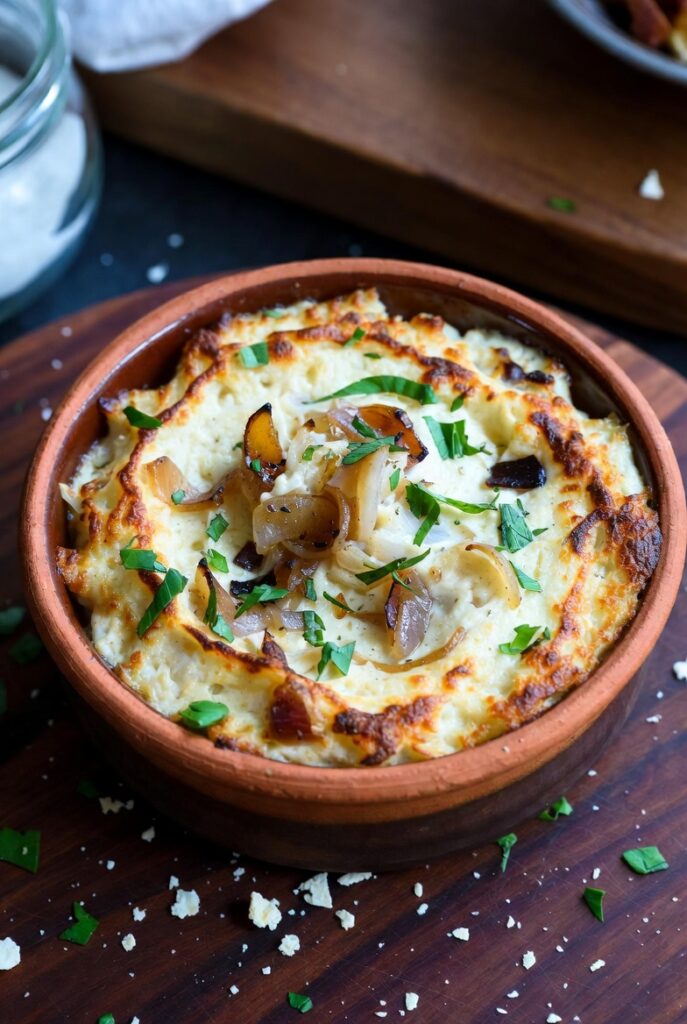
Switch the oven to “Broil” for the final 90 seconds until the cheese crown is toasted and displays “Leopard Spotting” (dark brown bubbles).
9. Satiety and the “Slow-Burn” Energy
The Hot & Cheesy Caramelized Onion Dip is designed for the “Social Long-Game.” Because it is rich in slow-digesting fats and fiber, it provides a “Slow-Burn” energy profile. This is the ideal appetizer for gatherings where alcohol is served, as the lipids provide a protective buffer for the stomach lining and slow the absorption of ethanol.
10. Storage and Reheating
- Refrigeration: Store in an airtight container for up to 4 days.
- The Reheat: To maintain the “Lipid Integrity,” reheat in a $175^\circ C$ (350°F) oven for 10 minutes. Avoid the microwave, as it can cause the sour cream to break and become oily.
11. FAQ
Q: Can I use red onions?
A: You can, but they have a higher water content and lower sugar density, meaning they will take longer to caramelize and will be slightly less sweet.
Q: My dip is too thick. How do I fix it?
A: Stir in a tablespoon of heavy cream or milk before baking to achieve a “looser” viscosity.
Q: What is the best dipping vessel?
A: Toasted baguette slices (crostini), sturdy potato chips, or apple slices for a “Sweet-and-Salty” contrast.
12. Nutritional Information (Per 1/4 Cup)
- Calories: 190 kcal
- Protein: 9g
- Total Fat: 15g
- Net Carbs: 5g
- Calcium: 20% DV