1. Introduction: The Deconstruction of the Perfect Slice
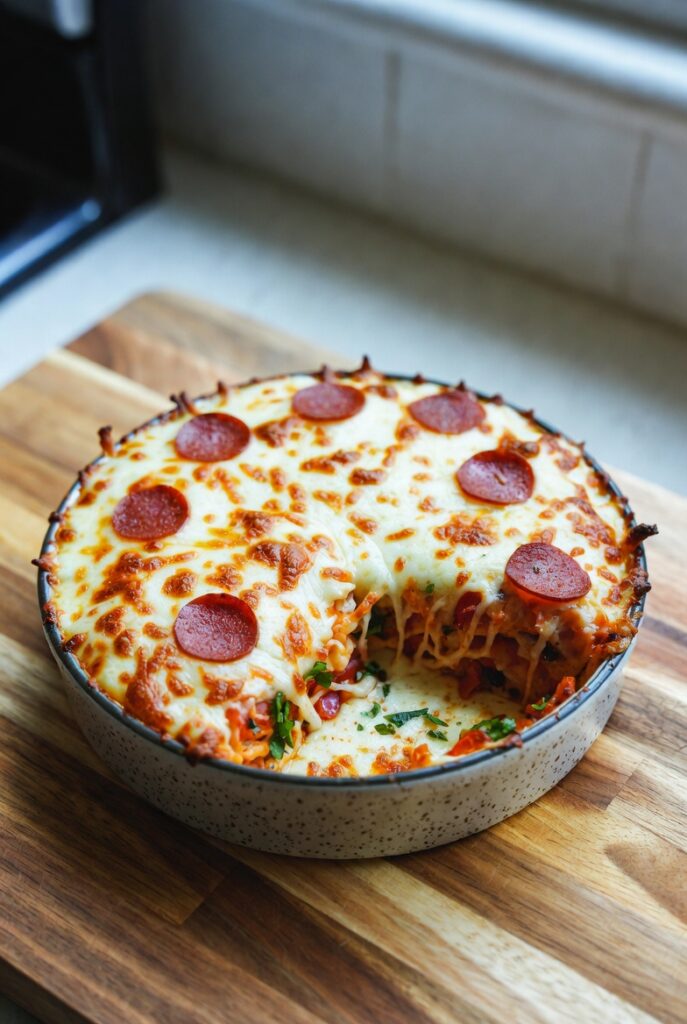
In the architecture of social snacking, the Cheesy Pepperoni Pizza Dip represents a brilliant “Deconstruction Strategy.” It takes the foundational elements of the world’s most popular comfort food—the molten cheese, the zesty aromatics, and the spicy, cured lipids—and removes the “Dough Friction.” By isolating the toppings into a high-density, “Single-Vessel” format, we create an experience that is 100% flavor and 0% crust-filler. This is a tactical victory for those who prioritize the “Umami-Rich” center of the pizza over the bread.
The brilliance of Cheesy Pepperoni Pizza Dip lies in its “Rheological Appeal”—the science of flow. A perfect pizza dip must maintain a specific viscosity; it needs to be “stretchy” enough to provide a visual “cheese pull” while remaining fluid enough to be scooped without snapping the dipping vessel. For the modern host, this is a “Signature Draft” that bridges the gap between childhood nostalgia and gourmet execution. It is a meal-prep-friendly, high-protein assembly that delivers a concentrated dose of Mediterranean flavors in under thirty minutes.
2. The Science of the “Lipid-Sauce Interface”
To master the Cheesy Pepperoni Pizza Dip, one must understand the interaction between the acidic tomato base and the alkaline cheese matrix. Traditional pizza sauce can sometimes “break” or separate when baked under a thick layer of cheese, resulting in a watery perimeter.
The secret to a professional-grade result is the “Cream Cheese Buffer.” By using a base layer of seasoned cream cheese, we create a thermal barrier that protects the delicate marinara sauce. This layer acts as an emulsifier, absorbing the oils released by the pepperoni (the “Pepperoni Cup” lipids) and preventing them from pooling on the surface. This ensures that every scoop is a balanced ratio of creamy, saucy, and spicy components.
Furthermore, we utilize a “High-Moisture Mozzarella” strategy. While aged mozzarella provides flavor, a touch of fresh or whole-milk mozzarella ensures that the dip remains molten even as it cools on the table. This is “Thermal Engineering” applied to appetizers—ensuring the “Social Window” of the dish is as wide as possible.
3. Recipe Overview: The Master Blueprint
- Cuisine Type: Italian-American Fusion
- Difficulty Level: Very Easy (Layer-focused assembly)
- Total Preparation Time: 15 Minutes
- Total Cooking Time: 20 Minutes
- Total Time: 35 Minutes
- Dietary Classifications: High-Protein, Keto-friendly (when served with vegetables), Gluten-Free (as a standalone).
- Yield: Serves 8 to 10
4. Equipment and Tools: The Essentials of Heat Retention
The structural success of Cheesy Pepperoni Pizza Dip depends on a vessel that can maintain a steady temperature to keep the cheese from “seizing.”
- 9-inch Deep-Dish Pie Plate or Ceramic Skillet: Ceramic is the “Platinum Standard” for heat retention, ensuring the cheese stays gooey for at least 20 minutes post-oven.
- Small Offset Spatula: For creating perfectly even layers of cream cheese and marinara.
- Cheese Grater: Mandatory. Pre-shredded cheese is coated in potato starch or cellulose, which prevents the “Infinite Stretch” we require for this dip.
- Chef’s Knife: For “Micro-Dicing” a portion of the pepperoni to ensure even distribution of spice throughout the matrix.
5. Ingredients Section: Sourcing for Umami Depth
In a dish with a limited ingredient list, the “Complexity” of the sauce and the “Cure” of the meat are the primary flavor drivers.
The Lipid Base
- Full-Fat Cream Cheese: 8 oz, softened. This is the “Insulator” that holds the dish together.
- Sour Cream or Ricotta: 1/4 cup. Adds a “Lighter Note” and improves the scoop-ability.
- Italian Seasoning: 1 teaspoon (dried oregano, basil, and garlic powder).
The “Pizza” Matrix
- Marinara or Pizza Sauce: 1 cup. Use a high-quality, thick sauce (like San Marzano-based) to prevent “Watery Run-off.”
- Mozzarella Cheese: 2 cups, freshly shredded. The “Stretch Component.”
- Parmesan Cheese: 1/2 cup, freshly grated. The “Salt Component.”
The “Flavor Spikes”
- Mini Pepperoni or Sliced Pepperoni: 1/2 cup. Use “Cup-and-Char” pepperoni for a superior aesthetic and flavor profile.
- Fresh Basil: For a “Vibrant High-Note” garnish.
- Optional: Diced green peppers or black olives for a “Supreme” variation.
6. The “Pepperoni Layering” Technique
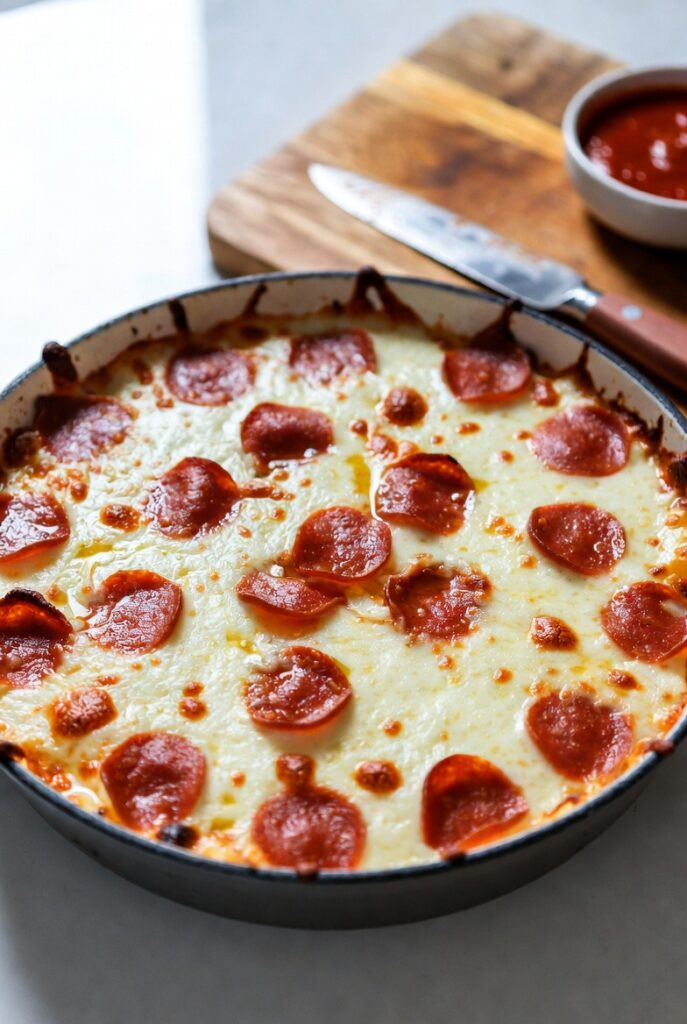
The most common failure in Cheesy Pepperoni Pizza Dip is the “Surface Oil Slick.” Pepperoni is rich in saturated fats that render out at $175^\circ C$ ($350^\circ F$). If you only place pepperoni on the top, the oil has nowhere to go but the surface.
To achieve a “Master Draft” finish, use a “Dual-Layer Strategy.” Finely dice half of your pepperoni and stir it directly into the cream cheese base. This allows the rendered fat to flavor the creamy layer from within. Place the remaining whole slices on top of the cheese for the classic “Pizza Aesthetic.” This ensures that the smoky, spicy “Pepperoni DNA” is present in every single bite, not just the top layer.
7. Deep Dive: Lycopene and Antioxidant Bioavailability
Why is the cooked marinara in the Cheesy Pepperoni Pizza Dip a functional health choice? It centers on Lycopene. Tomatoes are the primary source of this powerful antioxidant, which has been linked to heart health and skin protection.
Crucially, lycopene is “Heat-Stable” and “Fat-Soluble.” This means that cooking the sauce and pairing it with the fats in the mozzarella and cream cheese significantly increases its bioavailability—your body can absorb it much more efficiently than from a raw tomato. When you consume this dip, you are delivering a targeted dose of antioxidants to your system in a highly absorbable format. It is “Nutritional Engineering” disguised as a party favorite.
8. Step-by-Step Instructions: The Master Blueprint
Step 1: Thermal Calibration
Preheat your oven to $190^\circ C$ (375°F). This temperature is high enough to brown the cheese without scorching the bottom cream layer.
Step 2: The Base Emulsion
In a medium bowl, combine the softened cream cheese, sour cream (or ricotta), and Italian seasoning. Use a spatula to whip until smooth. Fold in the diced pepperoni.
Step 3: The Layered Assembly
Spread the cream cheese mixture into the bottom of your ceramic dish. Create a smooth, level surface. Spoon the marinara sauce over the top, spreading it almost to the edges.
Step 4: The Cheese Blanket
Combine the mozzarella and Parmesan. Sprinkle an even layer over the sauce. The cheese should act as a “Seal,” trapping the steam of the sauce beneath it.
Step 5: The “Top-Decoration”
Arrange the whole pepperoni slices over the cheese. If you want a “Supreme” version, add your diced peppers or olives now.
Step 6: The High-Heat Bake
Roast for 15–20 minutes.
The Pro Move: Switch the oven to “Broil” for the final 60 seconds. You are looking for “Leopard Spotting”—those small, dark-brown caramelized bubbles on the cheese that signify peak flavor.
Step 7: The Aesthetic Garnish
Remove from the oven and let sit for 5 minutes (the “Stabilization Phase”). Garnish with fresh basil or a pinch of red pepper flakes.
9. Modular Variations: Customizing the Standard
The Cheesy Pepperoni Pizza Dip is a flexible “Flavor Template.” You can adapt it to match any “Pizza Personality”:
- The “Meat Lovers” Shift: Add cooked Italian sausage crumbles and chopped bacon to the cream cheese base.
- The “White Pizza” Pivot: Omit the marinara. Increase the ricotta and add a splash of white truffle oil or extra garlic for a “Gourmet White” experience.
- The “Veggie” Standard: Add sautéed mushrooms, spinach (squeezed dry), and onions. Ensure the vegetables are cooked first to prevent them from “watering down” the dip.
10. Satiety and the “Umami-Fat” Synergy
The Cheesy Pepperoni Pizza Dip is a premier example of “Satiety Maximization.” By combining the $glutamates$ in the tomatoes and Parmesan with the high-quality proteins in the mozzarella and pepperoni, you are triggering multiple fullness signals. This dish is designed to satisfy “Sensory Specific Satiety”—the phenomenon where a complex range of flavors (salty, sweet, spicy, creamy) makes the brain feel “done” with eating faster than a bland snack would. It is a powerful tool for portion-controlled indulgence.
11. Storage and Reheating: The Cheese Recovery
Pizza dip is exceptionally resilient, but reheating requires a “Gentle Thermal Profile” to avoid the cheese becoming rubbery.
- Refrigeration: Store in an airtight container for up to 4 days.
- The Reheat: For best results, use a toaster oven at $160^\circ C$ (325°F) until the center is molten. If using a microwave, use 50% power and heat in 30-second bursts to prevent the cream cheese from “popping.”
- The “Leftover” Hack: Use cold leftover dip as a spread for a “Pizza Panini” or stir it into cooked pasta for an instant “Baked Ziti” experience.
12. Frequently Asked Questions (FAQ)
Q: Can I use low-fat cheese?
A: You can, but it is not recommended. Low-fat cheeses often contain stabilizers that prevent them from melting smoothly, which can lead to a “gritty” texture.
Q: Why is my dip watery?
A: This usually happens if the marinara sauce was too thin or if you added raw vegetables. Always use a thick “Pizza Sauce” and pre-cook any vegetable additions.
Q: What is the best dipping vessel?
A: Toasted baguette slices, breadsticks, or garlic knots are the “Standard.” For a Keto-Standard, use zucchini chips, pepperoni “chips” (baked until crispy), or cauliflower florets.
13. Nutritional Information
(Per serving – approx. 1/4 cup)
| Nutrient | Amount |
| Calories | 220 kcal |
| Protein | 12g |
| Total Fat | 18g |
| Net Carbs | 3g |
| Lycopene Yield | High |