1. Introduction
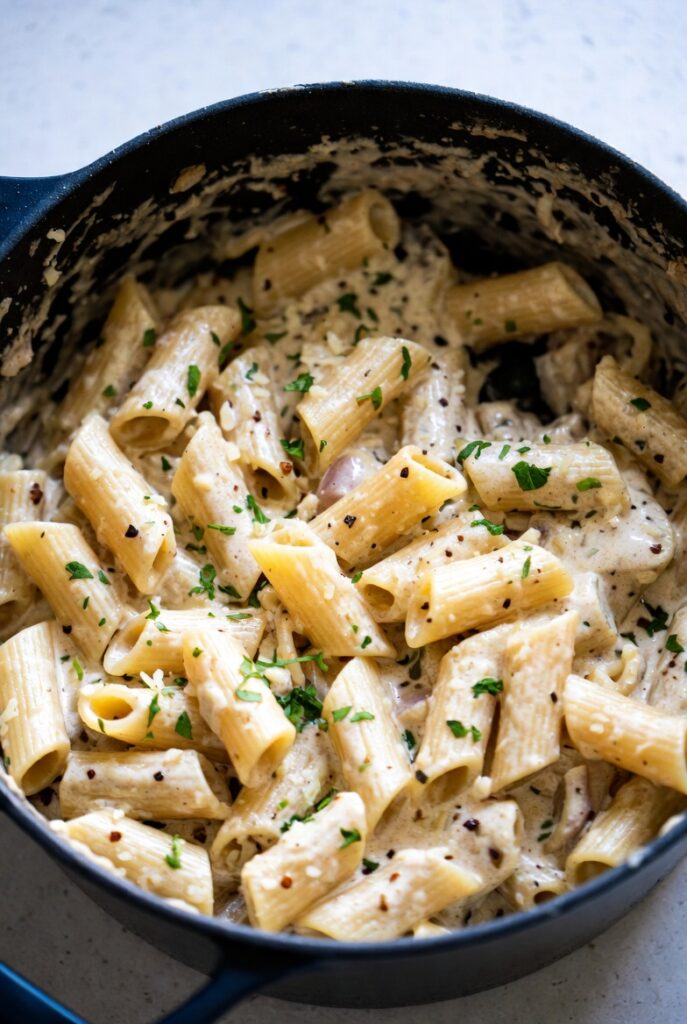
There is a specific kind of magic that happens when high-end Italian comfort meets the brutal efficiency of modern life. We have all been there: standing in a kitchen at 6:30 PM, craving something that tastes like a $30 bistro plate but possessing neither the energy to boil three separate pots nor the desire to scrub them afterward. Enter the Incredible One-Pot Creamy Garlic Parmesan Pasta.
This dish isn’t just a recipe; it’s a culinary “life hack” that has circulated through professional kitchens as the ultimate staff meal before going viral globally. Historically, pasta was always cooked in large volumes of salted water, drained, and then tossed with sauce. However, the one-pot method—derived from the Pasta Risottata technique—allows the pasta to cook directly in a mixture of broth and cream. As the pasta releases its natural starches into the liquid, it creates a self-emulsifying, velvety sauce that is physically impossible to achieve with the traditional boiling method.
The story of this dish is one of simplicity. It honors the Italian philosophy of Minestra, where ingredients are cooked together to preserve every ounce of flavor. By infusing the dry pasta with garlic-sautéed butter from the very first minute, every strand becomes a vessel for flavor rather than just a base for it.
2. Recipe Overview
- Cuisine Type: Modern Italian-American
- Difficulty Level: Beginner (Foolproof)
- Prep Time: 5 minutes
- Cook Time: 15 minutes
- Total Time: 20 minutes
- Dietary Classifications: Vegetarian (can be made Gluten-Free with substitutions)
3. Equipment and Tools
To ensure the starch concentrates correctly and the pasta cooks evenly, the geometry of your cookware matters.
- Primary Vessel: A 12-inch Deep Skillet or a 5-quart Dutch Oven.
- Specifications: You need a minimum wall height of 3 inches to prevent the simmering cream from bubbling over. A wide base is preferred over a narrow, tall pot to ensure even heat distribution across the dry pasta.
- Liquid Measuring: 2-cup glass measuring jug for precise broth-to-cream ratios.
- Stirring Tool: A silicone spatula or wooden spoon (metal can tear the pasta as it softens).
- Grating Tool: A Microplane or fine box grater. Crucial Note: Do not use pre-shredded cheese; the cellulose coating prevents it from melting into the “creamy dreamy” texture seen in your top-performing pins.
4. Serving Suggestions
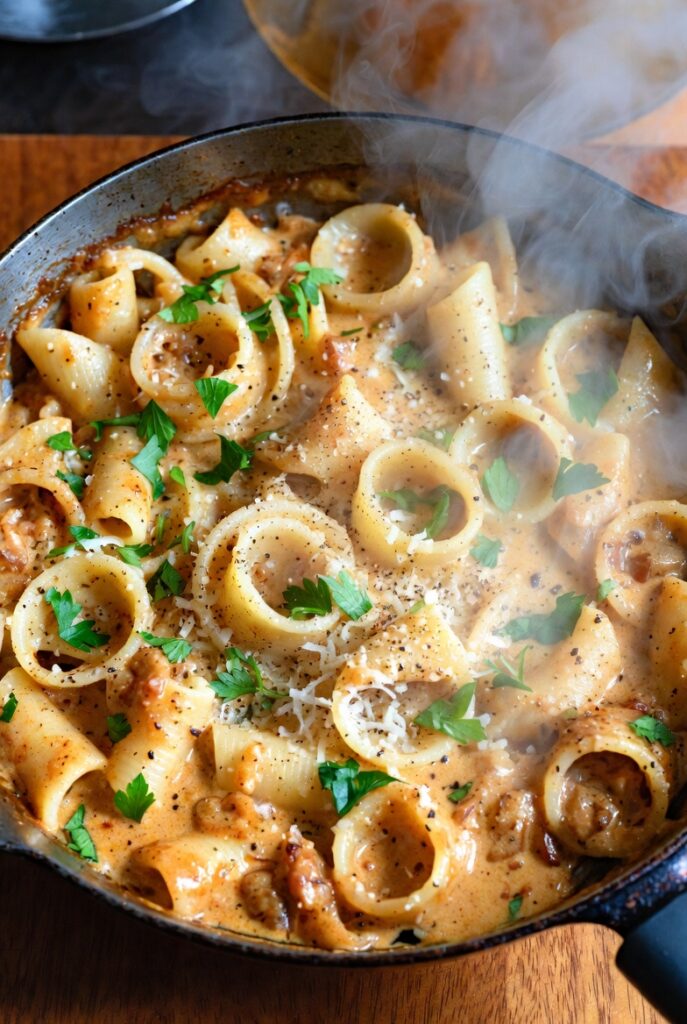
Plating Recommendations: Use a wide, shallow pasta bowl. Twirl the pasta using a carving fork to create height in the center of the bowl. This helps retain heat and showcases the glossy sheen of the Parmesan sauce.
Garnish Ideas:
- Freshness: Finely chiffonade flat-leaf Italian parsley.
- Texture: A sprinkle of toasted Panko breadcrumbs for a “crunch factor.”
- Heat: A pinch of high-quality Aleppo pepper or red chili flakes.
Pairings:
- Side Dish: A crisp Arugula salad with a sharp lemon vinaigrette to cut through the richness of the Parmesan.
- Beverage: A crisp, high-acidity white wine like a Pinot Grigio or a Sauvignon Blanc. For non-alcoholic options, a sparkling water with a heavy squeeze of fresh lime works beautifully.
5. Nutritional Information (Per Serving)
- Calories: 540 kcal
- Total Fat: 28g
- Saturated Fat: 16g
- Carbohydrates: 52g
- Protein: 18g
- Sodium: 680mg
- Health Benefits: Garlic contains allicin, known for its immune-boosting properties, while high-quality Parmesan provides a significant dose of bioavailable calcium and protein.
6. Storage and Reheating
Refrigeration: Store in an airtight glass container for up to 3 days.
Reheating (The Professional Method): One-pot pastas thicken significantly in the fridge because the starch continues to absorb moisture.
- Place the pasta in a small skillet over medium-low heat.
- Add 1-2 tablespoons of milk or broth per serving.
- Gently stir until the sauce re-emulsifies. Note: Freezing is not recommended as the dairy-based sauce may break and become grainy upon thawing.
7. Expert Tips and Variations
- The Golden Rule of Garlic: Never add your garlic to a cold pan. Let the butter foam slightly first, then sauté the garlic for exactly 30-45 seconds until fragrant. Overcooked garlic turns bitter and will ruin the “Creamy Dreamy” flavor profile.
- Common Mistake: Using high heat. This is a “simmer” recipe. Boiling dairy on high heat will cause it to curdle.
- Protein Addition: Stir in leftover rotisserie chicken or sautéed shrimp (referencing your top Lemon Garlic Shrimp pin) at the very end to warm through.
- Seasonal Adaptation: In spring, add frozen peas or asparagus tips during the last 3 minutes of cooking.
8. Ingredients Section
Measurements provided in Imperial and Metric.
- Pasta: 8 oz (225g) Fettuccine or Linguine (Long strands work best for this emulsification).
- Liquid Base: 2 cups (475ml) Low-sodium chicken or vegetable broth.
- Dairy: 1 cup (240ml) Heavy cream (double cream).
- Fat: 2 tbsp (30g) Unsalted high-fat butter (European style recommended).
- Aromatics: 4 cloves garlic, minced (approximately 1.5 tbsp).
- Cheese: 1/2 cup (50g) Freshly grated Parmigiano-Reggiano.
- Seasoning: 1/2 tsp Sea salt (adjust to taste), 1/4 tsp freshly cracked black pepper.
9. Step-by-Step Instructions
- Sauté the Aromatics: Melt the butter in your deep skillet over medium heat. Once foaming, add the minced garlic. Sauté until fragrant but not browned (Visual Cue: Garlic should look translucent and smell sweet).
- Build the Liquid Base: Pour in the broth and the heavy cream. Add the salt and pepper. Bring the mixture to a gentle simmer (small bubbles around the edges).
- The Pasta Drop: Add the dry pasta. If using fettuccine, you may need to nudge them down as they soften. Ensure they are submerged as much as possible.
- The Simmer Phase: Reduce heat to medium-low. Cook, stirring frequently. Troubleshooting Tip: Frequent stirring is vital here; it prevents the pasta from sticking to the bottom and coaxes the starch out to thicken the sauce.
- The Reduction: Cook for 10-12 minutes. You will notice the liquid reducing by half and becoming thick and glossy. Test the pasta for Al Dente texture.
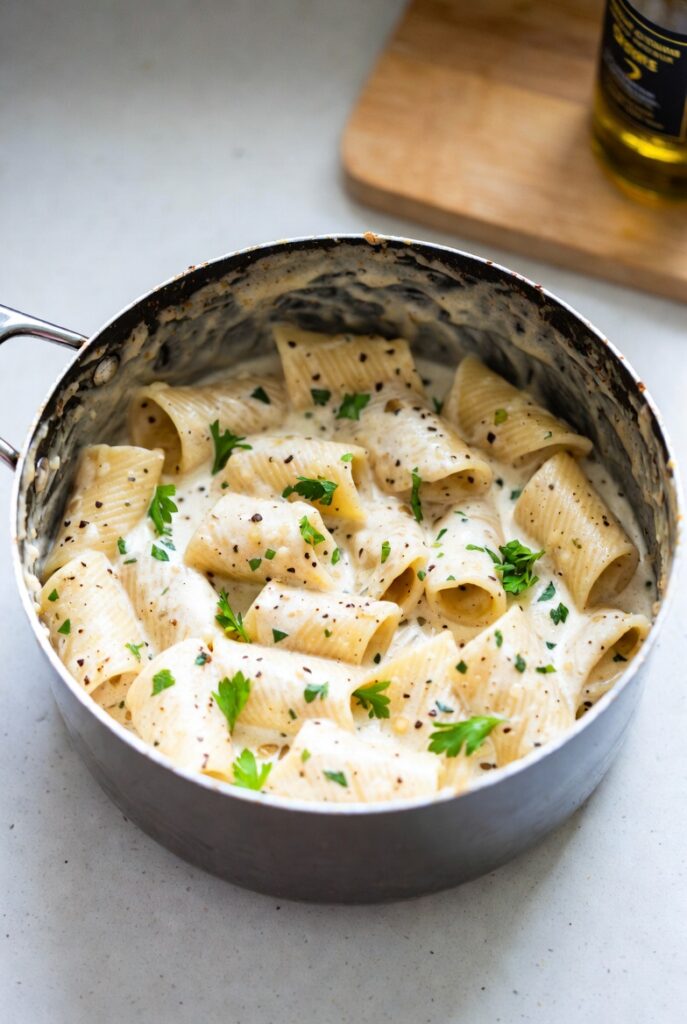
- The Emulsification: Remove the pan from heat entirely. This is the secret to a smooth sauce. Sprinkle the grated Parmesan over the top and toss vigorously until the cheese is fully melted into the sauce.
- Resting: Let the dish sit for 2 minutes. The sauce will continue to thicken into a “Creamy Dreamy” coating as it cools slightly.
10. Frequently Asked Questions (FAQ)
- Can I use milk instead of heavy cream? You can, but the sauce will be thinner. If using milk, increase the Parmesan amount to help with thickening.
- Why is my sauce grainy? This usually happens if you use “shaker” parmesan from a green bottle or if the heat was too high when you added the cheese. Always use fresh cheese and remove from heat before adding.
- Do I need to salt the “pasta water”? Since we are using broth, you only need a little extra salt. Taste the sauce before the final simmer to adjust.
- Can I use Gluten-Free pasta? Yes, but GF pasta releases different amounts of starch. You may need to add an extra 1/4 cup of broth if it dries out too quickly.
- What if the liquid evaporates before the pasta is cooked? Simply add 1/4 cup of warm water or broth and continue stirring.